How to Build Serious Muscle With Home Gym Machine Exercises
Let’s be honest. For many people, that expensive piece of equipment in the corner of the garage eventually turns into the world's most expensive clothes dryer. But if you are reading this, you are ready to strip off the laundry and actually put in the work. The potential for hypertrophy (muscle growth) isn't limited to a commercial facility; it lives right in those cables and weight stacks.
Mastering home gym machine exercises isn't just about pushing and pulling handles. It requires understanding leverage, time under tension, and how to manipulate a fixed path of motion to target specific muscle fibers. Whether you have a compact single-stack unit or a massive Smith machine combo, the principles of growth remain constant.
Key Takeaways: Quick Summary
- Control the Eccentric: Machines often assist the return phase. Fight against this. Take 3 seconds to lower the weight to maximize muscle tearing.
- Constant Tension: Unlike free weights, cables provide tension throughout the entire range of motion. Do not lock out your joints; keep the muscle engaged.
- Change Your Angles: Small adjustments in grip width or seat height on home gym machine workouts can completely shift the focus from one muscle head to another.
- Volume is King: Since machines offer more stability than free weights, you can safely push for higher reps and shorter rest periods to induce metabolic stress.
The Mechanics of Machine Training
Before we look at specific movements, you need to understand the physics. Free weights rely on gravity, meaning the resistance vector is always straight down. Home gym machines use pulleys and cams to redirect that resistance.
This means you can load a muscle at the peak of its contraction—something a dumbbell can't always do. For example, doing a fly with dumbbells offers zero resistance at the top when your arms are vertical. A machine fly keeps the chest under fire the entire time.
The "All-in-One" Advantage
When structuring all in one gym machine workouts, you have the benefit of rapid transitions. This allows for "drop sets" (lowering the weight immediately after failure and continuing) without needing to rack plates. This intensity technique is a primary driver for growth when using machines.
Upper Body Foundation
The Seated Chest Press
Most users just push forward. That is a mistake. To actually hit the pecs and not just your front delts, retract your shoulder blades and pin them against the back pad. As you press, imagine bringing your biceps together rather than just moving the handles.
Pro Tip: Don't lock your elbows at the extension. Stop one inch short to keep the tension on the pectorals.
Lat Pulldowns (The Right Way)
The biggest error here is leaning back and turning the movement into a row. Stay relatively upright. Grip the bar just outside shoulder width. Initiate the pull by driving your elbows down toward your hip pockets, not by pulling with your hands. If your forearms are burning more than your back, your form is off.
Lower Body Power
Leg Extensions
This is the king of isolation for the quadriceps. However, momentum is the enemy here. Many lifters kick the weight up.
Instead, extend the leg smoothly and hold the "peak contraction" at the top for a full two seconds. You should feel a distinct burn in the teardrop muscle just above the knee. Lower it slowly. If the weight stack slams down, you went too fast.
Low Pulley Squats/Deadlifts
If your machine has a low pulley, you can simulate squats. Use a straight bar attachment. Stand a few feet back to create an angle. This variation creates a unique drag that forces your glutes to fire harder to maintain balance, different from a standard barbell squat.
My Training Log: Real Talk
I want to mention something the manuals don't tell you about home gym machine exercises: the "friction factor."
I remember training on an older, slightly neglected multi-gym during a particularly humid summer. I was trying to hit a PR on tricep pushdowns. With free weights, 50lbs is 50lbs. But on that machine, the cable had this gritty, stuttering drag because the guide rods needed silicone lubricant.
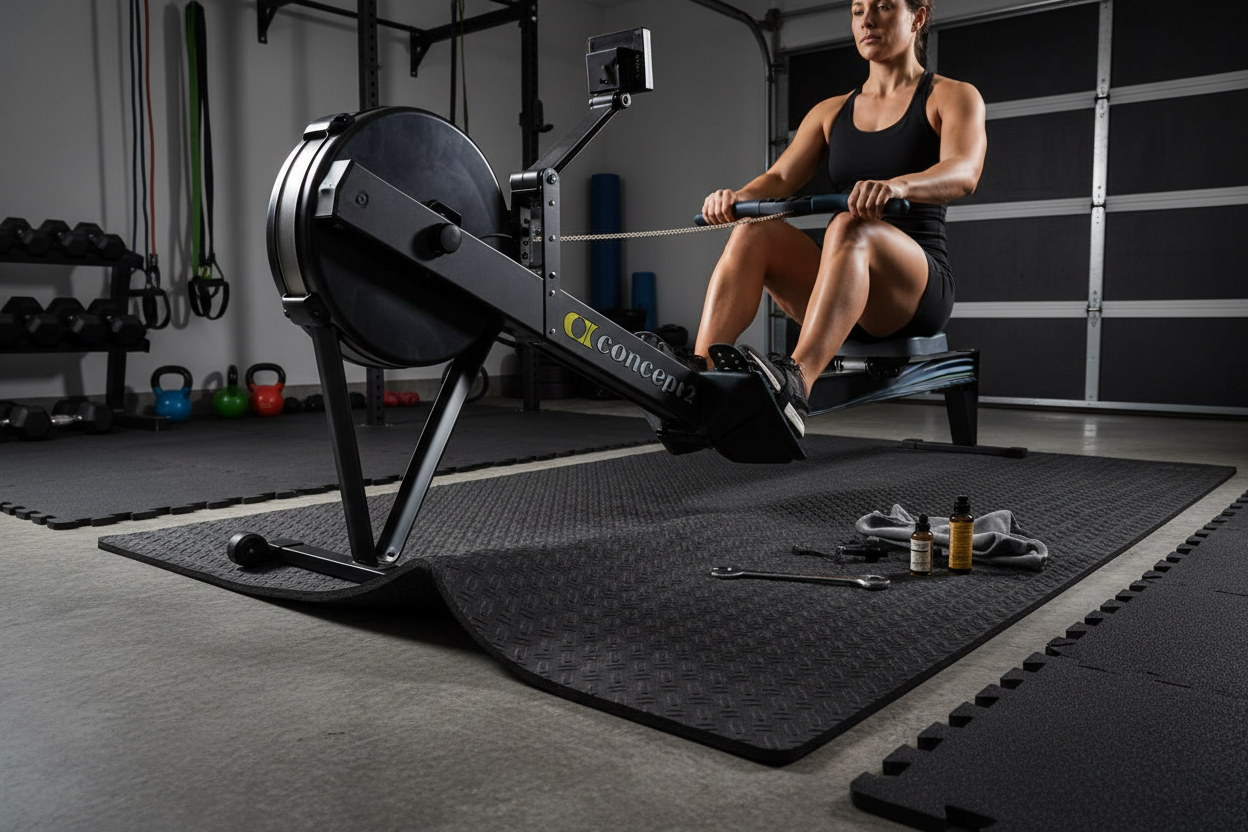
That friction actually changed the workout. The concentric (pushing down) felt heavier than the stack indicated, and the eccentric (letting it up) was jerky. I had to grip the rope harder just to stabilize the motion, which fried my forearms before my triceps were done. It taught me that machine maintenance is actually part of your programming. If the movement isn't smooth, you aren't training the muscle; you're fighting the mechanics. Now, I wipe down the guide rods with a silicone rag once a week. It makes the weight feel "truer" and keeps the focus where it belongs.
Conclusion
You don't need a membership card to build a physique that commands respect. By applying strict form, controlling the negative portion of the rep, and utilizing the unique tension curves of your equipment, you can turn a spare room setup into a powerhouse. The machine doesn't build the muscle; the intensity you apply to it does.
Frequently Asked Questions
Can you actually build mass with home gym machines?
Absolutely. Your muscles do not know if you are holding a dumbbell or a cable handle; they only understand tension and fatigue. As long as you apply progressive overload (increasing weight or reps over time) and eat enough protein, you will build mass.
How often should I perform home gym machine workouts?
For most lifters, a frequency of 3 to 4 times per week is ideal. This allows you to split your training (e.g., Upper/Lower or Push/Pull) while giving your muscles adequate recovery time, which is when the actual growth occurs.
Are machines safer than free weights?
Generally, yes. Machines follow a fixed path of motion, which reduces the risk of dropping weights or moving into a compromised position. This makes them excellent for beginners or those training alone at home without a spotter.