
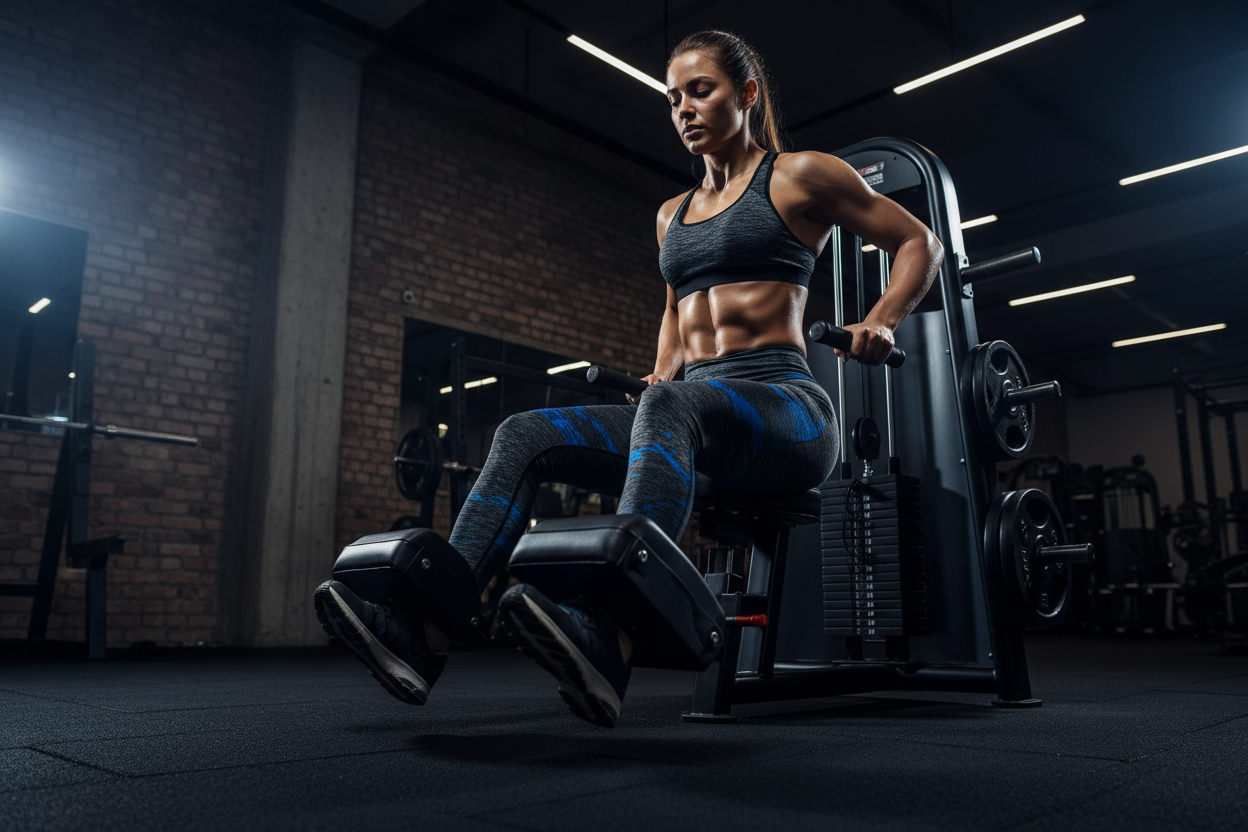
How to Build Rounder Glutes With the Hip Abductor Machine
Walk into any commercial gym, and you will likely see a row of people on their phones, mindlessly opening and closing their legs. Because of this, serious lifters often dismiss the hip abductor machine as a waste of time or a "magazine rack."
That is a massive mistake.
When executed with intention, this piece of equipment is one of the few ways to isolate the gluteus medius and minimus—muscles that squats and deadlifts often neglect. If you want that "shelf" look to the upper glutes or improved stability in your compound lifts, you need to stop ignoring this machine and start using it correctly.
Key Takeaways: Mastering the Movement
- Target Muscle: Primarily the Gluteus Medius and Minimus (upper/side glutes), not just the "hips."
- The "Lean" Hack: Leaning forward slightly during machine seated hip abduction increases glute activation and reduces TFL (thigh) involvement.
- Tempo Matters: Avoid using momentum to swing the weight out. Pause for one second at full extension.
- Range of Motion: Don't let the weight stack touch between reps; keep constant tension on the muscle.
Why the Seated Abduction Machine Matters
Many lifters obsess over the gluteus maximus (the main muscle worked in squats). However, the gluteus medius is responsible for hip stabilization and abduction (moving the leg away from the body).
Weak abductors lead to "knee cave" (valgus) during heavy squats, which is a one-way ticket to injury town. Using the seated machine hip abduction movement strengthens these stabilizers. Aesthetically, this is the machine that fills out the lateral divots in the hips, contributing to a rounder, fuller look.
Proper Form: The "Lean Forward" Technique
Most people sit back against the pad, hold the handles, and chat with their friends. This creates a comfortable chair, but it doesn't maximize muscle growth. Here is how to optimize the machine seated abduction for hypertrophy.
1. Setup and Positioning
Sit down and adjust the pads so they rest comfortably against the outside of your knees. Select a weight that allows for 12-15 controlled reps. If you have to jerk your body to start the movement, the weight is too heavy.
2. The Hip Hinge
Instead of leaning back, scoot your hips to the very back of the seat and hinge your torso forward at the hips. You can hold the machine frame in front of you for stability.
Why do this? Leaning forward places the glute fibers in a more lengthened position and mechanically disadvantages the Tensor Fasciae Latae (TFL). This ensures the glutes do the work, not your outer thighs.
3. Execution
Drive your knees outward against the pads. Focus on pushing with your knees, not your feet. At the peak of the movement (widest point), hold for a hard one-second count. Return to the starting position slowly—take three seconds to close your legs.
Common Mistakes Killing Your Gains
Using Momentum
If you are bouncing the weight stack, you aren't building muscle; you are just testing the machine's durability. The seated abduction machine requires constant tension. Momentum shifts the load to your tendons and joints rather than the muscle belly.
Partial Range of Motion
Don't do "half reps" in the middle range. You want to bring your knees as close together as the machine allows (stretching the glute) and push them out as wide as your flexibility permits (shortening the glute).
My Training Log: Real Talk
I used to hate this machine. For years, I avoided it because I thought it was for people who didn't want to squat. But a few years ago, I hit a plateau on my sumo deadlift—my knees kept caving in off the floor.
I added the hip abductor machine to the end of my leg days. The first thing I noticed wasn't muscle growth; it was the specific, nagging pain of the pads digging into the side of my knees. Most gym machines have worn-out foam, and once you start pushing heavy weight (I worked up to the full stack), that pressure on the joint is uncomfortable. I actually started bringing an extra hoodie to wrap around my knees for cushioning.
The other reality check? The "cramp." When you actually do the lean-forward method correctly, the burn in the upper glute shelf feels different than a squat pump. It feels like a charley horse. If you aren't making an ugly face by rep 12, you probably aren't isolating the muscle correctly.
Conclusion
The hip abductor machine is not a magic fix, but it is a precision tool. It fills the gaps that heavy compound lifting leaves behind. By changing your angle and controlling your tempo, you turn a "lazy" exercise into a high-intensity accessory movement. Stop skipping it, lean forward, and force those glutes to grow.
Frequently Asked Questions
Is the hip abductor machine safe for bad knees?
Generally, yes, because it is a low-impact, non-weight-bearing exercise. However, the pressure of the pads against the outer knee can be uncomfortable. Ensure the pads are positioned correctly on the fleshy part of the outer leg, not directly on the knee joint.
How often should I use the seated machine hip abduction?
Since the gluteus medius is a smaller muscle group with a high capacity for recovery, you can train it 2-3 times per week. It works best as a finisher at the end of a leg workout, performed for higher reps (15-20 range).
Can this machine replace squats?
No. Squats are a compound movement working the quads, hamstrings, and glute max. The abductor machine is an isolation movement for the outer hip. They are complementary, not interchangeable.


