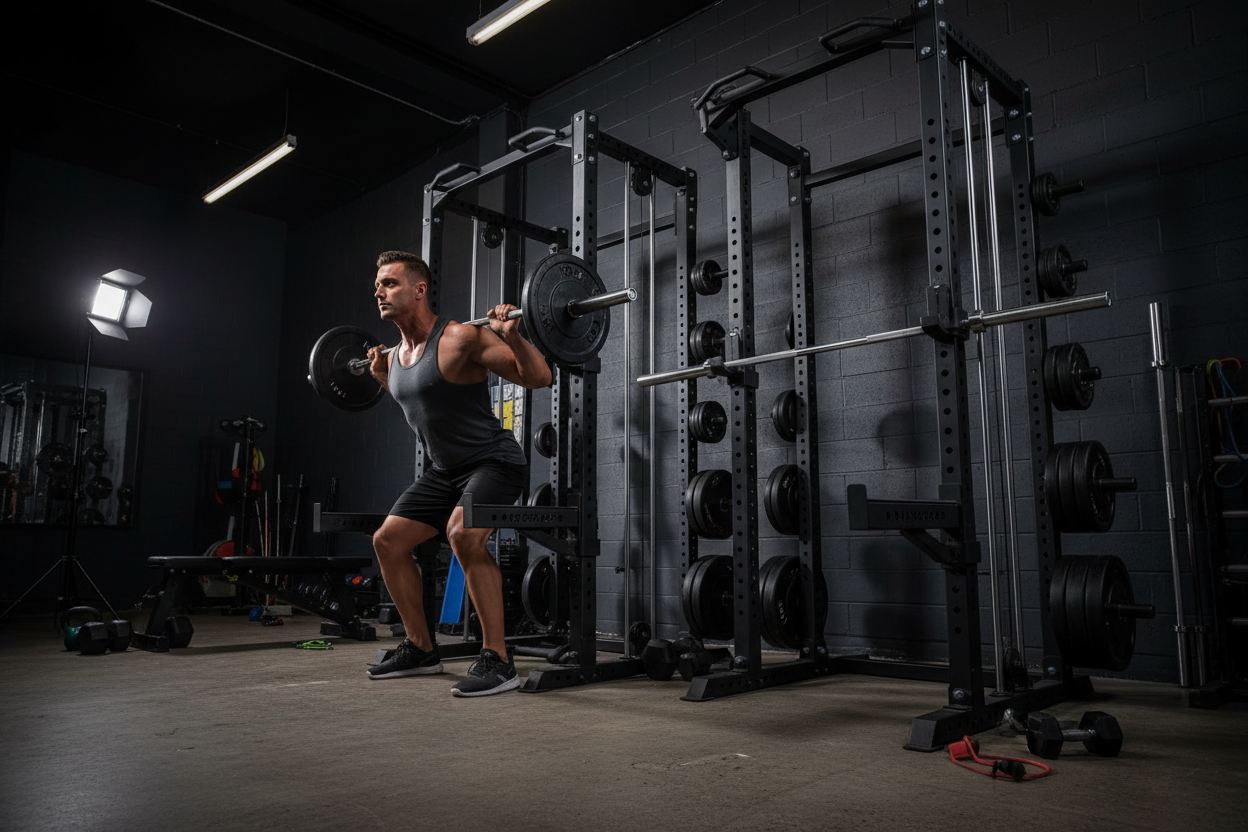
How to Build Massive Legs With Just Light Squats
We have all heard the gym bro mantra: "If it ain't heavy, it doesn't count." For years, I believed that if the bar wasn't bending, my legs weren't growing. But chasing personal records every week is a one-way ticket to joint pain and plateaued growth. Here is the reality: light squats are not just for warm-ups or rehabilitation. When programmed correctly, they are a potent tool for hypertrophy and movement mastery.
You don't need a loaded barbell to trigger a growth response. You need tension, focus, and the willingness to endure a different kind of pain—the burn of high-volume training.
Key Takeaways: Why Go Light?
- Metabolic Stress: High-rep sets with light weight create metabolic byproducts (lactate) that signal muscle growth.
- Technique Refinement: Lower loads allow you to perfect your depth and bar path without the fear of getting crushed.
- Joint Longevity: Reducing the absolute load gives your connective tissue a break while keeping the muscles active.
- Mind-Muscle Connection: You can focus on contracting the quads specifically rather than just moving weight from point A to B.
The Science: Why Light Weight Squats Build Muscle
For a long time, exercise science pointed to mechanical tension (heavy weight) as the primary driver of growth. That is still true, but it isn't the whole picture.
Recent research supports the efficacy of low-load training. When you take light weight squats to failure (or close to it), you recruit high-threshold motor units just as you would with heavy weights. The mechanism here is metabolic stress. By keeping the muscle under tension for longer durations (45 to 60 seconds per set), you induce cell swelling and hormonal responses that drive hypertrophy.
It’s About Intensity of Effort, Not Load
The catch? You have to work hard. A set of 20 reps with a light weight should feel absolutely miserable by rep 18. If you rack the bar feeling like you could have done 10 more, you wasted your time. The intensity comes from the burn, not the crushing weight on your spine.
How to Make Light Weights Feel Heavy
If you just bounce up and down with light weights, you are doing cardio, not bodybuilding. To get results, you must manipulate the physics of the lift.
1. Slow Down the Tempo
Stop using momentum. Adopt a 3-1-1-0 tempo. That means three seconds down, a one-second pause at the bottom, and one second up. This increases Time Under Tension (TUT). That one-second pause at the bottom removes the stretch reflex, forcing your quads to generate all the force to get you back up.
2. Constant Tension
Do not lock out your knees at the top. When you lock out, the load shifts from your muscles to your skeletal structure. By stopping just short of lockout, you keep the tension on the quads for the entire duration of the set. This creates a hypoxic environment in the muscle (lack of oxygen), which is fantastic for growth.
Common Mistakes with Light Loads
The biggest error is losing focus. When the weight is heavy, fear keeps your form tight. When the weight is light, lifters tend to get sloppy.
Maintain the same brace and spinal rigidity you would use for a max effort lift. Treat 135 lbs exactly the same way you treat 315 lbs. If your heels lift or your back rounds, the weight is irrelevant—your mechanics are flawed.
My Training Log: Real Talk
I want to be transparent about my transition to lighter training. A few years ago, my lower back was constantly tight from heavy back squats. I decided to run a cycle of high-rep, low-weight squats—specifically the infamous "20-rep breathing squats" protocol, but with a manageable load.
The first thing I noticed wasn't the pump; it was the panic. By rep 14, my legs weren't just burning; they were vibrating. There is a very specific, gritty feeling in the teardrop muscle (VMO) right above the knee when you refuse to lock out the reps. It feels like someone is holding a lighter to your skin.
I also recall the distinct mental battle. With heavy weights, the fear is "will I fail?" With light squats, the fear is "how much longer can I endure this burn?" Walking down the gym stairs afterward, my legs had that distinct 'jelly' wobble where your knee just decides to buckle without permission. That cycle added an inch to my thighs without ever going over 60% of my 1RM.
Conclusion
Don't let your ego dictate your training. Light squats offer a pathway to leg growth that saves your joints and tests your mental fortitude. By slowing down your reps and chasing the pump, you can build impressive legs without the heavy iron toll. Mix these into your routine as a back-off set or a dedicated hypertrophy block.
Frequently Asked Questions
Can I really build mass with light squats?
Yes. As long as you train close to muscular failure, light squats stimulate Type II muscle fibers similarly to heavy weights. The key is high volume and strict control to maximize metabolic stress.
How many reps should I do for light weight squats?
Aim for the 15 to 25 rep range. This range ensures enough time under tension to fatigue the muscle fibers. If you can easily do more than 25 reps, the weight is likely too light, or you need to slow down your tempo.
Should I use a belt for light squats?
Generally, no. Since the spinal load is lower, light squats are a great opportunity to strengthen your core naturally. Rely on your own abdominal bracing. However, if you are recovering from a back injury, use your best judgment.