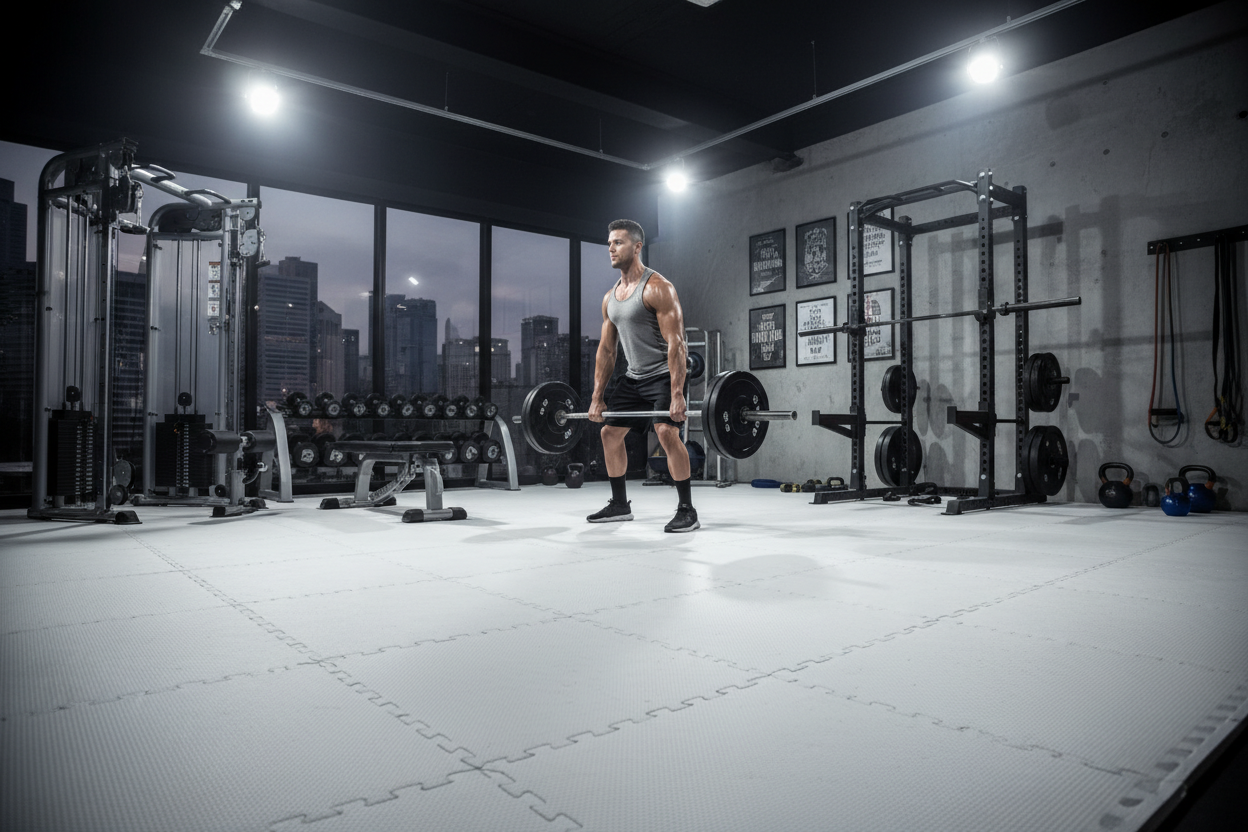
How to Build Mass With Just Barbell Exercises for Glutes
Most lifters mistakenly believe that simply squatting heavy is enough to build a powerful posterior chain. While squats are fundamental, they are often quad-dominant depending on your anatomy. If you are serious about hypertrophy, you need a strategy that specifically targets the gluteus maximus, medius, and minimus through different vectors of resistance.
The barbell is arguably the most effective tool for this because it allows for infinite progressive overload. However, form execution changes everything. To get results, you must master specific barbell exercises for glutes rather than just moving weight from point A to point B.
Key Takeaways: The Glute Growth Blueprint
If you are looking for the most effective way to structure your training, here is the core strategy for barbell-based glute development:
- The Shortened Position: The Barbell Hip Thrust is the king of peak contraction.
- The Lengthened Position: Romanian Deadlifts (RDLs) tear down muscle fibers through a deep stretch.
- Unilateral Work: Bulgarian Split Squats or Reverse Lunges fix imbalances and increase recruitment.
- Progressive Overload: You must add weight or reps every week to see changes in a glute workout with barbell.
- Volume: Aim for 10–15 hard sets per week specifically targeting the glutes.
Why the Barbell Reigns Supreme
You see plenty of influencers doing kickbacks with bands or using complex machines. While those have their place, a solid barbell booty workout offers something they don't: mechanical tension. Mechanical tension is the primary driver of muscle growth.
When you use a bar, you are stabilizing a free weight, which recruits more muscle fibers than a fixed machine. Furthermore, a glute workout bar allows you to load heavy. You cannot replicate the systemic stress of a 200lb hip thrust with a resistance band.
The "Big Three" Glute Barbell Exercises
You don't need a dozen different movements. You need to become an expert at these three.
1. The Barbell Hip Thrust
This is the gold standard for a glute barbell workout. Unlike squats, where the glutes are only maximally active at the bottom, the hip thrust keeps constant tension on the glutes, peaking at the top (lockout).
The Form Fix: Don't hyperextend your lower back. Keep your chin tucked to your chest and look forward. Think about "scooping" your hips under the bar rather than just bridging up. This posterior pelvic tilt is crucial for isolating the glutes.
2. The Romanian Deadlift (RDL)
While the thrust hits the glutes when they are squeezed (shortened), the RDL hits them when they are stretched (lengthened). This is one of the best glute exercises with bar for creating that "shelf" look where the glutes meet the hamstrings.
The Form Fix: Imagine closing a car door with your butt. Keep your shins vertical. The barbell should slide down your thighs. If the bar drifts away from your legs, you are using your lower back, not your glutes.
3. The Glute-Biased Back Squat
Yes, you can make the squat a glute exercise with barbell focus. The key is foot placement and bar position. A low-bar squat position forces you to hinge more at the hips, shifting the load from the knees (quads) to the hips (glutes).
The Form Fix: Take a slightly wider stance and point your toes out 30 degrees. This opens the hips and allows the glutes to drive the movement out of the hole.
Unilateral: The Secret Weapon
Bilateral movements (using both legs) are great for moving max weight, but glute workouts with bar must include single-leg work to prevent imbalances.
Barbell Reverse Lunges
This is safer than the forward lunge and easier on the knees. By stepping back, you maintain a vertical shin angle, which places the stress on the glute of the front leg. It is a staple glute exercise barbell movement for athletes and bodybuilders alike.
My Training Log: Real Talk
I have spent years under the bar, and I want to share a reality of barbell exercises for glutes that studies don't mention: the setup struggle.
I remember specifically when I started taking Hip Thrusts seriously. I was working up to 315lbs. The worst part wasn't the weight; it was the barbell digging into my hip bones. I tried using a yoga mat, but the bar kept rolling off, bruising my hips instantly. It wasn't until I bought a high-density squat pad that I could actually focus on the contraction rather than the sharp pain in my pelvis.
Another thing to note is the "wobble." When I first switched to exercises for glutes female barbell programs (which are just as effective for men), doing single-leg RDLs with a full Olympic bar felt impossible. The bar is long, and the leverage creates massive instability. I had to strip the weight back to just the empty bar for three weeks just to stop my ankle from rolling. Don't let your ego dictate the weight on unilateral moves; stability must come first.
Conclusion
Building a strong posterior chain doesn't require fancy equipment. A simple barbell workout for glutes focusing on Hip Thrusts, RDLs, and Split Squats is enough to transform your physique. The secret isn't muscle confusion; it's getting stronger at the basics over a long period. Grab the bar, perfect your hinge, and load it up.
Frequently Asked Questions
Can I grow my glutes using only a barbell?
Absolutely. A glute workout barbell routine allows for the highest amount of mechanical tension, which is the main factor in muscle hypertrophy. You can perform thrusts, squats, lunges, and deadlifts without any other equipment.
How heavy should I go for barbell glute exercises?
For the hip thrust, the glutes can handle heavy loads (5–8 reps). For stretch-based movements like RDLs or glute bar lunges, it is often better to stay in the 8–12 rep range to ensure your lower back doesn't take over due to fatigue.
Why do I feel RDLs in my lower back instead of my glutes?
This is a common issue in glutes barbell exercises. It usually happens because you are lowering the bar too far. Only lower the bar as far as your hamstrings allow while keeping a flat back. Once your back starts to round, the tension leaves the glutes and moves to the spine.