How to Build Explosive Strength Using a Power Rower Machine
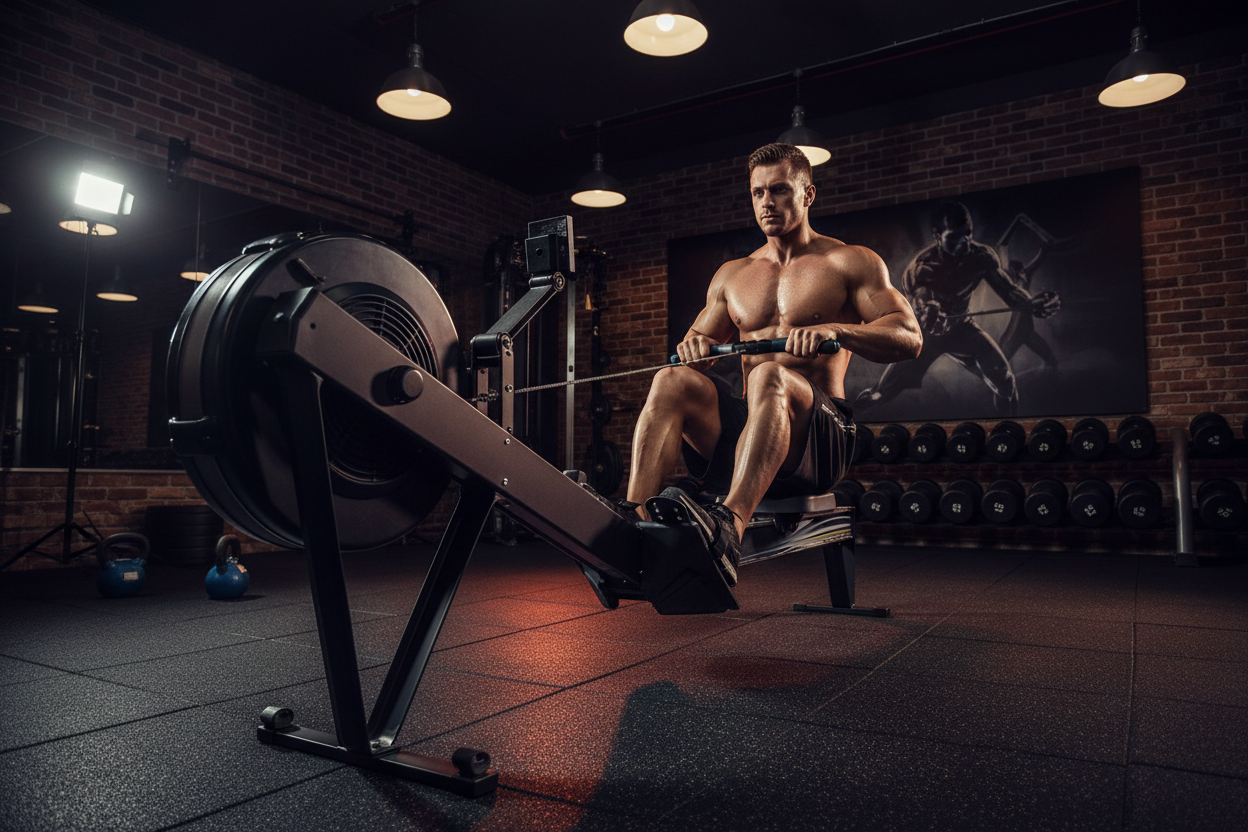
Most people walk into the gym, sit on the erg, and casually slide back and forth while watching TV. They treat it like a recovery tool. This is a fundamental misunderstanding of the equipment. If you approach the power rower machine with the mindset of a lifter rather than a jogger, you unlock one of the most potent stimuli for posterior chain development and anaerobic conditioning available.
We aren't talking about a leisurely paddle across the lake. We are talking about generating raw force. This guide breaks down the mechanics of using a rower not just for sweating, but for producing power.
Key Takeaways
- Watts Over Time: Focus on the energy produced per stroke (watts) rather than the total duration of the workout to build power.
- The Drive Sequence: Power is lost if the sequence isn't legs first, then body swing, then arm pull (60% legs, 30% body, 10% arms).
- Drag Factor Matters: Setting the damper to 10 doesn't equal a better workout; proper drag factor ensures your effort translates to flywheel acceleration.
- Posterior Chain Focus: Correct form heavily recruits the glutes and hamstrings, similar to a deadlift.
Defining the "Power" in Rowing
When we discuss power in a physics sense, we are talking about work divided by time. On a rower, this translates to how fast you can accelerate the flywheel. Many athletes confuse a power rowing machine workout with high stroke rates (strokes per minute or SPM).
However, you can row at a high SPM with very little power if you are just sliding up and down the rail without connection. True power rowing requires a slow recovery and an explosive drive. You are essentially performing a horizontal Olympic lift repeatedly. The goal is to maximize the wattage number on the monitor, not just the stroke count.
The Mechanics of Force Application
To generate force, you must understand the connection point. Your feet are the anchor. The most common mistake I see is athletes pulling with their arms immediately at the catch (the start of the stroke). This disconnects the kinetic chain.
The Leg Drive
Think of the catch position like the bottom of a squat or the start of a clean. Your shins should be vertical. The initial movement is purely a leg press. Your arms must act as stiff ropes (cables), merely transferring the force your quads and glutes are generating into the handle. If you bend your elbows early, you leak power.
The Hip Swing
Once the legs are nearly extended, the hips open up. This is the "body swing." It adds momentum to the flywheel that the legs started. If you open the hips too early, you put unnecessary strain on the lower back and lose the mechanical advantage of the legs.
Programming for Explosiveness
Stop doing 5,000-meter steady-state pieces if your goal is power. You need to train the creatine phosphate and glycolytic energy systems.
Try this protocol:
- Warm-up: 5 minutes easy rowing.
- Intervals: 10 rounds of 30 seconds Max Effort / 90 seconds Rest.
- The Goal: Keep the wattage consistent across all 10 rounds. If your watts drop by more than 15%, the session is over.
This forces your body to recruit fast-twitch muscle fibers, turning the rower into a strength-building tool.
My Training Log: Real Talk
I want to be honest about what a true power session feels like on these machines. It isn't the "runner's high" you get from a treadmill. It’s significantly more uncomfortable.
I remember specifically training for a 500m sprint test last winter. The thing nobody tells you about max-effort rowing is the "rower's cough." It’s that metallic taste in the back of your throat that lingers for twenty minutes after you rack the handle. It happens because you are moving so much air through your lungs that you actually dry out the bronchial tubes.
Also, forget about your hands looking pretty. I don't care if you wear gloves (though most rowers will mock you for it); the friction isn't just on the skin. It’s the deep ache in the forearms where the muscle belly meets the tendon. There is a specific moment in the last 100 meters where your grip starts to fail, and you have to mentally force your fingers to stay hooked around the handle even though they want to curl open. That is where the real training happens. It’s ugly, it’s loud, and it works.
Conclusion
The rower is not just for warm-ups. When utilized correctly, it is a posterior chain developer that rivals the kettlebell swing. Focus on your form, prioritize wattage over duration, and respect the recovery phase. If you aren't gasping for air after a 500-meter sprint, you aren't pulling hard enough.
Frequently Asked Questions
Can a power rower machine build muscle?
Yes, specifically in the posterior chain (hamstrings, glutes, back) and quads. While it won't build mass like a heavy barbell squat, high-resistance, explosive rowing stimulates hypertrophy in these muscle groups.
What is the best damper setting for power?
Contrary to popular belief, setting the damper to 10 isn't always best. It creates a heavy feel, like a slow boat. For power output, a setting between 4 and 6 usually allows for the best combination of resistance and flywheel acceleration, leading to higher wattage.
How does rowing compare to running for power development?
Rowing is superior to distance running for power development because it requires force production against resistance with every stroke. Running is impact-heavy but generally requires less force per stride compared to the explosive drive required on a rower.