How to Build Elite Fitness Using Only the Rowing Machine Gym
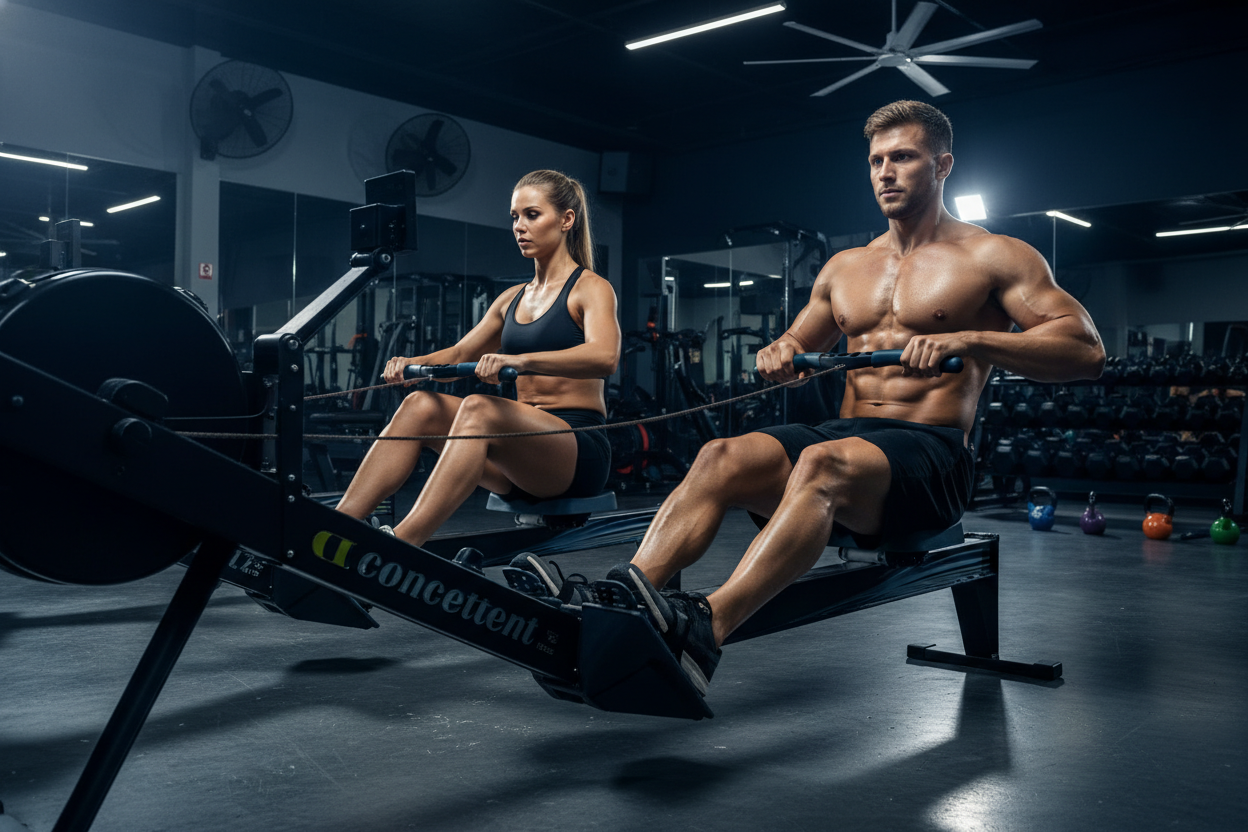
Walk into almost any fitness center, and you will see a familiar sight: a line of occupied treadmills and a lonely, empty rowing machine gym setup in the corner. Most people treat the rower as a five-minute warm-up tool or a coat rack for their hoodie while they bench press. That is a massive strategic error.
If you are looking for the single most efficient piece of equipment to build cardiovascular endurance and muscular power simultaneously, the ergometer (rower) has no rival. It demands effort from 86% of your muscles with every stroke. Ignoring this machine means leaving gains on the table.
Key Takeaways: Mastering the Rower
- Full-Body Engagement: Unlike cycling or running, rowing recruits legs, core, back, and arms in a specific sequence.
- Low Impact, High Intensity: Stationary rowing offers elite-level metabolic conditioning without the joint stress associated with pavement pounding.
- The Power Curve: Effective rowing is about force application, not just speed. The goal is to drive hard, not just slide fast.
- The Sequence: Success relies on the mantra: Legs, Body, Arms, Arms, Body, Legs.
Why the Gym Rowing Machine is Superior
The science behind the rower gym setup is simple: it is an energy hog. Because you are pushing and pulling simultaneously, your heart has to pump blood to both your upper and lower extremities at once. This forces your cardiovascular system to work significantly harder than it does during isolation cardio.
The "Push," Not the "Pull"
A common misconception is that rowing is an arm workout. It isn't. It is a leg press in disguise. Roughly 60% of the power should come from your leg drive. If your biceps tire before your quads, your mechanics are off. The machine rewards explosive leg power transferred through a stiff core.
Correcting Your Form: The "Legs-Body-Arms" Mantra
To stop flailing and start training, you must master the sequence. Most beginners on a gym rowing machine look like they are trying to start a lawnmower while falling off a cliff. Here is how to fix it.
1. The Catch
Shins vertical, arms straight, heels down (if possible). You should feel tension in your hamstrings and lats like a coiled spring.
2. The Drive
Explode back with the legs. Keep the arms straight. Do not lean back yet. This is purely pushing the machine away from you.
3. The Finish
Once the legs are extended, swing the hips open and pull the handle to the sternum. This happens fast.
4. The Recovery
This is where patience pays off. Push the hands away first, hinge the hips forward, and then bend the knees to slide forward. Do not rush the slide.
My Training Log: Real Talk
Let's strip away the polished advice for a second. I have spent hundreds of hours on the Concept2, and here is the reality of a serious rowing gym session that the brochures don't mention.
First, it's the blisters. You won't get them on your palms where you expect; you get them on the very pads of your fingers just below the top knuckle. It stings the moment the shower water hits them. Also, there is the "erg cough." After a truly maximal 2,000-meter test, your lungs burn with a specific, metallic taste that lingers for about twenty minutes. It’s brutal, but it’s the only way you know you actually emptied the tank.
Another thing to watch out for is the foot straps. On older gym machines, the plastic buckle teeth get worn down. If you are doing high-rate sprints, I've had my feet fly completely out of the loosen straps mid-drive, resulting in a very ungraceful slide off the back of the seat. Always check the teeth on the foot cradles before you strap in.
Programming Your Rowing Gym Workout
Don't just sit and row for 20 minutes aimlessly. Use the monitor.
The "Pete Plan" Hybrid
For a mix of fat loss and endurance, try intervals. Set the monitor for 500 meters. Row at 90% effort. Rest for 1 minute. Repeat 6 times. Your goal is to keep every single 500m split within 2 seconds of the others. Consistency creates capacity.
Conclusion
The stationary rowing setup is the most honest piece of equipment in the gym. It does not help you move; you have to do all the work. By respecting the mechanics and embracing the intensity, you can replace an hour of jogging with 20 minutes of rowing and get a better physiological return.
Frequently Asked Questions
Can you build muscle on a rowing machine?
Yes, but primarily muscular endurance rather than hypertrophy (bulk). The rowing motion builds powerful legs, a strong posterior chain (back and glutes), and a solid core. However, for significant muscle size, you should combine rowing with heavy resistance training.
Is rowing better than running for belly fat?
Rowing is often more efficient for fat loss because it recruits more muscle mass than running, leading to a higher caloric burn per minute at high intensities. Additionally, the low-impact nature allows for higher frequency training without the joint pain that often sidelines runners.
How long should a beginner row for?
Start small. Form degrades quickly with fatigue. A beginner should aim for 10 to 15 minutes broken into intervals (e.g., 3 minutes rowing, 1 minute rest). Focus strictly on the "Legs-Body-Arms" sequence before trying to increase duration or speed.