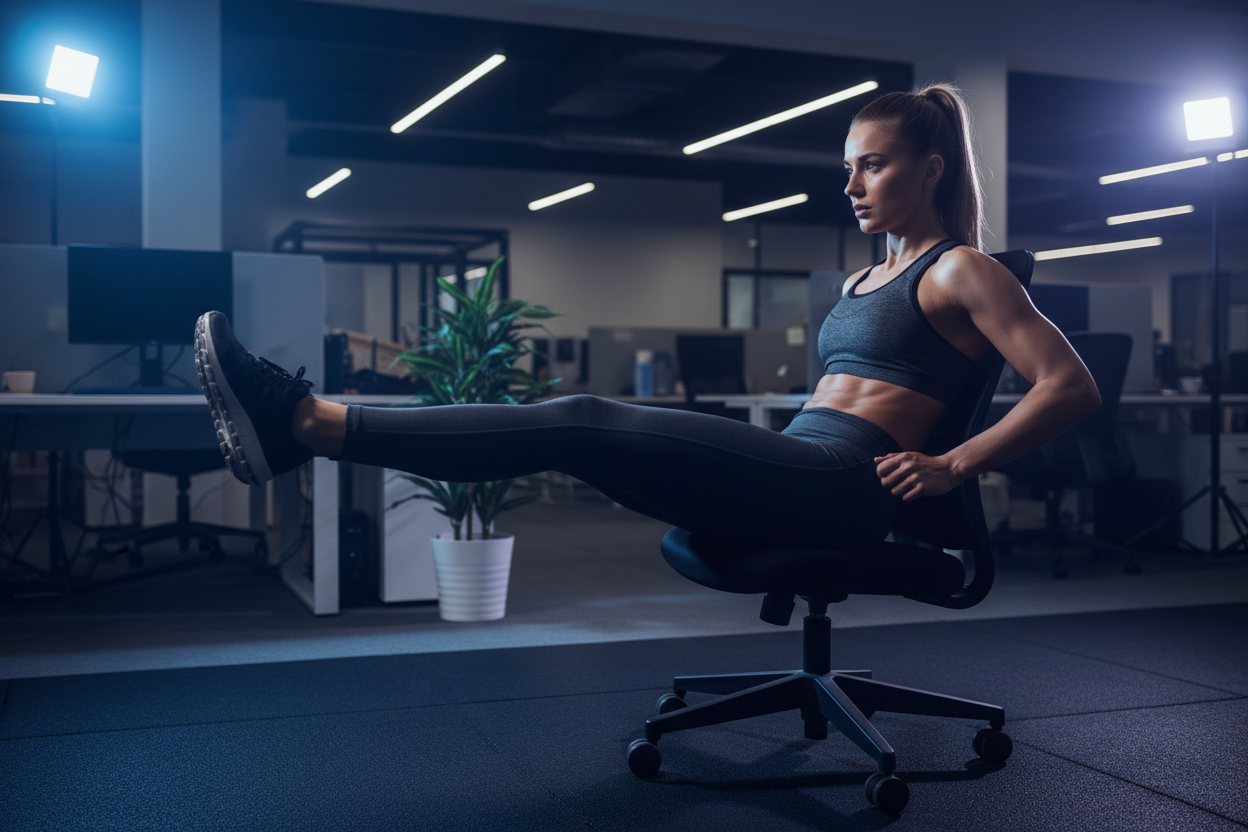
How to Build Bulletproof Hips With the Seated Leg Lift
Most people treat their hip flexors like background noise—until they start hurting. We sit all day, shortening these muscles, and then wonder why our lower backs ache or our squat depth suffers. Enter the seated leg lift. It looks deceptively simple, often relegated to rehabilitation clinics or senior fitness classes, but when performed with intent, it is a powerhouse for functional mobility and core strength.
Key Takeaways
- Primary Muscles Worked: Hip flexors (Iliopsoas), Quadriceps (specifically Rectus Femoris), and Lower Abdominals.
- Main Benefit: Improves active compression strength and hip mobility without loading the spine.
- Variations: Ranges from the beginner-friendly seated single leg lift to the advanced floor L-sit prep.
- Frequency: Can be performed daily due to low central nervous system fatigue.
Why This Move Matters: Seated Leg Lifts Muscles Worked
You might ask, why bother lifting your legs while sitting? The magic lies in the mechanics. When you perform seated leg raises, you are isolating the hip flexors in a shortened position.
Most gym exercises work muscles in the mid-range. By engaging the seated leg lifts muscles worked—primarily the iliopsoas and the rectus femoris—you build strength at the end range of motion. This is critical for everything from sprinting to simply getting out of a deep chair without groaning.
The Anatomy of the Lift
Unlike a standing knee raise, the sitting leg lift removes the help of your glutes and hamstrings. It forces your anterior chain to do all the work. This isolation is why it burns so intensely even without weights.
Mastering the Form: The Seated Leg Raise Exercise
To get the seated leg lifts in chair benefits, you must strip away momentum. Here is how to execute the movement correctly.
1. The Setup
Sit on the edge of a sturdy chair or bench. Your feet should be flat on the floor, knees bent at 90 degrees. Grip the sides of the seat for stability. Crucially, keep your torso upright. If you lean back, you turn this into a leverage movement rather than a muscle contraction.
2. The Execution
Exhale and slowly extend one knee to straighten the leg, then lift the entire leg upward. This is the seated leg up phase. Hold at the top for a distinct one-second pause. You should feel a deep cramping sensation in the crease of your hip. Lower it slowly. Do not let gravity drop the leg.
Variations and Progressions
The Seated Single Leg Lift
This is your starting point. By focusing on one side at a time, you can identify imbalances between your left and right hip strength. This seated single leg raise is ideal for beginners or those recovering from injury.
The Double Leg Lift (Advanced)
Once the single version feels easy, try lifting both legs simultaneously. This shifts the demand heavily onto the lower abdominals. This variation is often a precursor to gymnastic movements like the L-sit.
Common Mistakes to Avoid
Stop cheating the rep. The most common error I see with seated lifts is leaning the torso backward to counterbalance the weight of the legs. While this allows you to lift the legs higher, it disengages the core and puts strain on the lumbar spine. Keep your chest proud and vertical. If your leg only lifts an inch off the chair, that is fine. That inch is pure strength.
My Training Log: Real Talk
I used to think sitting leg raises were useless. I was a "heavy weights only" kind of lifter. Then I tweaked my lower back deadlifting.
I incorporated these into my warm-up, and let me tell you about the specific, humbling burn. It wasn't the broad, exhausting fatigue of a squat. It was a sharp, localized "cramp" right in the hip pocket (the TFL area) that made my leg shake uncontrollably after just eight reps.
Another thing the textbooks don't mention: the fabric of your chair matters. I remember doing these in mesh office shorts on a vinyl bench, and sliding forward every time I engaged my core. I had to literally jam my thumbs under my glutes to create enough friction to stay put. It's unglamorous, but that stability is the only way to actually target the flexor.
Conclusion
The seated leg lift isn't just for physical therapy; it's for anyone who wants a bulletproof core and functional hips. Whether you are doing seated leg ups at your desk or incorporating them into a gym warm-up, consistency is the secret sauce. Start with the seated single leg lift, master the contraction, and watch your hip mobility transform.
Frequently Asked Questions
Do seated leg lifts burn belly fat?
No exercise can spot-reduce fat. However, seated leg raises strengthen the abdominal muscles underneath the fat, which can improve the appearance of your midsection once body fat is reduced through diet.
Are seated leg lifts effective for seniors?
Absolutely. The seated leg lifts in chair benefits include improved balance and the ability to walk with a higher knee drive, which reduces the risk of tripping and falling.
Can I do seated leg raises every day?
Yes. Because this is a bodyweight isolation exercise, it does not tax the nervous system heavily. You can perform seated lifts daily to combat the tightness caused by prolonged sitting.