How to Build Athletic Power With a Rowboat Workout Machine
Most people walk into a gym and head straight for the treadmill or the elliptical. They completely bypass the rowboat workout machine sitting in the corner, gathering dust. That is a massive mistake. If you want a piece of equipment that torches calories while sparing your knees from the pounding of running, this is it.
Rowing is often misunderstood as just an upper-body workout. In reality, it is a pushing movement driven by your legs, not a pulling movement dominated by your arms. Mastering this machine allows you to train like an athlete, improving cardiovascular health and muscular endurance simultaneously.
Key Takeaways
- Full-Body Engagement: Rowing utilizes approximately 86% of your body's muscles, including legs, core, and back.
- Low Impact: Unlike running, the seated position removes impact stress from ankles and knees.
- Variable Resistance: Water-based machines adjust resistance dynamically based on how hard you pull.
- Posterior Chain Focus: It specifically targets the glutes and hamstrings, counteracting the effects of sitting at a desk all day.
Why the Mechanics Matter
Before we look at the hardware, we need to fix your form. The efficiency of the rowboat workout machine relies on the sequence of movement. It isn't a singular motion; it is a four-part cycle: Catch, Drive, Finish, and Recovery.
The power comes from the "Drive." Think of this like a deadlift or a jump squat. You push through your heels. Many beginners initiate the movement by yanking with their biceps. This leads to early fatigue and potential back strain. The correct power distribution is 60% legs, 20% core, and only 20% arms.
Choosing Your Resistance: Air vs. Water
Not all rowers feel the same. When selecting a machine, you generally face two main contenders: air resistance and water resistance.
The Waterpower Rower Experience
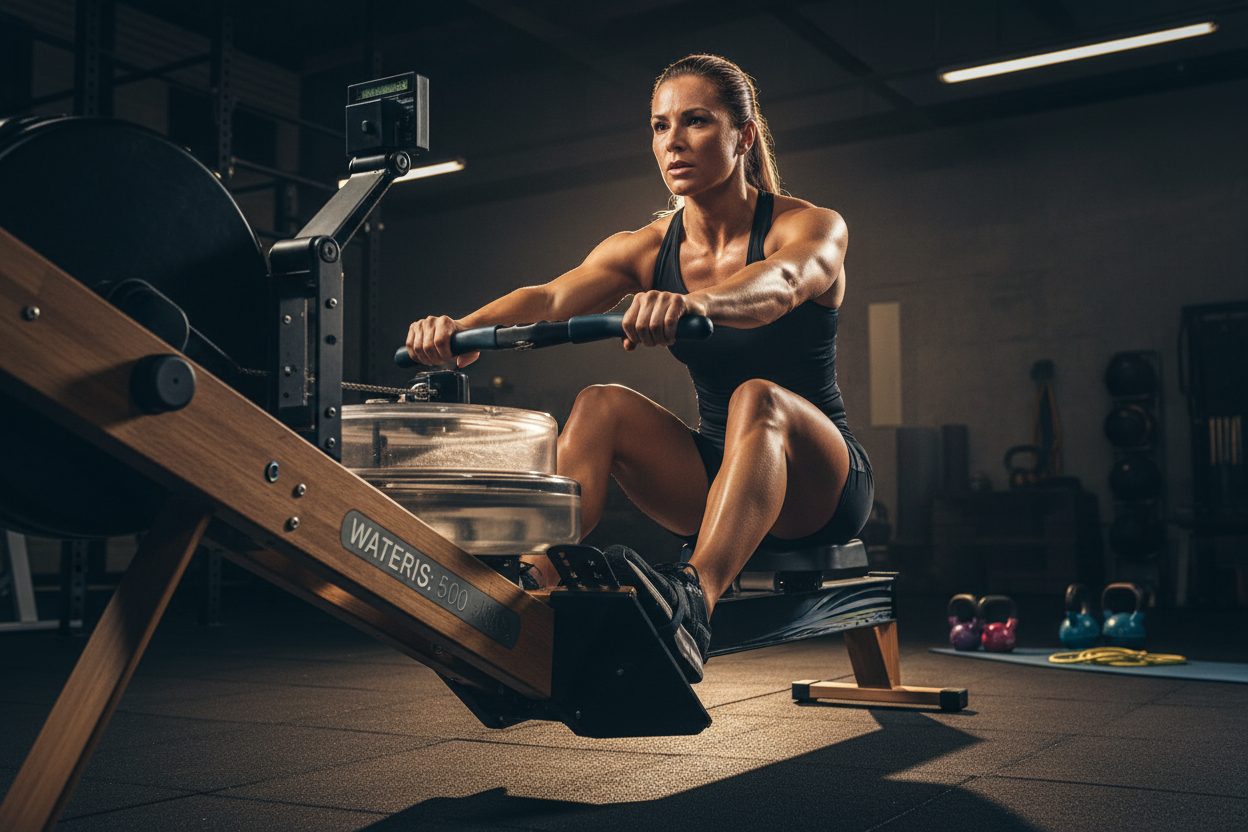
For the purest simulation of on-water rowing, you want a waterpower rower. These machines feature a tank filled with water and a flywheel paddle. The resistance is dynamic. The harder you pull, the more resistance the water provides. It creates a natural, smooth drag that mimics a boat cutting through a lake.
A high-quality waterrower rower is often made of wood (like ash or walnut) to absorb sound and vibration. This makes them popular for home gyms where noise is a concern. The only sound you hear is the rhythmic swishing of water in the tank.
The "Rover" and Air Systems
You might see terms like "rover machine gym" equipment in online searches. This is usually a colloquialism for standard air rowers found in CrossFit boxes. These use a fan to generate wind resistance. They are louder and often provide a lighter, "zippier" feel compared to the heavy, consistent drag of a water rover machine.
The Indo-Row Protocol
If you struggle with motivation, look into the indo-row rowing machine philosophy. Indo-Row is a branded program that popularized group rowing classes. They utilize water-based machines to simulate crew racing.
The beauty of this style is the focus on team synchronization. Even if you are training alone at home, adopting an "Indo-Row" mindset means focusing on stroke rate (strokes per minute) rather than just brute force. It turns a boring cardio session into a technical skill session.
Common Mistakes That Kill Progress
The most frequent error is the "rainbow" stroke. This happens when you lift the handle over your knees on the return. It disrupts the chain and strains the lower back. To fix this, ensure your legs don't bend until the handle has passed your knees on the recovery phase. Arms away, body forward, then the legs compress.
My Training Log: Real Talk
Let’s step away from the manual for a second. I’ve spent countless hours on both air and water rowers, and here is the unpolished truth about the rowboat workout machine experience.
The first time I did a 5,000-meter session on a water rower, I didn't wear gloves. Big mistake. By the 3k mark, the sweat made the handle slick, and I started over-gripping to compensate. I ended up with blisters right at the base of my ring fingers that stung for days.
Another detail people don't mention is the "heel slip." If you don't tighten the foot straps exactly over the widest part of your shoe, your heel starts to lift too high on the catch. I learned the hard way that this kills your hamstring power. Now, I crank those straps down until they almost cut off circulation before I start a sprint piece. And that sound of the water? It’s soothing for the first ten minutes, but when you are in the pain cave at minute twenty, that relentless whoosh-slosh becomes a mental battle rhythm you have to fight to keep up with.
Conclusion
Integrating a rower into your routine is one of the highest ROI decisions you can make for your fitness. It builds a bulletproof back, powerful legs, and a cardiovascular engine that won't quit. Whether you choose a classic water rower or a high-tech air model, the key is respecting the technique. Stop pulling with your arms, start pushing with your legs, and watch your conditioning transform.
Frequently Asked Questions
Is a water rover machine better than a magnetic one?
For realistic feel, yes. A water machine provides infinite resistance based on your effort, whereas magnetic rowers have a set limit and often feel "static" or unnatural throughout the stroke.
Can I lose belly fat using a rowboat workout machine?
Absolutely. Because rowing uses 86% of your muscle mass, it burns calories at a higher rate than cycling or walking. Combined with a caloric deficit, it is a powerful tool for fat loss.
What is the correct damper setting on a rower?
On air rowers, keep it between 3 and 5. Many people crank it to 10 thinking it's "harder," but that is like rowing a boat with a parachute attached. A setting of 3-5 mimics the drag of a sleek water vessel.