How to Build a V-Taper With the Wings Exercise Machine
You want that classic V-taper. The silhouette that makes your waist look smaller and your shoulders broader. To get there, you need to focus on the Latissimus Dorsi, and nothing isolates this area quite like a dedicated wings exercise machine.
Many lifters hop on these machines, jerk the weight down, and wonder why they only feel the burn in their biceps. The problem isn't the equipment; it's the execution. If you aren't engaging your back specifically, you are just doing an expensive arm workout. Let’s fix your form and widen your frame.
Key Takeaways for Lat Growth
- Elbows Drive the Movement: Visualize your hands as hooks; pull down through your elbows, not your biceps.
- Control the Eccentric: The upward phase (releasing the weight) should take twice as long as the pull.
- Thumbless Grip: Using a 'suicide grip' (thumbs over the bar) reduces forearm engagement and isolates the lats.
- Chest Up: Keep your thoracic spine extended to allow the lats to fully contract at the bottom.
Defining the "Wings" Machine
When we talk about building "wings," we are referring to the lats. While some gym-goers colloquially call the Pec Deck a "butterfly" or "wings" machine, the equipment that actually builds the winged look is the Lat Pulldown or the Seated Cable Row.
These machines allow you to manipulate angles that are difficult to replicate with free weights alone, providing constant tension throughout the entire range of motion.
Mastering the Lat Pulldown
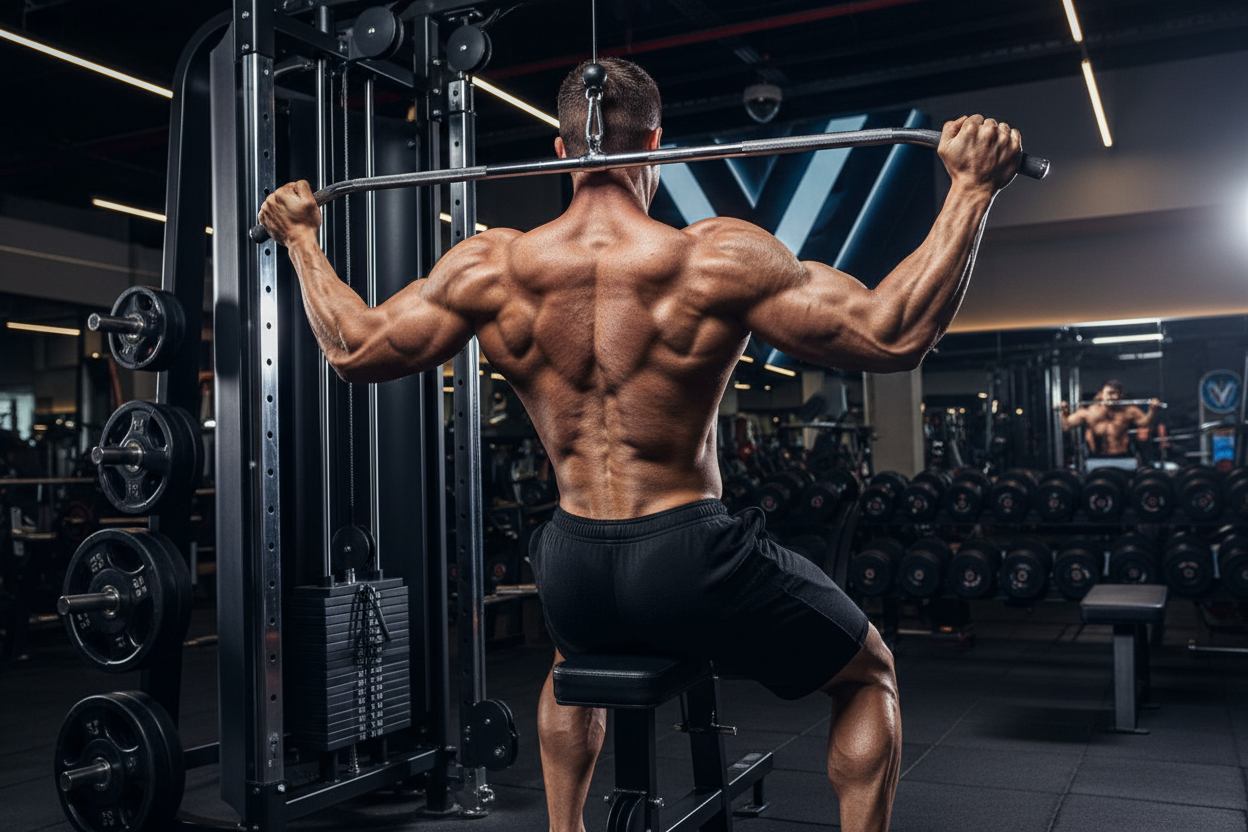
The Lat Pulldown is the king of the wings workout machine category. Here is how to get the most out of it.
The Setup
Adjust the thigh pad so your legs are locked in tight. If there is a gap between your quads and the pad, your body will lift off the seat as the weight goes up, killing your leverage. Your feet should be flat on the floor, driving downward for stability.
The Pull
Initiate the movement by depressing your scapula (shoulder blades) down. Do not bend your arms yet. Once your shoulders are set, drive your elbows toward your back pockets. Stop when the bar reaches your upper chest. Going lower usually causes the shoulders to roll forward, which invites injury and disengages the back.
The Seated Row Variation
Width is important, but thickness matters too. The seated row machine complements the vertical pull.
Use a wide grip attachment here. A narrow grip hits the middle back, but a wide grip targets the outer lats—the actual "wings." Keep your torso stationary. If you are swinging back and forth like a metronome, you are using momentum, not muscle.
Common Mistakes Killing Your Gains
Behind the Neck Pulldowns: This old-school method places unnecessary stress on the rotator cuff with minimal extra benefit to the lats. Pull to the front (sternum) for safety and better contraction.
The Lean Back: Leaning back slightly is fine to clear the face, but if you are practically lying horizontal, you have turned a vertical pull into a horizontal row. Keep the angle upright.
My Training Log: Real Talk
I want to share something about my own experience with the standard selectorized wings machine. For the first two years of my training, I couldn't feel my lats working. I was moving the whole stack, but my forearms would be screaming in pain while my back felt fresh.
The game changer wasn't a supplement or a new routine. It was the tactile sensation of the grip. I stopped wrapping my thumb around the bar. I remember the specific feeling of the knurling digging into my palm just below the fingers when I switched to a thumbless grip. It felt insecure at first, like the bar might slip.
But the moment I did that, the tension in my forearms vanished and transferred directly to my armpit area. I also remember the friction of the cable on a poorly maintained machine at my old gym—that jerky resistance forced me to slow down my reps. Ironically, that gritty, stuttering cable taught me tempo control better than any coach could have.
Conclusion
Building a wide back doesn't happen by accident. It requires intention. The wings exercise machine is a tool, and like any tool, it works best in skilled hands. Focus on the stretch at the top and the squeeze at the bottom. Drop the ego, drop the weight if necessary, and chase the pump in your lats, not your arms.
Frequently Asked Questions
Can I build wings without a machine?
Yes, pull-ups and barbell rows are excellent mass builders. However, machines provide constant tension and stability, which helps isolate the muscle, especially for beginners who struggle with bodyweight exercises.
How often should I train my lats?
For most lifters, training back twice a week is optimal. This allows for sufficient volume to stimulate growth while providing enough recovery time (48 to 72 hours) between sessions.
Is the Pec Deck considered a wings machine?
Sometimes. In casual gym slang, people call the chest fly machine "wings" because of the flapping motion. However, for the purpose of physique aesthetics, "wings" refers to the back muscles (lats), not the chest.