How I Finally Figured Out Exercise in Middle Age at Home
I used to think I was indestructible. My 20s were spent chasing 1RM deadlifts and doing high-box jumps until my shins bled. But then 40 hit, and suddenly a routine Tuesday leg day left me walking like a LEGO person for a week. I realized that exercise in middle age isn't about being the strongest guy in the room anymore; it's about being the guy who can still move without groaning when he stands up from the couch.
Quick Takeaways
- Ditch the high-impact plyometrics for controlled, heavy resistance training.
- Invest in high-density flooring to save your knees and ankles from shock.
- Prioritize 'Time Under Tension' over explosive movements.
- Recovery is now as important as the workout itself.
The Moment I Knew My 20-Something Routine Was Dead
The wake-up call didn't happen during a PR attempt. It happened while I was tying my shoes. I felt a tweak in my lower back that sidelined me for four days. That was the moment I realized my recovery time had effectively doubled while my margin for error had shrunk to zero. Middle-aged fitness requires a pivot from 'how much can I lift?' to 'how well can I move?'.
I spent years thinking I could out-train a bad recovery plan. I'd hit the garage gym at 6 AM, smash some heavy sets, and then sit at a desk for eight hours. My joints were screaming, but I was too stubborn to listen. Eventually, the nagging tendinitis in my elbows and the dull ache in my knees became too loud to ignore. I had to stop training like a college athlete and start training like a guy with a mortgage and a aging skeleton.
Why 'Pushing Through the Pain' is Garbage Advice Now
We’ve all heard the 'no pain, no gain' mantra. In your 20s, that pain is often just muscle soreness. In middle age, that pain is usually your connective tissue telling you to stop before something snaps. Grinding through a workout with a hot shoulder or a stiff lower back isn't mental toughness; it’s a fast track to a surgical consult. Middle aged exercise is about longevity.
I stopped treating every session like a war. If my knees feel 'crunchy,' I swap the back squats for something else. If my shoulder is clicking, I don't bench press. The goal now is consistency. If I push too hard today and have to take two weeks off, I’ve lost. I’ve learned that middle-aged fitness is won by the person who can show up four days a week, every week, for the next twenty years.
Rebuilding My Setup From the Ground Up
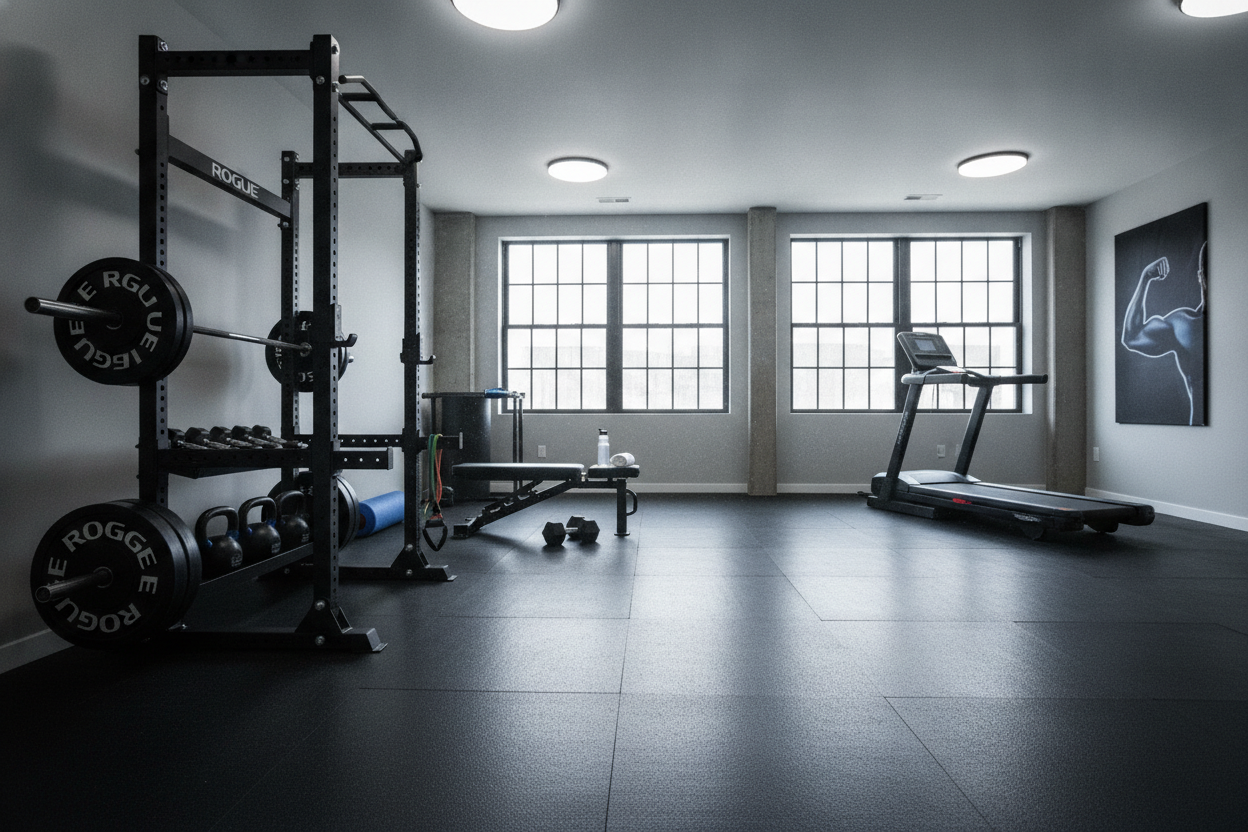
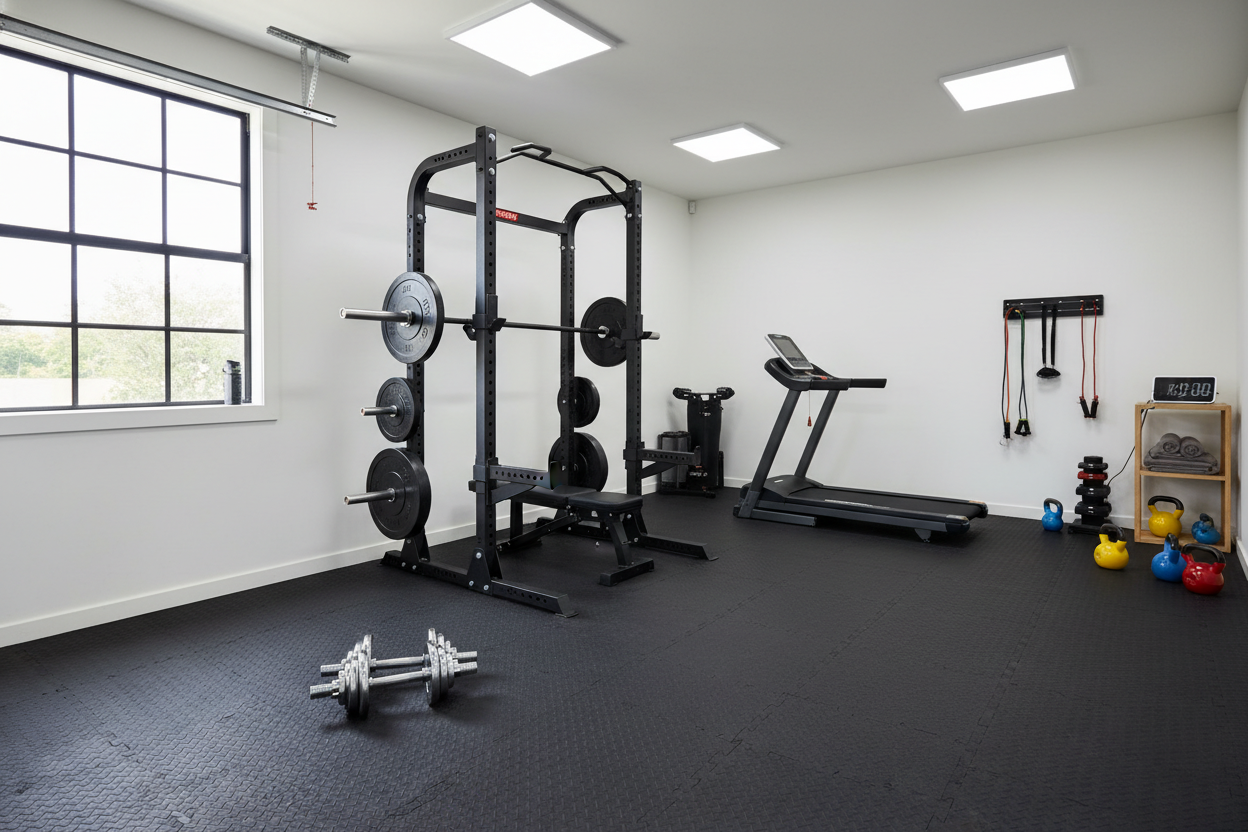
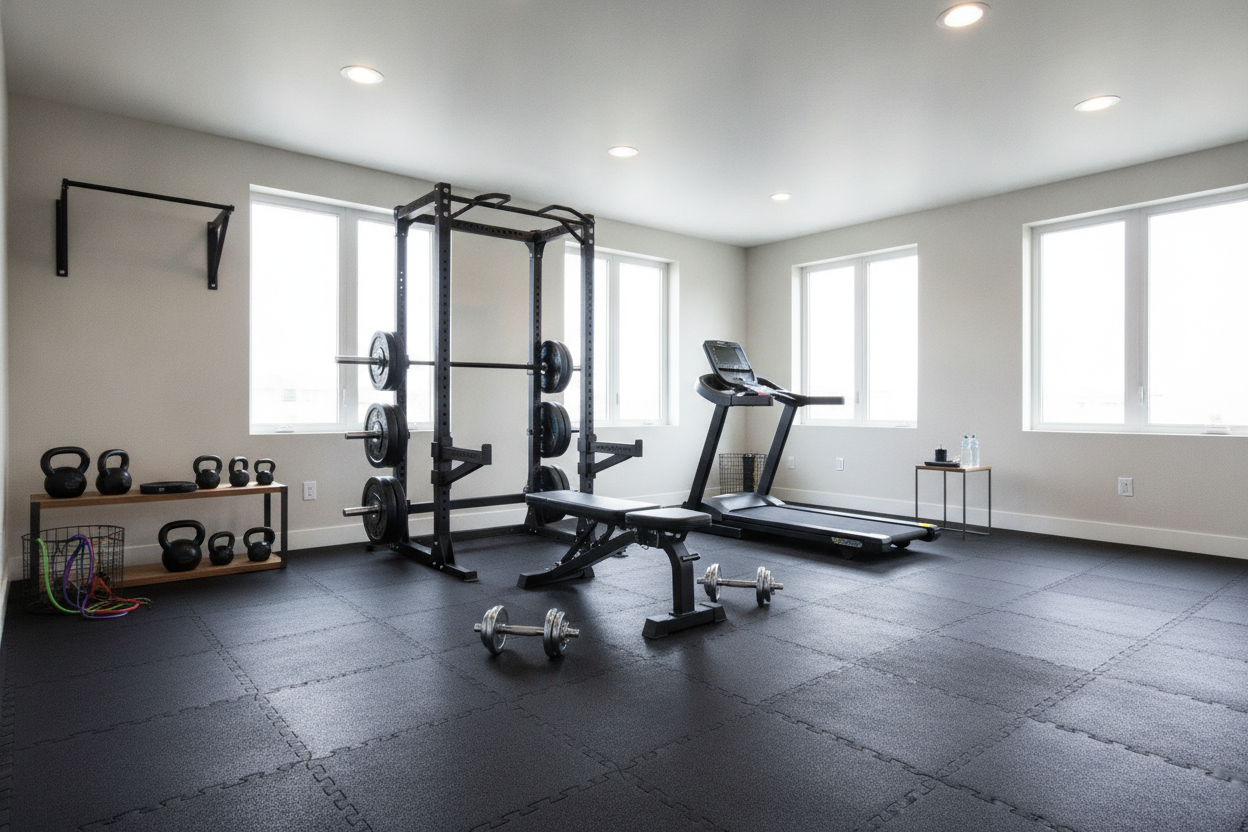
The first thing I did was look at my floor. I was training on thin, cheap foam tiles that offered zero support and shifted every time I moved. My ankles were taking the brunt of the impact. I realized that a large exercise mat for home gym was the most underrated piece of equipment I could own. It’s not just about comfort; it’s about shock absorption and stability.
I needed something that wouldn't compress under a 200-lb rack but still had enough 'give' to save my joints during lunges. If you're still using those puzzle-piece foam squares, you're doing yourself a disservice. I spent a lot of time researching how to choose the best exercise mat because the density of the rubber matters more than the thickness. High-density rubber provides a solid foundation for heavy lifts while dampening the vibration that rattles your bones.
The Exercises I Kept (And the Ones I Trashed)
I officially retired the 30-inch box jump. The reward of a vertical leap isn't worth the risk of a ruptured Achilles. I also stopped chasing max-effort barbell deadlifts from the floor. Instead, I moved to trap bar deadlifts and heavy goblet squats. These movements allow me to load the muscles without the extreme shear force on my spine. I do most of this work on my gym flooring for home workout, which provides the traction I need for heavy kettlebell swings.
I replaced high-impact running with incline walking and rucking. I replaced 'kipping' movements with strict, controlled repetitions. By focusing on the eccentric (the lowering phase) of every lift, I’m building more muscle with less weight. A 50-lb dumbbell feels like 80 lbs when you take four seconds to lower it. That’s how you build strength in your 40s and 50s without wrecking your tendons.
The 3 Non-Negotiable Rules for Your New Routine
Rule one: 10 minutes of mobility is mandatory. No more walking into the garage and immediately grabbing a barbell. Rule two: Buy quality gear. Your joints deserve better than budget-bin equipment that vibrates or lacks stability. Rule three: Success is measured by how you feel on Saturday morning, not by your one-rep max. If you can't play with your kids because your workout was too 'hardcore,' you failed.
FAQ
How often should I train in middle age?
Three to four days of strength training is the sweet spot. It allows for 48 hours of recovery between sessions, which is crucial as your hormone levels and protein synthesis rates change.
Do I really need a special gym floor?
Yes. Concrete is unforgiving. Cheap foam is unstable. A high-density rubber mat absorbs the micro-shocks that lead to chronic joint inflammation over time.
Should I stop doing cardio?
Never. But stop pounding the pavement if your knees hurt. Switch to a rower, a bike, or heavy rucking. Your heart doesn't know the difference, but your cartilage does.