How I Cut My Exercise Routine to Build Muscle in Half
I spent years staring at the same four walls of my garage, waiting three minutes between sets of bench press while my coffee went cold. It is a trap. You think you need two hours for a real exercise routine to build muscle, but most of that time is just you scrolling Instagram while your heart rate drops and your momentum dies. I was tired of my workouts feeling like a part-time job, so I stopped training like a bodybuilder from 1995 and started using antagonist paired sets.
- Slash Workout Time: Cut your gym sessions by 40-50% without dropping volume.
- Better Recovery: Reciprocal inhibition forces opposing muscles to relax while you work.
- Increased Density: More work in less time leads to a massive metabolic demand.
- Home Gym Optimized: Perfect for limited equipment setups where you need to stay in one spot.
The Dead Time Killing Your Garage Gym Workouts
Traditional straight sets are the default for a reason—they work—but they are horribly inefficient for the home trainee. When you do a set of overhead presses and then sit on your bench for three minutes, you are bleeding out your training intensity. In a commercial gym, you might be waiting for a machine anyway, so the rest feels natural. In a garage, that dead time is just a reminder of the laundry you aren't doing or the sleep you're missing.
I used to think that resting longer meant I could lift heavier on the next set. While true for pure powerlifting peaking, for a general exercise routine for muscle gain, you don't need to be fully recovered to stimulate growth. By the time I finished a standard 5x5 routine with accessories, I had spent nearly 45 minutes just sitting on a plyo box. That is not training; that is loitering.
What Are Antagonist Paired Sets?
Antagonist paired sets (APS) are the ultimate efficiency hack. Instead of doing all your sets of one exercise before moving to the next, you pair two movements that target opposing muscle groups—like chest and back, or quads and hamstrings. You do a set of 'A', rest 60 seconds, do a set of 'B', rest 60 seconds, and repeat.
The magic here is a neurological phenomenon called reciprocal inhibition. When you're crushing a set of rows, your brain sends a signal to your chest muscles to relax so they don't fight the movement. This means your 'push' muscles are actually recovering deeper while you're 'pulling' than they would if you were just sitting still. If you are just starting out, How To Build Real Muscle With A Simple Exercise Routine For Home Gym is a good place to start before you crank up the density with these pairings.
My Exact Exercise Routine to Build Muscle Faster
I don't pair just anything. You have to be smart about mechanical tension. I avoid pairing two movements that both tax the lower back or the grip, otherwise, your performance will tank before your muscles do. I focus on big, compound movements that allow me to move real weight without the 90-minute time commitment.
The Upper Body Push/Pull Block
My go-to is pairing a heavy dumbbell bench press with a chest-supported row. I use a pair of adjustable dumbbells that go up to 80 lbs. I hit 8-10 reps on the bench, wait a minute, then hop onto the incline bench for rows. This fills the entire upper body with blood and keeps the heart rate elevated. By the time I finish four rounds, my chest and back are toasted, and I've saved about 12 minutes compared to doing them separately.
The Lower Body Squat/Hinge Block
This is the brutal part of the daily exercise routine to build muscle. I pair goblet squats with Romanian deadlifts (RDLs). It is a quad-dominant move followed by a posterior chain move. Since I am usually using a single heavy kettlebell or a pair of dumbbells, I don't have to worry about a 300-lb barbell crushing me if I get tired. If you are trying to figure out which tools to buy for this, How To Build Muscle With The Best Leg Exercise Equipment For Home breaks down the essentials for a solid home leg day.
Turning This Into a Daily Exercise Routine to Build Muscle
You can't go 100% every single day, or your central nervous system will fry. I structure this across four days a week. Monday and Thursday are Upper Body APS days. Tuesday and Friday are Lower Body APS days. This gives you plenty of recovery time while ensuring you hit every muscle group twice a week.
The key to a daily exercise routine to build muscle is consistency over intensity. I’d rather see you do 30 minutes of high-density paired sets four times a week than one two-hour marathon that leaves you so sore you can't walk for six days. Keep the rest intervals strict. Use a timer. If you start drifting into two-minute rests, you've lost the benefit of the pairing.
Setting Up Your Space for 10-Second Transitions
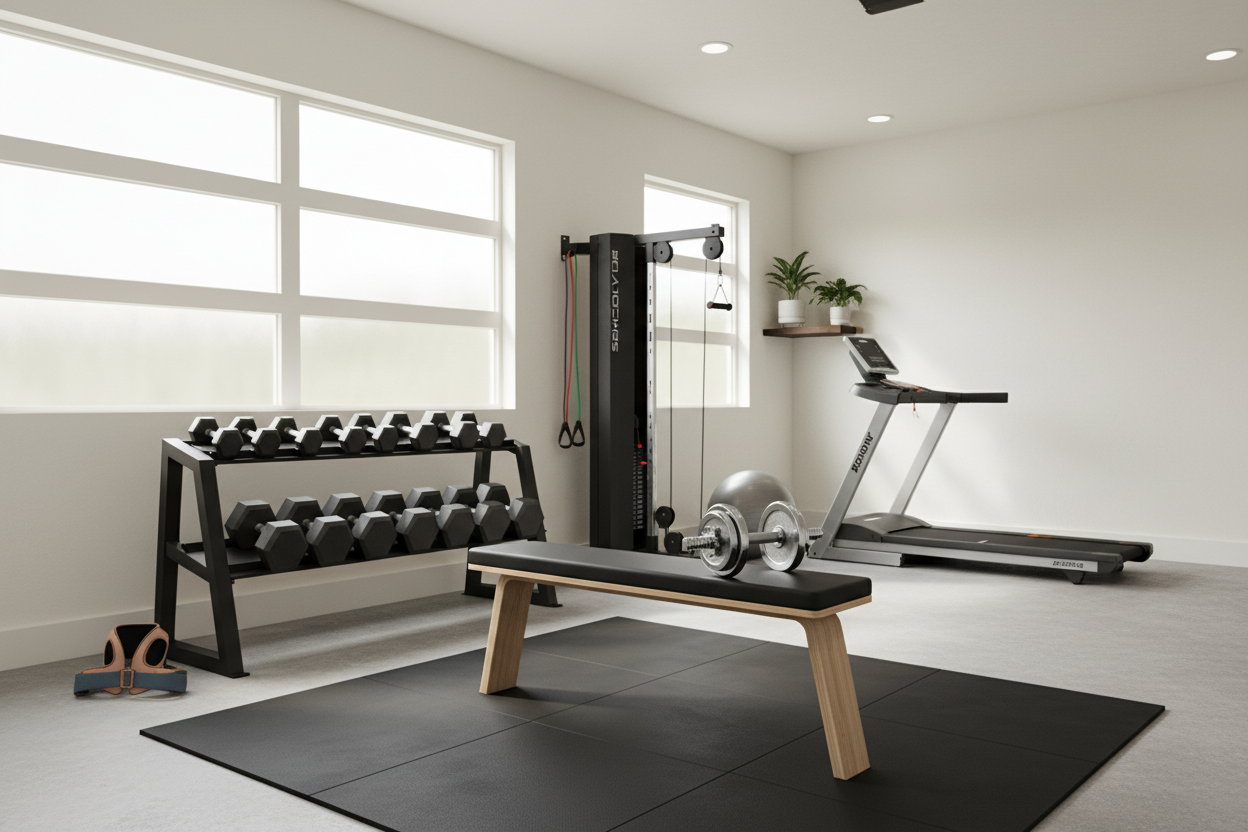
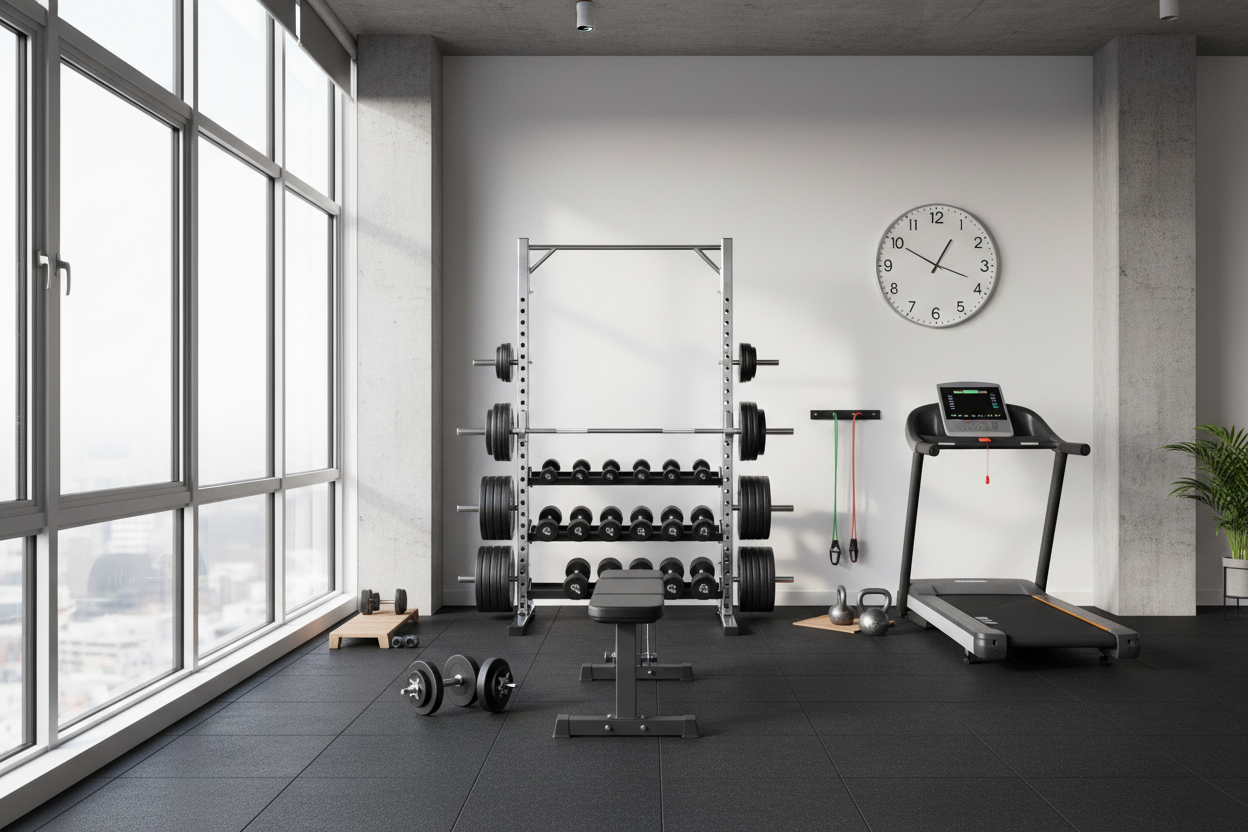
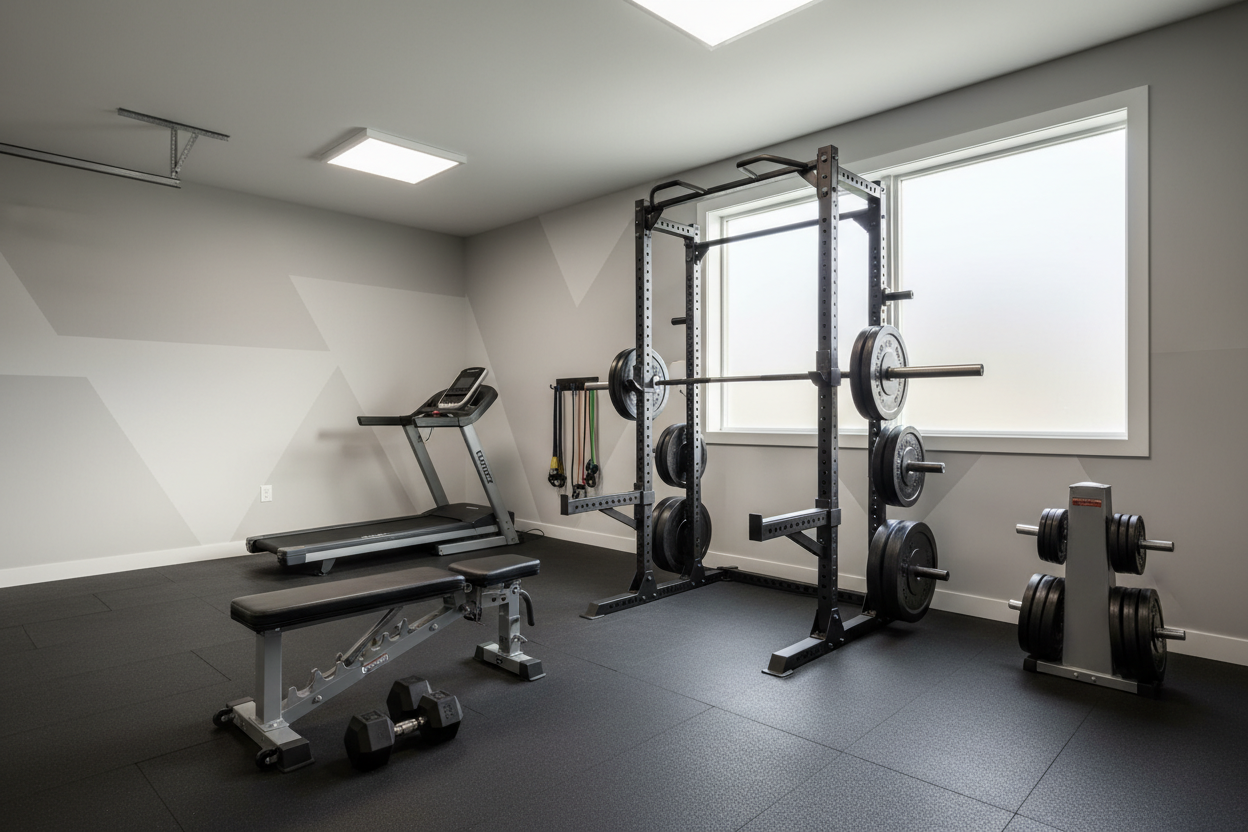
Efficiency dies in a messy gym. If you have to walk across the garage and move a bike to get to your next station, the APS method fails. I keep my entire 'block' within a 6x8 foot area. I lay down a Large Exercise Mat For Home Gym so I have a dedicated, grippy surface where I can drop weights and move from a floor press to a standing row without slipping on bare concrete.
Layout matters. Put your bench in the center of your mat. Keep your dumbbells or kettlebells on one side and your pull-up bar or bands on the other. You should be able to transition between exercises in ten seconds or less. This keeps the 'pump' alive and ensures your heart rate stays high enough to provide a secondary cardiovascular benefit.
Personal Experience: The Heavy Squat Mistake
I'll be honest: I once tried to pair heavy 400-lb barbell back squats with weighted pull-ups. It was a disaster. My lower back was so fatigued from stabilizing the squat that I couldn't get a good contraction on the pull-ups, and my grip was shot. I learned the hard way that APS works best when you use movements that don't compete for the same stabilizers. Stick to one 'big' lift and one 'medium' lift, or two moderate-weight dumbbell movements. Don't be a hero with the heavy iron until you know how your body handles the density.
FAQ
Do I need a lot of equipment for antagonist sets?
Not at all. You can do this with just a pair of dumbbells or even bodyweight exercises like push-ups and pull-ups. The goal is the pairing, not the specific tool.
Will this make me lose strength?
Actually, many people find they get stronger. Reciprocal inhibition allows the muscles to recover more effectively between sets, often leading to higher force output on your second and third sets.
Can I do this if I'm a beginner?
I'd recommend mastering the form of each individual exercise first. Once you can perform a squat and a row with perfect technique, then you can start pairing them to save time.