How Gym Machines Work: The Complete Mechanics Guide
Walking into a fitness center for the first time can feel like stepping onto the bridge of a spaceship. You see rows of steel contraptions, cables, and levers, and the anxiety sets in. You want to get fit, but you don't want to look foolish trying to figure out how gym machines work.
Here is the reality: machines are actually designed to be the most intuitive tools in the room. Unlike a barbell, which requires you to stabilize the load entirely, a machine dictates the path of motion for you. This guide breaks down the mechanics behind the equipment so you can walk up to any station with confidence.
Key Takeaways: Understanding Machine Mechanics
- Fixed Path of Motion: Machines guide your movement, reducing the need for stabilizer muscles and lowering injury risk.
- The Cam System: Many machines use a kidney-shaped wheel (cam) to match the resistance to your muscle's natural strength curve.
- Adjustment Points: Look for bright colors (usually yellow or red) on handles and pins; these indicate adjustable parts.
- Axis of Rotation: Align your joint (like your knee or elbow) with the machine's pivot point for safe biomechanics.
The Science: Pulleys, Cams, and Levers
To understand how to work gym machines, you need to look past the padding and see the engineering. Most selectorized equipment (machines with a weight stack) relies on simple physics to create resistance.
The Weight Stack and Pin
The most common feature is the weight stack. A central guide rod runs through rectangular metal plates. When you insert the pin, you select how many plates will be lifted. The pin locks that specific plate to the central rod, which is attached to the cable. If you ever wonder how do gym machines work so smoothly, it’s usually because of well-lubricated guide rods reducing friction.
The Cam: Why It's Shaped Like a Kidney Bean
Have you ever noticed the oddly shaped wheel at the top of a leg extension? That is a cam. It is not round by accident. It is designed to manipulate mechanical advantage.
Muscles are weaker at certain points in a lift (usually the beginning and end) and stronger in the middle. The cam changes the leverage throughout the movement. It makes the weight feel lighter where you are mechanically weak and heavier where you are strong. This ensures consistent tension, a major factor in gym machine benefits.
How to Use Common Gym Equipment: A Universal Framework
You don't need to memorize a manual for every brand. Whether you are figuring out how to use all gym equipment or just a specific piece, follow this four-step protocol.
1. Locate the Adjustment Points
Manufacturers make this easy. Look for the bright yellow or red handles. These control seat height, backrest angle, or arm position. If it is a bright color, it moves. Adjust the seat so that the handles are roughly at chest or shoulder height for pressing movements.
2. Align Your Axis of Rotation
This is the most critical step for safety. Look for the bolt or pivot point where the machine arm moves. If you are using a leg extension, your knee should form a straight line with that bolt. If you are off-center, you introduce shearing force to the joint, which can lead to injury.
3. Select Your Load
Start lighter than you think. Test the range of motion. The plates should not slam down between reps; they should hover just above the stack to keep tension on the muscle.
Specific Use Cases: From Pull-Ups to Leg Presses
The Assisted Dip/Pull-Up Machine
Many beginners search for the gym machine where you pull yourself up. This is the assisted pull-up machine. It works differently than others: the more weight you select, the easier the exercise becomes.
The weight stack acts as a counterbalance. If you weigh 150 lbs and select 100 lbs on the stack, you are only lifting 50 lbs of your own body weight. It is the perfect tool for building foundational back strength.
The Leg Press
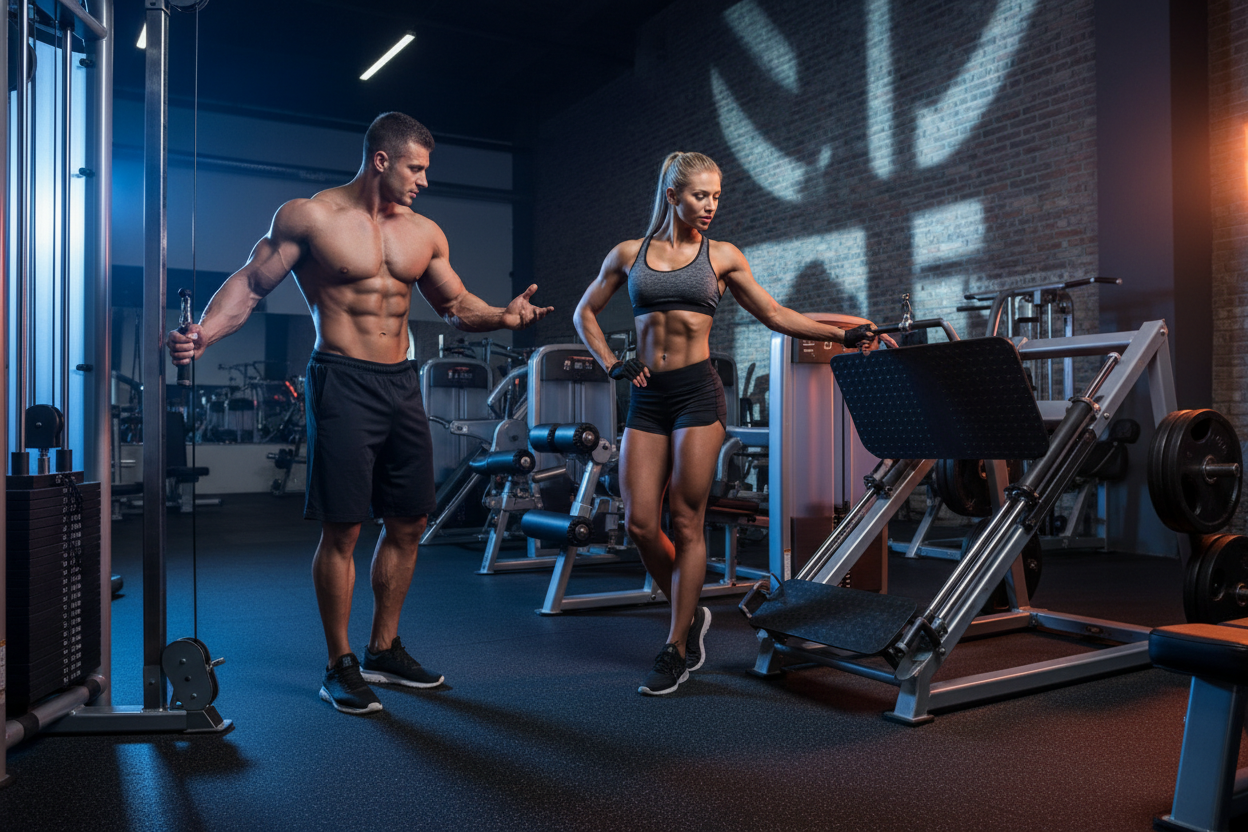
When learning workout machines and how to use them, the leg press is a staple. Sit with your back flat against the pad. Place your feet shoulder-width apart. Unlock the safety handles (usually by the hips). Lower the weight until your legs form a 90-degree angle. Never lock your knees out at the top; keep a soft bend to protect your joints.
My Training Log: Real Talk on Machine Feel
I’ve spent thousands of hours pulling cables and pushing levers, and here is something the manuals won't tell you: not all machines are maintained equally.
I remember walking into a basement gym to use a seated row. I set up perfectly, aligned my chest, and pulled. The movement was gritty, like there was sand in the gears. The cable dragged, and the resistance profile was jerky. It threw off my mind-muscle connection completely.
Another thing to watch out for is the "vinyl sweat slip." On a hot day, if you're doing a heavy lying leg curl, you will slide down the bench as you curl the weight up because the vinyl gets slick. I learned the hard way that you have to grip the handles deathly tight, not to help the lift, but just to anchor your body to the pad. If the machine feels "off" or the cable casing is cracked, skip it. No pump is worth a snapped cable.
Conclusion
Understanding how gym machines work isn't about memorizing physics; it's about understanding that these tools are built to help you fail safely. They stabilize the load so you can focus purely on effort. Start with the adjustment points, align your joints, and control the tempo. Once you master the mechanics, the gym floor stops being a place of confusion and becomes a playground for progress.
Frequently Asked Questions
Are gym machines better than free weights?
Neither is strictly "better." Gym machine benefits include safety and isolation, making them great for hypertrophy (muscle growth) and beginners. Free weights require more stabilization and engage more muscle groups. A balanced program usually includes both.
How do I know if the seat height is correct?
On chest and shoulder machines, the handles should generally align with the middle of your chest or the front of your shoulders. If you feel excessive strain in your shoulder joints rather than your muscles, the seat is likely too low.
What is a tip machine gym users should know?
If you see a small extra weight (usually 5lbs or 2.5kg) that slides onto the stack, use it. This is a "micro-load" adjustment. It allows you to progress gradually when the jump between the main plates is too heavy.