How free weight exercises for shoulders Exposed My Fake Strength
I spent five years in a commercial gym thinking I was a beast because I could pin-load the shoulder press machine for three plates on each side. Then I built my garage gym, bought a real barbell, and realized I had been lying to myself. free weight exercises for shoulders are the ultimate lie detector. If you want to know how strong you actually are, step off the tracks and pick up something that isn't bolted to a floor.
Quick Takeaways
- Machines stabilize the weight for you; free weights force your body to do the work.
- The Standing Barbell OHP is the king of overhead strength and core stability.
- Rear delts are the most neglected part of the shoulder but crucial for joint health.
- Controlling the eccentric (lowering) phase is the secret to making free weights feel like high-end machines.
The Day I Realized My Machine Press Was Useless
I remember the first day I set up my rack. I loaded a barbell with 225 lbs—my usual working weight on the Smith machine—and got under it. I didn't even get one rep. The bar didn't just go up and down; it wobbled, tilted, and nearly stapled me to the floor. I had 'fake strength.' I had the prime movers, but my stabilizers were non-existent.
While Weight Lifting Machines are fantastic for pure hypertrophy and isolation, relying on them exclusively for your shoulders is a recipe for disaster. You end up with big delts and a rotator cuff made of wet tissue paper. When I switched to a routine strictly using free-floating implements, my joint pain vanished and my actual, usable power skyrocketed.
Why You Need to Get Off the Tracks
The human shoulder is the most mobile joint in the body. It is a ball-and-socket setup designed to move in three dimensions. When you use fixed-path equipment, you are forcing a 3D joint into a 2D movement. This creates 'track wear' on your cartilage. By switching to a shoulders workout free weights approach, you allow your body to find its natural path of least resistance.
This isn't just about safety; it's about recruitment. When you press a dumbbell, your brain is firing thousands of signals per second to the tiny stabilizer muscles just to keep the weight from falling sideways. That extra work translates to more caloric burn and a much thicker, more '3D' look to the deltoid caps that machines just can't replicate.
The 3 Lifts That Rebuilt My Delts
I stripped my routine down to these three movements. No cables, no cams, no pulleys. Just gravity and iron. These three exercises hit every head of the deltoid while forcing the rest of my body to stay rigid.
The Standing Barbell Overhead Press
This is the gold standard. Standing up and pressing a bar over your head forces your glutes, core, and quads to lock down like a tripod. It is a full-body movement masquerading as a shoulder exercise. If your core is weak, you will know the second that bar clears your forehead.
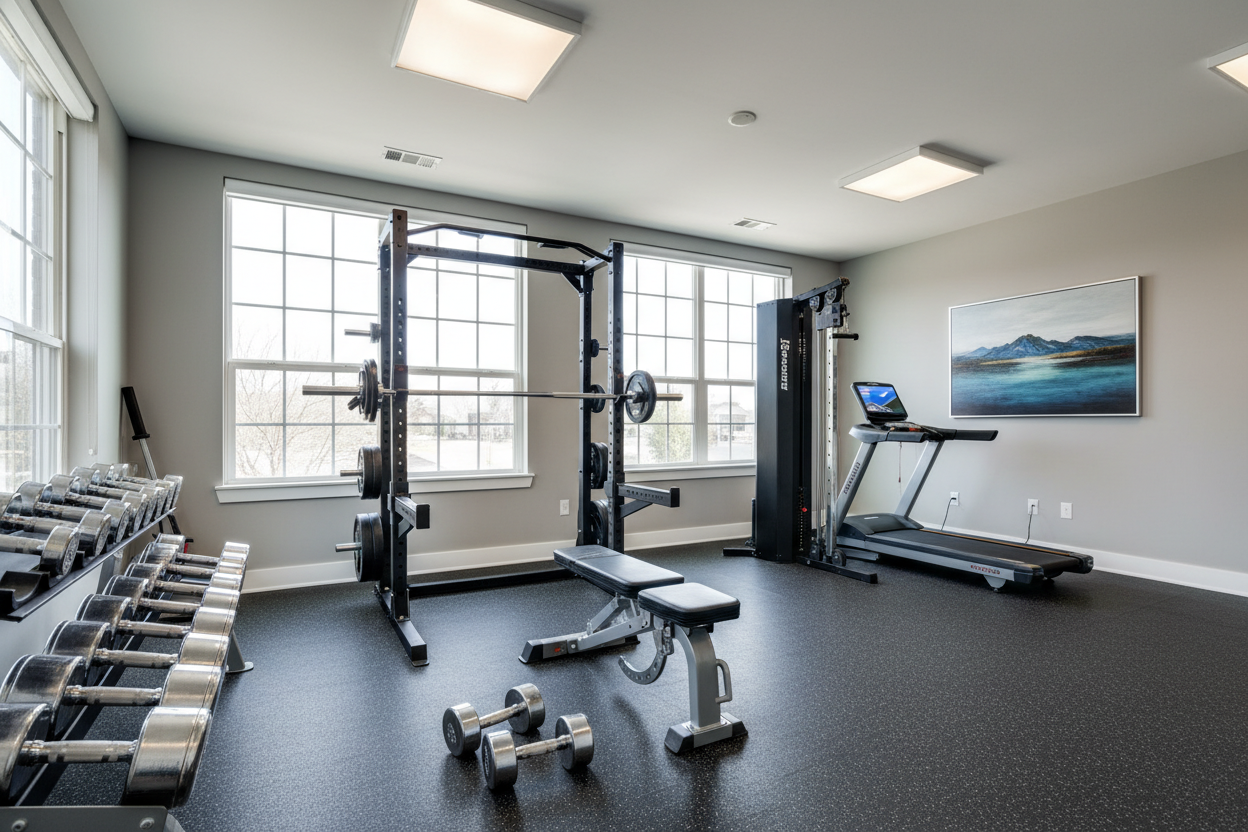
I recommend using a Gxmmat X6 Power Rack Weight Bench Package for this. Setting the J-hooks at clavicle height inside a sturdy rack is a must. It allows you to step into the bar and get a proper shelf across your front delts before you even start the lift. Plus, having those safety spotter arms means you can push to failure without worrying about the bar crashing through your floor.
Chest-Supported Dumbbell Rear Delt Rows
Most guys have 'gorilla posture'—shoulders slumped forward from too much benching. This exercise is the cure. Instead of the reverse pec-deck, I use an incline bench. It forces the rear delts to work without letting you use your lower back to swing the weight up.
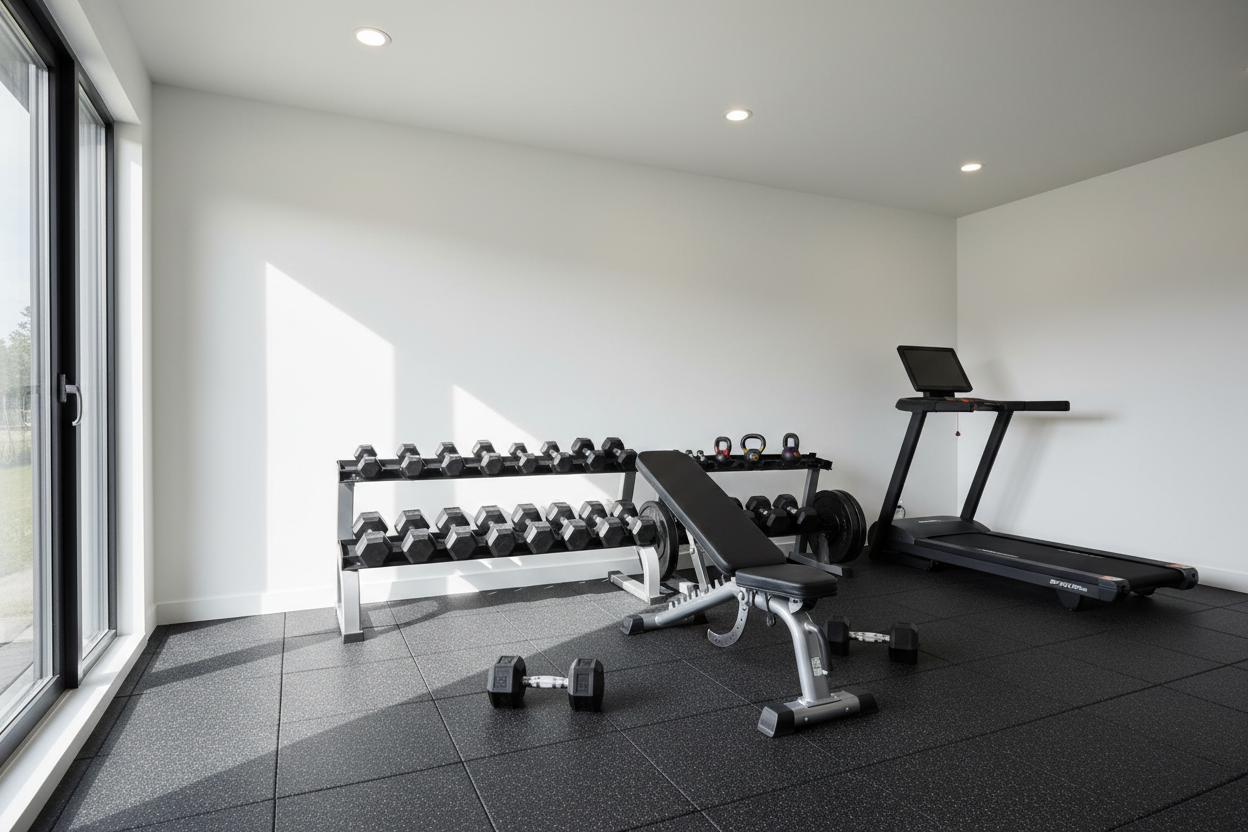
I usually set my Gxmmat Adjustable Weight Bench to a 45-degree angle. Laying chest-down on the pad completely eliminates 'body english.' When you pull those dumbbells back, it is 100% rear delt and rhomboid. It’s a humbling movement; you’ll likely have to drop 20 lbs from what you think you can lift, but the growth is worth the ego hit.
The Unilateral Dumbbell Arnold Press
This is my favorite 'functional' builder. By rotating the palms from facing you to facing away during the press, you engage the rotator cuff through its full range of motion. Doing it unilaterally (one arm at a time) adds a massive oblique challenge because you have to fight to keep your torso from leaning.
How to Make Your Dumbbells Feel Like Machines
The one thing machines do well is provide constant tension. To get that with free weights, you have to be intentional. Stop clanking the weights at the top of a press—that actually takes the tension off the muscle. Instead, stop just short of lockout and focus on a four-second eccentric phase on the way down.
If you master the tempo, you can get more growth out of a 40-lb dumbbell than a guy swinging 80s with bad form. For a deeper look at these techniques, check out my guide on How to Make Free Weight Exercises for Hypertrophy Feel Like Machines. It’s all about time under tension and eliminating momentum.
Putting It Together: A Real-World Routine
You don't need a dozen different shoulder free weights exercises to see results. I recommend a simple 'Heavy-Medium-Light' approach twice a week. Start with the Barbell OHP for 5 sets of 5 to build that raw power. Follow it up with the Arnold Press for 3 sets of 10-12 to get that rotational health.
Finish your session with the chest-supported rows for high reps (15-20) to pump blood into the rear delts and stabilize the joint. This simple template has done more for my shoulder width and health than any $5,000 commercial machine ever did. Stop trusting the machine and start trusting the iron.
FAQ
Are free weights better than machines for shoulder pain?
Usually, yes. Machines lock you into a fixed path that might not suit your specific anatomy. Free weights allow your joints to move naturally, which often reduces the 'impingement' feeling people get on machines.
Can I build big shoulders with just dumbbells?
Absolutely. Dumbbells actually allow for a greater range of motion than a barbell. However, the barbell is better for loading maximal weight to build raw, 'fake-strength-shattering' power.
How often should I train shoulders with free weights?
Twice a week is the sweet spot. Your delts are involved in every chest and back movement, so they don't need a massive amount of dedicated volume to grow—they just need high-quality, heavy stimulus.