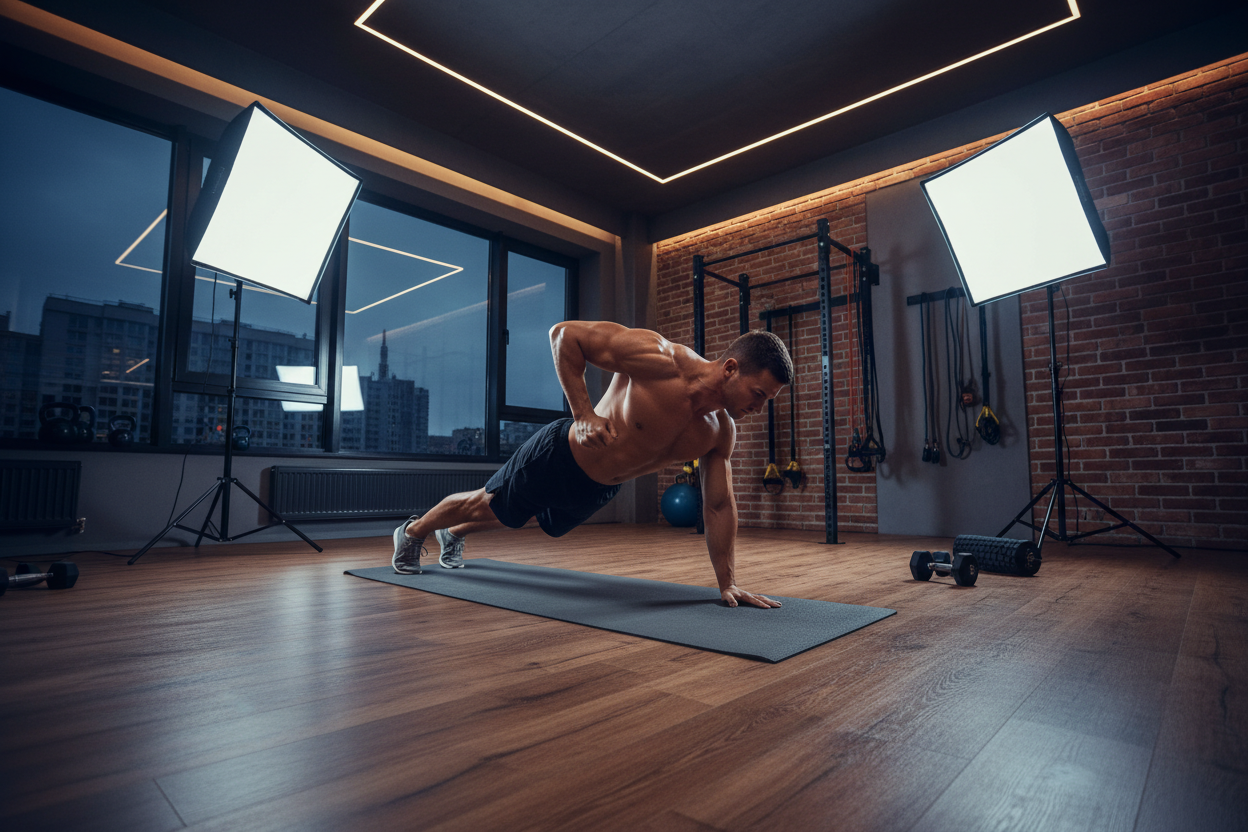
Home Workouts That Work: The Definitive Guide for Real Results
Let’s be honest: finding home workouts that work often feels like searching for a needle in a haystack of influencers doing endless burpees. You have likely tried a few apps or YouTube videos, only to find yourself bored, plateauing, or simply not seeing the aesthetic changes promised. The problem usually isn't the location; it's the programming.
A good workout at home requires the same physiological principles as a session in a high-end commercial facility. You don't need a sea of chrome machines, but you do need structure, intensity, and a refusal to treat your living room training as "lesser than." This guide cuts through the fluff to establish a baseline for building muscle and burning fat without leaving your house.
Key Takeaways: The Pillars of Home Training
- Progressive Overload is Non-Negotiable: You must make the at home routine harder over time by adding reps, decreasing rest, or increasing resistance.
- Compound Movements Rule: The best home workouts focus on squats, push-ups, lunges, and rows rather than isolation exercises.
- Consistency Over Intensity: Daily at home workouts (or at least 4x a week) beat a sporadic, brutal session once a week.
- Environment Matters: Dedicating a specific space creates the mental shift needed for fitness training at home.
Why Most At-Home Routines Fail
The primary reason people struggle to find good fitness routines at home is a lack of resistance. In a gym, adding 5lbs to the bar is easy. In your living room, you might be limited to a single pair of dumbbells or just your body weight.
To counter this, you must manipulate other variables. If you can't add weight, you must increase the time under tension or the mechanical disadvantage. For example, if a standard push-up is too easy, elevating your feet turns it into a great workout at home for the upper chest. You have to be creative to keep the stimulus high.
Structuring the Best Home Exercise Routine
Randomness is the enemy of results. A good at home exercise routine should follow a split structure. For most people, an Upper/Lower split or a Full Body routine performed 3-4 times a week is optimal.
Here is a blueprint for an effective exercise set at home:
- Push: Push-ups (variations), Overhead Press (using bands or jugs), Dips.
- Pull: Doorframe Rows, Pull-ups (if you have a bar), Band Pull-aparts.
- Legs: Bulgarian Split Squats, Glute Bridges, Walking Lunges.
- Core: Planks, Leg Raises.
Equipment: Essentials vs. Luxuries
While you can get a good home workout with zero gear, a few strategic purchases elevate the experience. You don't need a full rack to have workouts at home gym quality.
The Trinity of Home Gear:
- Resistance Bands: Versatile and space-saving. They are essential for good workouts from home because they provide constant tension.
- Adjustable Dumbbells: If you have the budget, these are the best way to workout from home for hypertrophy.
- A Sturdy Chair or Bench: Necessary for step-ups and dips.
If you are looking for at home workout ideas that require no money, look at calisthenics. However, be prepared to master difficult variations like pistol squats to keep the intensity high.
My Personal Experience with Home Workouts That Work
I want to strip away the polish for a second. When I first transitioned from a commercial gym to training in my garage, I hated it. The best at home workouts on paper felt miserable in practice.
I remember specifically buying a cheap set of adjustable dumbbells—the kind with the spin-lock collars. The knurling was so aggressive it felt like a cheese grater against my palms, and the spin-locks would constantly loosen with a metallic clank every time I did a hammer curl. It was distracting and annoying.
But the real breaking point was the "living room lunge." I didn't account for the carpet. Doing sliding lunges in socks sounds like a great home workout idea until you generate enough friction to give yourself a rug burn on the ball of your foot. I learned the hard way that wearing shoes, even indoors, changed my mindset. It stopped feeling like "playtime" and started feeling like training. That mental switch—putting on my gym shoes even though I was standing three feet from my couch—was the moment my home workouts actually started working.
Conclusion
What is the best workout at home? It is the one you actually do with intent. Stop looking for secret hacks. The top workout at home is built on the boring basics: push, pull, squat, hinge, and carry. Apply progressive overload, respect the recovery process, and treat your living room with the same respect you'd give a squat rack.
Frequently Asked Questions
What are good at home workouts for small spaces?
If you have limited room, the best home workouts utilize vertical space. Think jump squats, burpees, and standing overhead presses with bands. You don't need to sprawl out to get an effective stimulus.
Can I build muscle with just bodyweight exercises?
Yes, but it requires high volume and difficult variations. Good home workouts for muscle growth must push near failure. You will need to progress from standard push-ups to archer push-ups or handstand push-ups to continue growing.
How often should I train at home?
For daily at home workouts, keep the sessions shorter (20-30 minutes). If you prefer longer sessions (45-60 minutes), aim for 3 to 4 days a week to allow for recovery. Overtraining is still possible, even with bodyweight.