Home Gym Flooring Over Carpet Reddit: What Actually Works
Setting up a home gym in a spare bedroom or finished basement often means dealing with existing plush or low-pile carpet. Squatting heavy on a squishy surface is a recipe for rolled ankles, and dropping weights directly on your landlord's pristine rug is a quick way to lose your security deposit. If you've been scouring home gym flooring over carpet reddit threads late at night, you already know the confusion: do you use horse stall mats, plywood, or interlocking tiles?
Lifting on an unstable surface compromises your power output and safety. This guide breaks down the most reliable, community-tested solutions to protect both your floors and your joints, helping you build a rock-solid foundation for your home gym.
Key Takeaways
- Never put soft foam over soft carpet: Stacking EVA foam tiles on top of plush carpet creates a dangerous, unstable lifting surface.
- The plywood subfloor is king: Adding a rigid layer of OSB or plywood between your carpet and rubber mats distributes weight evenly and prevents carpet damage.
- Carpet pile matters: Low-pile commercial carpet is much easier to work with than high-pile shag, which requires thicker wood substrates.
- Stall mats are the gold standard: 3/4-inch vulcanized rubber horse stall mats offer the best durability and impact absorption for the price.
Why Soft Flooring on Carpet is a Safety Hazard
When researching a home gym on carpet reddit setup, the most common mistake beginners make is buying cheap, interlocking foam puzzle mats and throwing them right over their bedroom carpet. While this might be fine for light yoga or stretching, it is disastrous for strength training.
The "Squish" Factor
When you unrack a heavy barbell for squats or overhead presses, your feet need to root into the ground. If your flooring compresses under the load, your ankles will wobble to overcompensate. This energy leak not only reduces the amount of weight you can lift, but it drastically increases the risk of lower body injuries.
Carpet Indentations and Tearing
Heavy equipment like power racks and treadmills will sink through soft mats and permanently crush the carpet fibers underneath. Even worse, the lateral friction from dynamic movements (like burpees or kettlebell swings) can cause the mats to shift and pull at the carpet, eventually tearing the backing.
The Ultimate Solution: The Subfloor Platform
To create a commercial-gym feel over carpet, you need to distribute the pinpoint pressure of your equipment and body weight across a wider surface area. The best way to do this is by building a simple, affordable subfloor.
Building the Platform
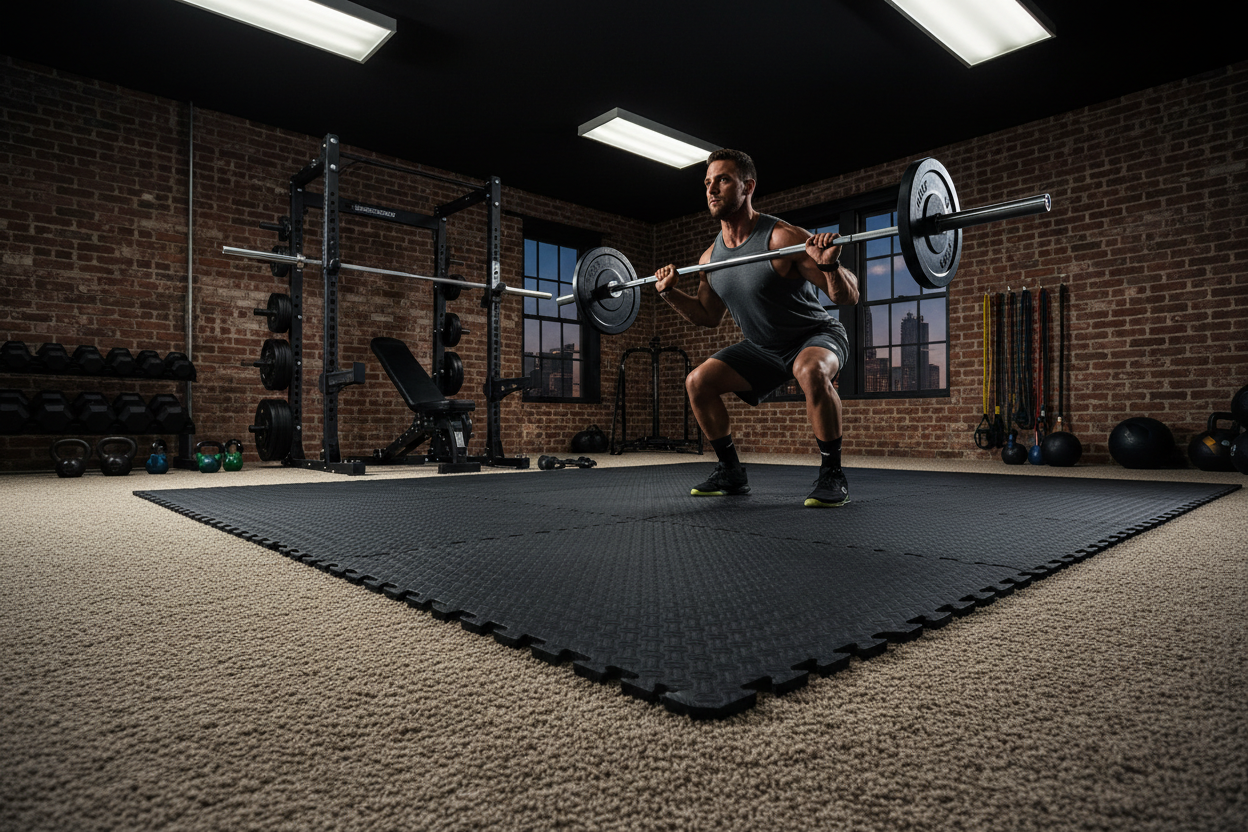
The standard Reddit-approved method is the "plywood sandwich." You lay down a protective layer of plastic sheeting (to prevent moisture buildup and protect the carpet from wood splinters), followed by one or two layers of 5/8-inch or 3/4-inch OSB (Oriented Strand Board) or plywood. Finally, you top the wood with 3/4-inch rubber horse stall mats.
This rigid wood layer acts as a bridge, completely neutralizing the squishiness of the carpet underneath and giving you a rock-solid base for heavy deadlifts and power racks.
Transitioning Spaces: Hard Surface Considerations
Dealing with Concrete
If you eventually move your setup to the garage or an unfinished basement, your flooring strategy will change. When looking into home gym flooring over concrete reddit solutions, the wood subfloor becomes optional unless you are doing Olympic weightlifting. For general strength training on concrete, you can lay 3/4-inch rubber stall mats directly on the floor. However, you must tape the seams with heavy-duty gorilla tape to prevent them from shifting, and consider a moisture barrier if your concrete tends to sweat.
From Our Gym: Honest Take
When I first set up my spare-bedroom gym in a rental house, I completely ignored the advice I read online. I threw down some 1/2-inch rubber tiles directly over medium-pile carpet and set up my half-rack. It was a nightmare. Within a week, my rack had sunk unevenly, making my pull-up bar noticeably slanted. Every time I deadlifted, the mats shifted, leaving black scuff marks on the beige carpet fibers.
I finally caved, went to the local hardware store, and bought two sheets of 3/4-inch plywood to place under my rubber mats. The difference was night and day. My feet felt completely planted during heavy squats, the rack leveled out perfectly, and when I moved out two years later, a quick vacuum was all it took to make the carpet look brand new. Don't skip the wood layer—it's worth the extra $60.
Frequently Asked Questions
Can I put rubber stall mats directly over my carpet?
You can, but it's only recommended if you have very tight, low-pile commercial carpet. On standard residential plush carpet, even heavy 100lb stall mats will sink and shift under heavy loads, creating an uneven surface.
Will a home gym ruin my carpet?
It will if you don't distribute the weight properly. Heavy racks and dropped weights will crush carpet padding and snap the fibers. Using a plywood subfloor under your mats eliminates this risk entirely.
What is the cheapest flooring option for a carpeted room?
The most cost-effective, safe method is laying down a single sheet of 5/8-inch OSB board (around $15-$20) topped with a single 4x6 foot 3/4-inch horse stall mat (around $50) specifically for your lifting zone, rather than wall-to-wall coverage.