
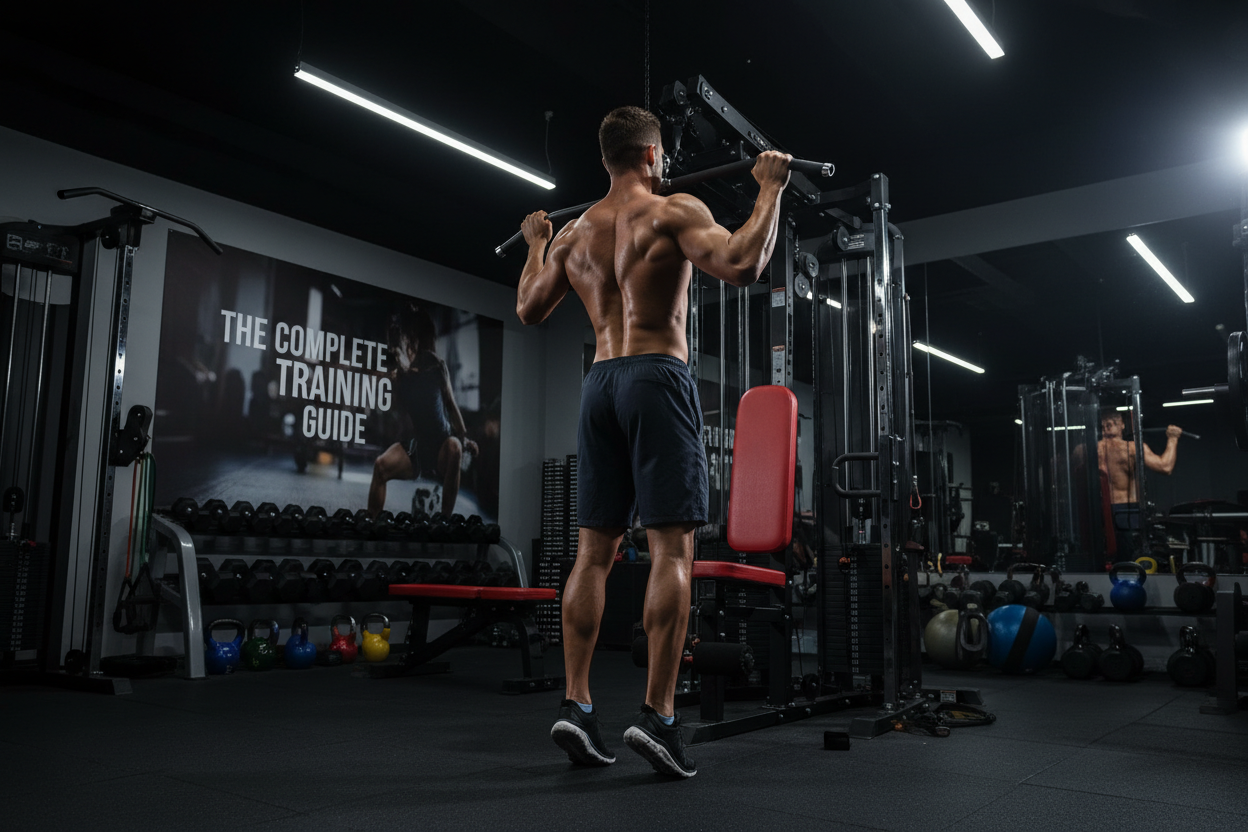
Home Gym Equipment Workouts: The Complete Training Guide
It happens to the best of us: you invest in a comprehensive multi-station setup, build it in your basement, and then find yourself doing the exact same three chest presses and lat pulldowns every single week. If you are struggling to see progress, you do not need more gear—you need better home gym equipment workouts.
Whether you are dealing with a compact corner setup in an apartment or a fully decked-out garage gym, understanding how to properly sequence and execute movements on your machine is the difference between a frustrating plateau and real strength gains. This guide will walk you through how to structure your training, utilize every cable attachment, and get the maximum return on your home investment.
Key Takeaways
- Maximize Versatility: A single weight stack can target every major muscle group if you understand proper attachment usage and body positioning.
- Progressive Overload: Consistently increasing weight, reps, or time under tension is crucial for home gym success.
- Space Efficiency: Standard multi-station machines require roughly 6x6 feet of clearance for full range of motion.
- Maintenance Matters: Smooth cable mechanics directly impact muscle activation and joint safety during your workouts.
Maximizing Your Multi-Station Setup
Many home lifters barely scratch the surface of their equipment's capabilities. A standard all-in-one trainer is designed to replicate the commercial gym experience, but only if you know how to use it creatively.
Essential Movements
To truly see results, you need a rotation of core multi gym machine exercises that target the body comprehensively. Instead of just standard seated presses, incorporate standing cable chest flyes, low-pulley rows, and cable pull-throughs. By adjusting the pulley height and swapping out a lat bar for a rope or D-handle, you can shift the angle of resistance and hit muscle fibers that basic presses miss.
Structuring Your Routine for Progression
Randomly pulling cables will yield random results. To build muscle and burn fat, your programming needs structure.
Programming Your Sessions
When designing workouts for home gym machine systems, an upper/lower split or a push/pull/legs (PPL) routine works incredibly well. For instance, on a pull day, you can sequence wide-grip lat pulldowns, seated cable rows, and straight-arm pulldowns. This keeps you stationed at the machine, minimizing transition time and keeping your heart rate elevated.
Execution and Form
When mastering various exercises on home gym machine setups, focus heavily on your eccentric control (the lowering phase of the weight). Because cable systems provide constant tension—unlike free weights where tension drops at the top or bottom of a movement—a slow, three-second negative will drastically increase muscle hypertrophy without requiring you to max out the weight stack.
From Our Gym: Honest Take
When I first set up a standard selectorized multi-station in my own garage gym, I quickly realized that the 160-pound weight stack felt much lighter on leg days than it did for upper body work. To counter this without buying a whole new rig, I started incorporating unilateral (single-arm or single-leg) movements like single-leg cable kickbacks and one-arm rows. It completely renewed the challenge.
One minor caveat with most entry-level home machines is the cable friction during fast, explosive movements. I highly recommend treating the guide rods with a silicone-based lubricant once a month. It takes two minutes, but it completely transformed the smoothness of my cable flyes and triceps pushdowns, making a $500 machine feel like a $2,000 commercial unit.
Frequently Asked Questions
Are home gym machines effective for building muscle?
Absolutely. As long as you apply progressive overload and utilize a full range of motion, the constant tension provided by cable-driven home gyms is excellent for hypertrophy and joint-friendly strength building.
How much space do I actually need for a multi-station home gym?
While the footprint of the machine might only be 4x5 feet, you need to account for your body's extension. Plan for at least a 6x6 foot area, and ensure you have a minimum of 7.5 feet of ceiling clearance for lat pulldowns and overhead extensions.
What is the best way to maintain my home gym equipment?
Wipe down the upholstery after each use to prevent cracking from sweat. Check the cable tension monthly, inspect the carabiners for wear, and regularly lubricate the weight stack guide rods with a dry silicone spray to ensure fluid movement.


