Home Gym Equipment Setup: Blueprint for the Perfect Space
Tired of waiting for the squat rack at a crowded commercial facility? Building your own personal iron paradise is the dream, but figuring out the right home gym equipment setup can feel overwhelming. Between measuring floor space, managing budgets, and decoding equipment specs, it is easy to make costly mistakes. Whether you are working with a tight budget in a spare bedroom or outfitting a massive two-car garage, this guide will help you design a highly functional training space without wasting money on gear you will never use.
Key Takeaways
- Measure your ceiling height and floor space before buying any power rack or cardio machine.
- Invest heavily in a quality barbell and versatile weight plates before buying specialized machines.
- High-density rubber flooring is non-negotiable for protecting your home's foundation and your joints.
- A well-planned workout set up at home saves an average of 120 hours of commute time annually.
Space Planning: Blueprinting Your Zone
Conquering the Small Gym Garage
When dealing with a small gym garage, verticality is your best friend. Look for folding wall-mounted racks that protrude less than 5 inches when stowed. A nice home gym setup does not require 500 square feet; it requires smart storage solutions like wall-mounted pegboards for accessories and vertical barbell holders. Always map out your floor plan with painter's tape before clicking 'checkout'.
Spare Bedrooms and Basements
If your gym setup for home is indoors, noise, ceiling height, and floor loading become primary concerns. Opt for urethane or high-quality bumper plates to dampen sound, and always lay down 3/4-inch horse stall mats. If your basement ceilings are under 8 feet, look for 'shorty' power racks specifically designed for low-clearance environments.
Choosing the Right Gear
The Foundation of a Weight Set Up for Home Gym
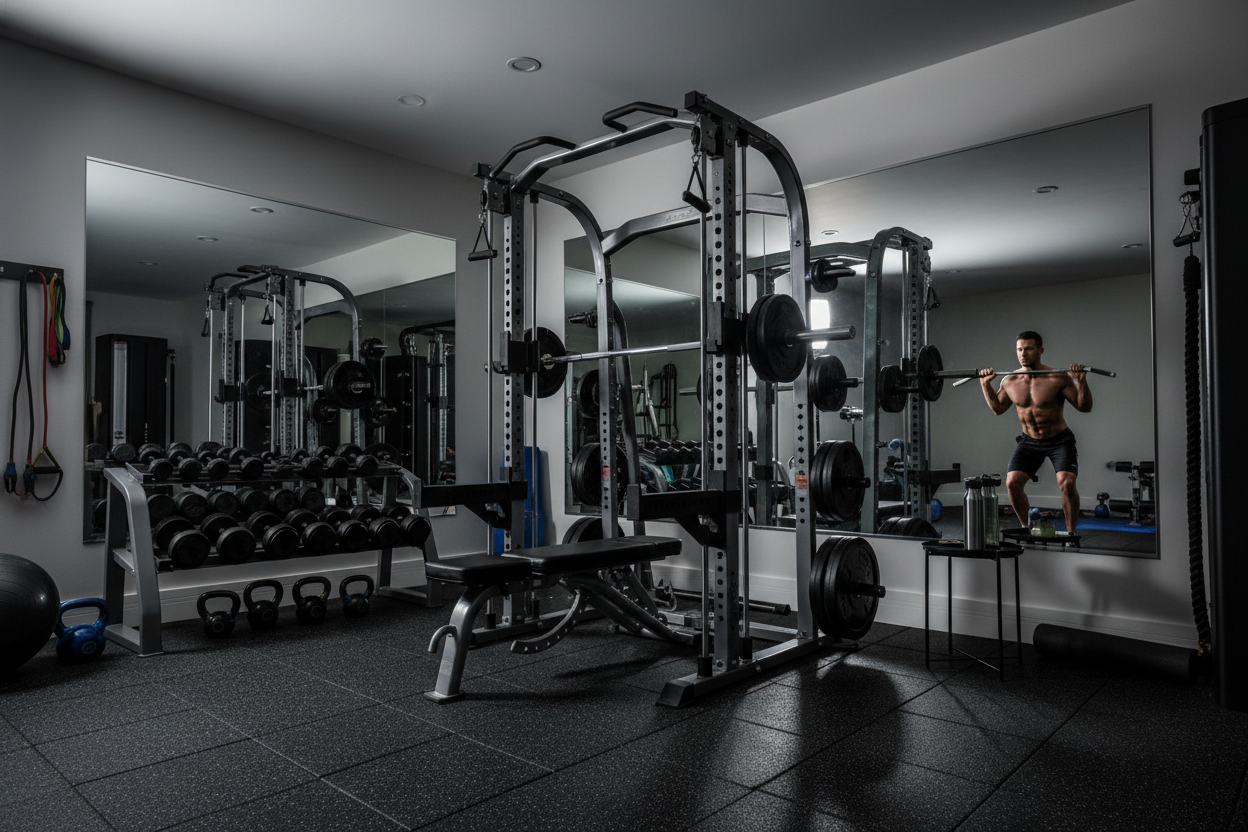
To achieve the perfect home gym setup, start with the 'Big Three': a heavy-duty power rack, an adjustable FID (Flat/Incline/Decline) bench, and an Olympic barbell. This foundational weight set up for home gym allows you to perform squats, bench presses, deadlifts, and overhead presses safely. Look for a rack with at least a 1,000-pound weight capacity and 3x3-inch 11-gauge steel uprights for commercial-grade stability.
From Our Gym: Honest Take
When I first built my workout set up at home, I made a classic rookie mistake: I skimped on flooring to afford a fancier cable crossover machine. Within six months, my concrete garage floor had visible micro-cracks from deadlifts, and the cheap puzzle mats I bought were sliding apart during heavy split squats. I had to tear everything down, patch the concrete, and install 3/4-inch vulcanized rubber mats. Additionally, at 6 foot 1, I bought a standard 84-inch power rack without factoring in the 2-inch lifting platform underneath it—leaving me unable to do strict overhead presses inside the cage. Always measure your true clearance, factoring in your flooring depth and your own height!
Frequently Asked Questions
How much space do I actually need for a gym setup for home?
For a functional strength training space, a 10x10 foot area (100 square feet) is the sweet spot. This provides enough room for a standard power rack, a bench, and adequate clearance to load a 7-foot Olympic barbell on both sides.
Is a dedicated weight set up for home gym worth the initial cost?
Absolutely. While the upfront cost can range from $1,000 to $3,000 for quality gear, eliminating a $50 to $100 monthly gym membership and the associated commute costs means your home gym pays for itself in about two to three years.
What is the best way to maintain equipment in a garage?
Humidity is the enemy of raw steel. Insulating your garage door makes a massive difference. Pair that with a high-velocity floor fan, a portable dehumidifier, and a monthly wipe-down of your barbells with 3-in-One oil to keep the knurling rust-free.