Hammer Strength: The Definitive Guide for Elite Training
You walk into a serious bodybuilding club, and the atmosphere changes. It isn't just about the loud music or the heavy dumbbells; it’s the machinery. Specifically, the plate-loaded beasts lining the walls. If you are serious about hypertrophy, you have likely encountered the intersection of the **hammer and strength** training concepts. But we aren't just talking about a tool; we are talking about a brand that revolutionized how athletes move weight.
Many lifters plateau because they rely solely on gravity (free weights) or fixed-path pulleys (standard cables). The human body doesn't move in straight lines, and it doesn't move symmetrically all the time. This is where Hammer Strength changed the game. It bridges the gap between the raw feel of free weights and the safety of a machine, creating a stimulus that is hard to replicate.
Key Takeaways
- ISO-Lateral Technology: Unlike standard machines, Hammer Strength allows each arm or leg to move independently, preventing your dominant side from compensating for the weaker one.
- Converging and Diverging Arcs: The equipment mimics natural joint movement rather than forcing a linear path, reducing shoulder and knee strain.
- Plate-Loaded Focus: While they offer selectorized stacks, the brand is famous for plate-loaded gear that offers a distinct strength curve.
- Ownership: Hammer Strength is owned by Life Fitness, representing their hardcore, performance-oriented line.
What Is Hammer Strength?
Founded by Gary Jones in 1989, Hammer Strength was the first to explore the ergonomic advantages of using computer-aided design (CAD) to build gym equipment. The goal wasn't just to build a hammer machine gym setup; it was to match the machine's movement to the body's natural biomechanics.
Before this, most machines forced you into a fixed, vertical, or horizontal plane. Jones realized that when you press, your hands naturally come together (converge). When you pull, they might move apart or sweep down. By accommodating this natural arc, hammer strength equipment allows for heavier loading with less risk of injury.
The Core Advantage: ISO-Lateral Technology
If you ask any bodybuilder what is hammer strength famous for, the answer is ISO-Lateral technology. This is the defining feature of the brand. On a standard chest press machine, if your right side is stronger, it can push the bar up even if your left side is lagging. This creates muscle imbalances.
With hammer strength machines, the lever arms are independent. You cannot cheat. If your left pec is weak, the left handle isn't going up. This makes it the premier tool for correcting symmetry issues. Whether you are using hammer strength leg equipment or a chest press, you get the isolation of a dumbbell with the stability of a machine.
Hammer Strength vs Life Fitness: What’s the Difference?
Since Life Fitness owns Hammer Strength, there is often confusion between the two. Think of it this way: Life Fitness is generally associated with selectorized equipment (pin-loaded weight stacks) and cardio machines found in hotels and general fitness clubs. They are designed for ease of use and quick adjustments.
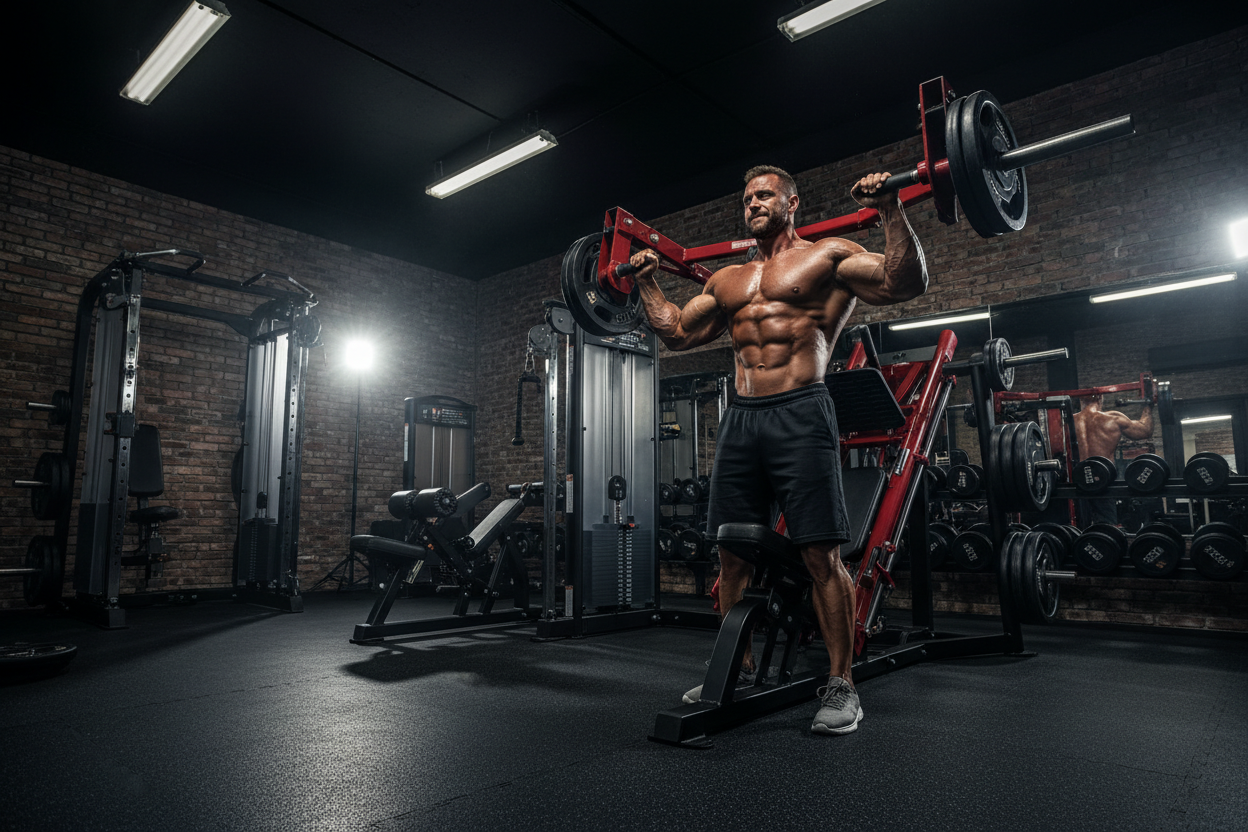
Hammer Strength fitness equipment, particularly the plate-loaded line, is designed for performance centers, athletic training facilities, and serious bodybuilding gyms. It requires you to physically load plates (Olympic disks). The resistance profile feels heavier and more "raw" than the smooth, consistent tension of a hammer strength cable machine or functional trainer.
Top Machines to Look For
The ISO-Lateral Chest Press
Perhaps the most iconic piece of hammer strength weight equipment. It allows for a deep stretch at the bottom and a hard contraction at the top without the shoulder impingement common in flat bench pressing.
The Hammer Strength Leg Machine (Leg Press)
Unlike a standard 45-degree leg press, the Hammer Strength linear leg press or the ISO-Lateral leg extension offers a unique strength curve. It keeps tension on the quads throughout the movement, rather than letting the weight "deload" at the top.
The Elusive Pullover
If you see a hammer strength pullover machine for sale, grab it. It was popularized by Dorian Yates and is considered one of the best back developers ever made. It removes the biceps from the equation, isolating the lats completely.
Building a Hammer Strength Home Gym
Bringing this gear home is a commitment. These machines have a massive footprint. A hammer strength functional trainer is often a better choice for home garages because it combines multiple movements into one unit. However, for those with space, hunting down used maquinas hammer (as they are known globally) or refurbished units is often the only way to afford them, as brand-new units are priced for commercial facilities.
My Training Log: Real Talk
I remember the first time I used the Hammer Strength ISO-Lateral High Row. I’d spent years using standard cable pulldowns, thinking my back development was decent. I loaded up three plates on each side of the Hammer machine, sat down, and strapped in.
The first rep was a wake-up call. It wasn't just the weight; it was the path of motion. With cables, the weight stack sometimes swings or carries momentum. On the Hammer, the dead weight sensation was immediate. But the specific detail that stuck with me was the handle texture. It wasn't that aggressive, sharp knurling you find on a powerlifting bar; it was a smoother, rubberized grip that got incredibly slick once I started sweating. I had to stop mid-set to chalk up—something I never did on machines.
Furthermore, the independent arms humbled me. My right side locked out easily, but my left side stalled three inches from the bottom. That wobble you feel when one arm fails while the other is still going? That’s the feeling of true isolation. You can't fake it on these machines.
Conclusion
Hammer Strength training isn't just about moving heavy metal; it's about moving it correctly. By aligning the machine's mechanics with your anatomy, you can push past failure safely. Whether you are looking to outfit a commercial facility or just want to know why the big guys gravitate toward these machines, the answer lies in the arc. It’s the closest thing to lifting free weights, without the danger of dropping a barbell on your neck.
Frequently Asked Questions
Who owns Hammer Strength?
Hammer Strength is owned by Brunswick Corporation's Life Fitness division. They acquired the brand in 1997, but the original designs by Gary Jones remain the foundation of the equipment's biomechanics.
Is Hammer Strength better than free weights?
It is not necessarily "better," but it is different. Free weights recruit more stabilizer muscles, while hammer strength machines offer greater stability, allowing you to focus purely on output and hypertrophy without worrying about balancing the load.
Why is Hammer Strength equipment so expensive?
The cost comes from the commercial-grade steel (usually 11-gauge), the patented motion technology, and the durability. These machines are built to survive 24/7 abuse in pro athletic facilities, making them significantly more robust than standard home gym gear.