Hammer Strength Accessories: The Definitive Compatibility Guide
You didn't invest in a Hammer Strength rig just to hang a towel on it. You bought it because it is the gold standard of biomechanics and durability. However, a base rack is just a frame until you optimize it. The right hammer strength accessories differ from standard gym gear because they aren't just about adding exercises; they are about matching the specific force curves and structural integrity of the HD Elite or Athletic series.
Many gym owners and athletes make the mistake of thinking all steel is created equal. It isn't. Mixing incompatible attachments or ignoring the specific modularity of these racks limits your training potential. Let's break down how to actually use this equipment to its full capacity.
Key Takeaways
- Series Compatibility Matters: HD Elite accessories generally do not fit HD Athletic rigs due to upright size differences (3x3 vs. other dimensions).
- Biomechanics First: Genuine attachments are designed to maintain the center of gravity and stability of the base unit.
- Locking Mechanisms: Look for the proprietary "Spider Gusset" or magnetic locking pins that define Hammer Strength safety.
- Resale Value: Branded hammer strength attachments hold value significantly better than generic alternatives.
Understanding the Ecosystem: HD Elite vs. HD Athletic
Before buying anything, you must identify your framework. Hammer Strength splits its rack ecosystem primarily into the HD Elite and HD Athletic lines. This is where most confusion happens.
The HD Elite is the heavy-duty standard found in NCAA weight rooms. It uses specific heavy-gauge steel uprights. If you try to force a generic 3x3 attachment onto this, you risk damaging the finish or, worse, compromising the locking pin stability. The HD Athletic series is more modular but has its own set of spacing rules.
The "Play" Factor
Cheap attachments wobble. When you are moving 400+ pounds, a millimeter of play in a J-hook or a dip handle feels like an inch. Hammer Strength engineers their accessories with tight tolerances. This reduces the kinetic energy wasted on stabilizing the equipment, allowing you to direct that energy into the lift.
Essential Upgrades for Performance
Once compatibility is sorted, you need to prioritize gear that expands functionality without cluttering the floor.
The Power Pivot (Landmine)
This isn't just a tube on a hinge. The official attachment integrates directly into the rack's base or uprights. It allows for rotational power work which is critical for athletes. Because it anchors to the heavy frame, you don't get the "slide" common with bumper-plate landmines.
Nordic Hamstring Attachment
Posterior chain development is non-negotiable. The single-pad Nordic attachment for these racks is superior because of the density of the foam. It doesn't compress to the metal core under heavy load, saving your ankles from bruising during eccentric lowering phases.
Flexible Bar Catches
Standard safety straps are fine, but the flexible bar catches are a game-changer for bench pressing alone. They absorb the impact of a failed lift rather than stopping the bar dead, which protects both the barbell's integrity and your wrists.
Common Mistakes When Outfitting
The biggest error I see is the "Frankenstein" rack. This happens when owners try to drill holes to make third-party hammer strength attachments fit. This immediately voids warranties and ruins the structural powder coat, inviting rust.
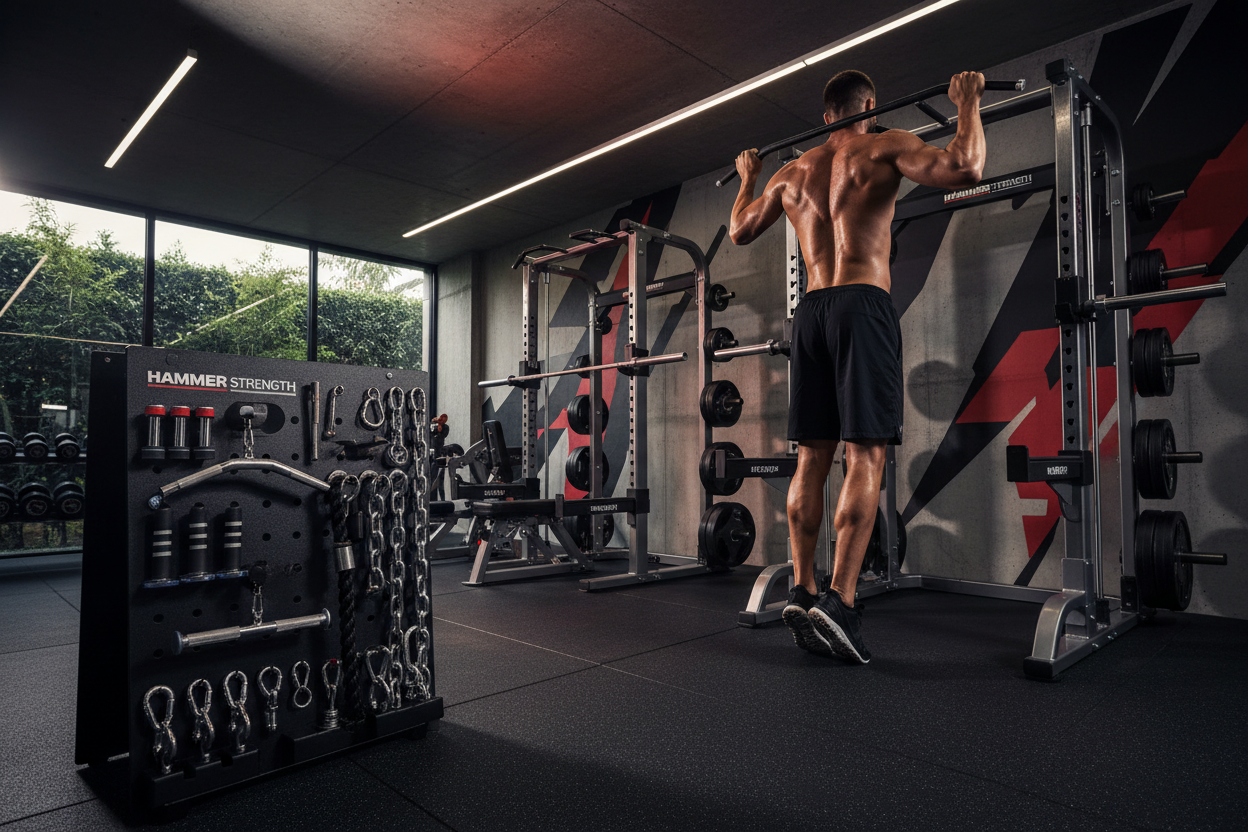
Another mistake is ignoring storage. The specialized weight horns and bar holders aren't just for organization; they add necessary ballast weight to the rack, making it more stable during dynamic movements like kipping pull-ups or band work.
My Training Log: Real Talk
I want to be honest about the user experience here. I've spent hundreds of hours specifically on the HD Elite combo rack. There is a specific nuance to the "Docking Station" (where you swap out platforms or benches) that marketing brochures don't mention.
It's the Mag-Pin system. On cheaper racks, when you adjust a J-hook or a safety arm, there is usually a lot of metal-on-metal screeching, and you have to wiggle it to find the hole. With the Hammer gear, there is this very distinct, tactile "thud-click" when the magnet engages the upright. It doesn't scratch.
However, I will say this: the knurling on their specific pull-up sphere attachments is aggressive. The first time I did a high-volume set of neutral grip pull-ups on the sphere grips without chalk, it tore my calluses faster than a jagged rusty bar. It holds you tight, but you have to respect the grit. Also, the dip attachment is heavier than you expect. Moving it mid-workout when you are gassed is a workout in itself. It’s overbuilt, which is good for safety, but annoying when you just want to super-set quickly.
Final Thoughts
Upgrading your setup with proper accessories is about respecting the engineering of the machine. You want seamless integration where the gear disappears, and only the effort remains. Stick to the ecosystem, check your upright dimensions, and prioritize attachments that open up new planes of motion.
Frequently Asked Questions
Do standard 3x3 attachments fit Hammer Strength racks?
Rarely. While the dimensions might look similar, the hole spacing (hardware size) and the specific metric vs. imperial gauge of the steel often differ. Using generic attachments can damage the Hammer Strength uprights and results in a loose, unsafe fit.
What is the difference between HD Elite and HD Athletic accessories?
HD Elite is built for extreme loads and heavy athletic use, often featuring thicker steel and different hole spacing compared to the HD Athletic line. Accessories are generally not interchangeable between the two lines due to these structural variances.
How do I maintain the locking pins on the attachments?
Periodically check the magnetic mechanisms and springs for debris. A light application of silicone lubricant (not oil-based, which attracts dust) keeps the Mag-Pins moving smoothly and prevents the internal springs from seizing up over time.