Gymnasium Rubber Flooring Explained: Don't Ruin Your Foundation
Nothing halts a heavy deadlift session faster than the fear of cracking your garage foundation. Whether you are dealing with a noisy basement setup, dropping dumbbells, or just tired of working out on cold concrete, investing in proper gymnasium rubber flooring is the most critical first step for any serious home gym build.
A solid foundation protects your equipment, your joints, and your home's structural integrity. In this guide, we will help you navigate the sea of options—from interlocking tiles to heavy-duty rolls—so you can build a safe, durable training space without overspending.
Key Takeaways
- Thickness matters: 3/8-inch is the gold standard for general home gyms, while 1/2-inch to 3/4-inch is required for heavy Olympic lifting.
- Format dictates installation: Rolls offer a seamless look but are heavy and hard to install; tiles are DIY-friendly but can separate under heavy lateral movement.
- Density equals durability: High-density vulcanized rubber prevents equipment from sinking and provides better rebound.
- Beware the smell: Cheaper, low-quality options often off-gas strong sulfur odors in enclosed spaces.
Choosing the Right Thickness and Type
When looking at rubber floors for gyms, the sheer variety can be overwhelming. Your decision should primarily come down to your training style and the space you are outfitting.
Rolled Rubber vs. Gym Tiles Floor
Rolled rubber provides a premium, commercial-grade aesthetic with minimal seams, making it ideal for large spaces where you want to prevent water or sweat from seeping through to the subfloor. However, a gym tiles floor setup is incredibly popular for North American home gyms because it is highly DIY-friendly. If you make a mistake cutting a tile to fit around a basement pillar, you only ruin a single square, not a massive 50-foot roll.
Density and Impact Absorption
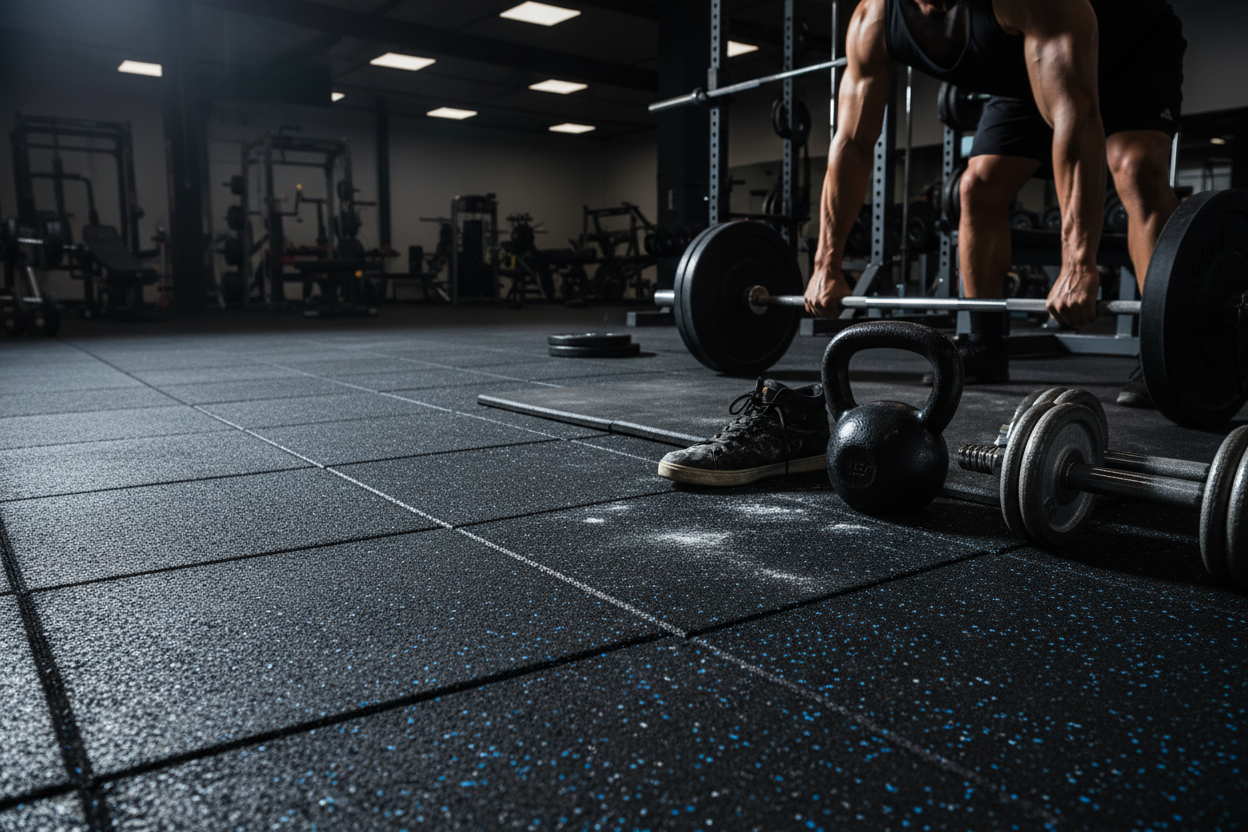
Not all fitness rubber flooring is created equal. You want high-density, non-porous rubber. Lower density mats might feel softer underfoot, but they compress under heavy power racks, leading to uneven lifting surfaces. A dense gym flooring rubber compound ensures your squat stand remains perfectly level while still absorbing the shock of dropped bumper plates.
Space Planning for North American Homes
Most home gyms occupy a standard two-car garage or a basement room. When planning a layout with rubber flooring gym tiles, always order 10% more material than your square footage dictates to account for wall cuts and mistakes.
If you are building a platform in a damp basement, consider a dimpled underlayment beneath your rubber floor for gyms. This allows trapped moisture to evaporate rather than breeding mold against your concrete. For garage setups with sloped floors (common for drainage), interlocking tiles tend to conform better to slight grade changes than rigid horse stall mats.
Budgeting Without Sacrificing Quality
It is tempting to search for discount gym flooring when outfitting your space, especially after dropping thousands on a rack and barbell. However, cheaping out on your foundation often leads to immediate regret. Low-tier rubber tiles gym systems are notoriously crumbly, shedding black specks all over your floor, and often suffer from severe off-gassing that can make a closed garage smell like a tire fire.
If you are on a strict budget, prioritize outfitting just your primary lifting zone (an 8x8 foot area) with high-quality 3/8-inch rubber, rather than covering the entire room in cheap, thin foam.
From Our Gym: Honest Take
When we first outfitted our 400-square-foot garage testing facility, we tried to cut corners by using cheap, low-density interlocking foam-rubber blend tiles. It was a disaster. Within three months, the seams began pulling apart during heavy kettlebell swings, and our power rack permanently compressed the tiles, causing it to wobble.
We eventually ripped it all out and upgraded to commercial-grade 3/8-inch vulcanized rubber rolls. The difference was night and day. The knurling on our dropped barbells no longer bit into the floor, the tire smell was virtually non-existent after a quick mop with a neutral pH cleaner, and the seamless look instantly made the garage feel like a professional facility. The only caveat? Moving 150-pound rubber rolls into place requires at least two people and a lot of patience. If I had to do it solo, I would opt for high-end, heavy-duty interlocking tiles instead.
Frequently Asked Questions
Is a rubber floor for gyms necessary if I have carpet?
Yes. Lifting on carpet is unstable and dangerous, particularly for squats and overhead presses. Carpet also traps sweat and chalk. You should remove the carpet or lay down a rigid piece of plywood topped with gym flooring rubber tiles to create a stable lifting surface.
How thick should my gym flooring rubber tiles be?
For standard strength training, dumbbell work, and cardio equipment, 3/8-inch (8mm to 10mm) is perfect. If you are regularly dropping heavy barbells from overhead (Olympic weightlifting), you need at least 1/2-inch to 3/4-inch thickness, ideally paired with a dedicated lifting platform.
Do rubber tiles gym systems smell bad?
New rubber will always have a slight odor, but premium vulcanized rubber dissipates quickly. Cheaper, recycled crumb rubber bound with low-quality adhesives can off-gas for months. To speed up the process, wash the mats with a mild soap and keep the room well-ventilated for the first few weeks.