Gym Technical: The Definitive Guide to Smart Training
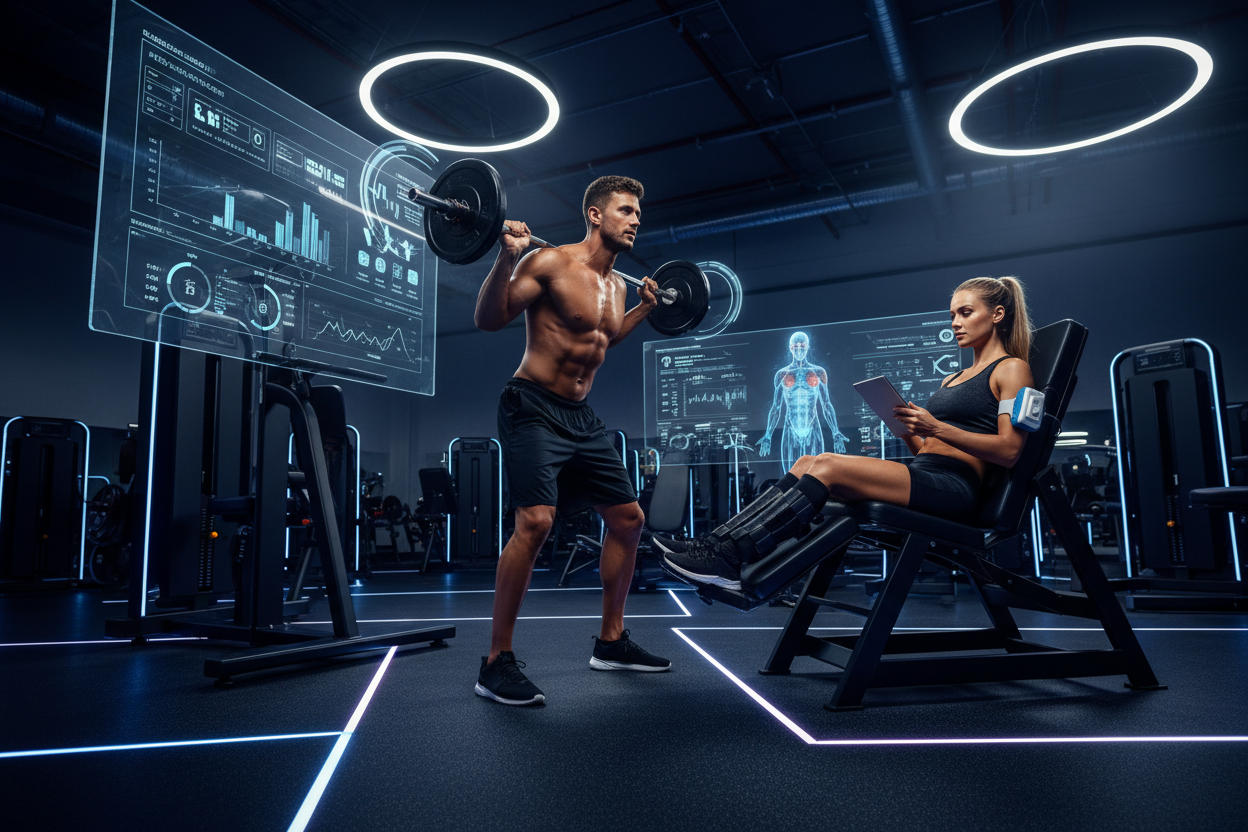
You walk into a modern training facility, and the atmosphere has shifted. The clanging of iron is being replaced—or at least augmented—by the hum of magnetic motors and the glow of haptic feedback screens. We are currently living through the biggest shift in exercise science history. However, simply buying the latest gadget doesn't guarantee muscle growth or fat loss. Understanding the gym technical landscape is no longer optional for the serious athlete; it is the new baseline for efficiency.
The problem isn't a lack of tools; it's the paralysis of analysis. With so much data available, from heart rate variability (HRV) to bar velocity, many lifters lose sight of the fundamentals. This guide cuts through the marketing noise to explain exactly how integrating technology into your fitness routine can optimize your biological output.
Key Takeaways: The Smart Gym Summary
- Velocity Over Weight: Modern tech focuses on bar speed (velocity-based training) to determine daily readiness rather than just static 1RM percentages.
- Linear vs. Variable Resistance: New tech gym equipment utilizes digital motors to alter resistance curves instantly, overloading muscles at their strongest points.
- Recovery is Quantifiable: Technology in fitness has moved beyond step counting to tracking Central Nervous System (CNS) fatigue via HRV.
- Biofeedback Loops: The primary benefit of gym technology is immediate form correction and exertion data, preventing "junk volume."
The Evolution of Gym Tech Equipment
For decades, gravity was the only law that mattered in the weight room. You picked up a weight; gravity pulled it down. While effective, gravity has limitations. It provides a constant load, even though your muscles are stronger in some parts of the movement than others.
Digital Resistance Motors
The most significant leap in fitness equipment technology is the move from weight stacks to digital resistance. Machines using electromagnetic motors can adjust the load millisecond by millisecond.
This allows for "eccentric overloading." The machine can give you 100lbs on the way up (concentric) and automatically switch to 120lbs on the way down (eccentric). This was previously impossible without a training partner manually pushing down on the bar. This specific application of technology gym equipment triggers higher levels of mechanical tension, the primary driver of hypertrophy.
Decoding Data: Technology in Fitness
Wearing a tracker is useless if you don't know how to interpret the signal. The integration of fitness and technology has provided us with a dashboard for the human body, but most people ignore the check engine light.
Velocity Based Training (VBT)
VBT is the gold standard of tech fitness equipment. By attaching a sensor to a barbell, you measure how fast the weight moves. If your target speed for a squat is 0.5 meters per second, and you grind out a rep at 0.2 m/s, the technology tells you to stop. You are fatigued, and further reps are just accumulating damage without stimulus.
Common Mistakes with New Technology in Fitness
Despite the benefits, there is a dark side to the proliferation of technology in gym settings. The most common error is outsourcing your intuition to an algorithm.
If your smart watch says you are "100% Recovered" but your joints ache and you feel lethargic, listen to your body, not the screen. Gym tech equipment is a tool for validation, not a replacement for somatic awareness. Relying solely on metrics can lead to under-training on days you feel great but the data says otherwise, or over-training when the data gives a false green light.
My Training Log: Real Talk
I want to be transparent about the transition to high-tech training because the brochures never tell you the weird parts. I recently spent a month testing a high-end digital cable trainer—one of those wall-mounted units that uses algorithms to simulate weight.
On paper, it's perfect. In reality, there is a learning curve that feels incredibly synthetic. During a heavy row, I noticed a specific "haptic wobble" at the very top of the contraction. It wasn't the smooth, dead-stop feeling of iron hitting the stack. It was a micro-vibration, like the motor was fighting to calculate exactly how much resistance to apply against my pull.
Furthermore, without the visual cue of a pin in a weight stack, I found myself getting "number blindness." I was staring at a digital readout of "50kg" but I couldn't feel the mass of it before I started. It messed with my psychological prep for the set. The tech works—my lats were torched—but you have to get used to that sterile, robotic resistance that lacks the satisfying "clank" of old-school lifting.
Conclusion
The era of gym technical integration is here. Whether it is through advanced wearables monitoring your CNS or motor-driven resistance machines, these tools offer a level of precision that raw iron cannot match. However, they remain just that: tools. Use the data to refine your programming, but never forget that the effort must come from you.
Frequently Asked Questions
Is high-tech gym equipment better than free weights?
Not necessarily better, but different. Free weights require more stabilizer muscle recruitment, while new tech gym equipment offers better isolation and variable resistance profiles that can be safer for joints and more efficient for hypertrophy.
Do I need expensive wearables to benefit from technology in fitness?
No. While high-end trackers offer deep insights like HRV, basic apps that track progressive overload (sets, reps, and weight) are the most effective form of technology fitness integration for the average lifter.
Is the calorie count on gym tech equipment accurate?
Generally, no. Most cardio machines overestimate calorie burn by 15-20% because they cannot account for your specific metabolic rate, muscle mass, or hormonal state. Use the numbers as a relative benchmark for intensity, not absolute truth.