
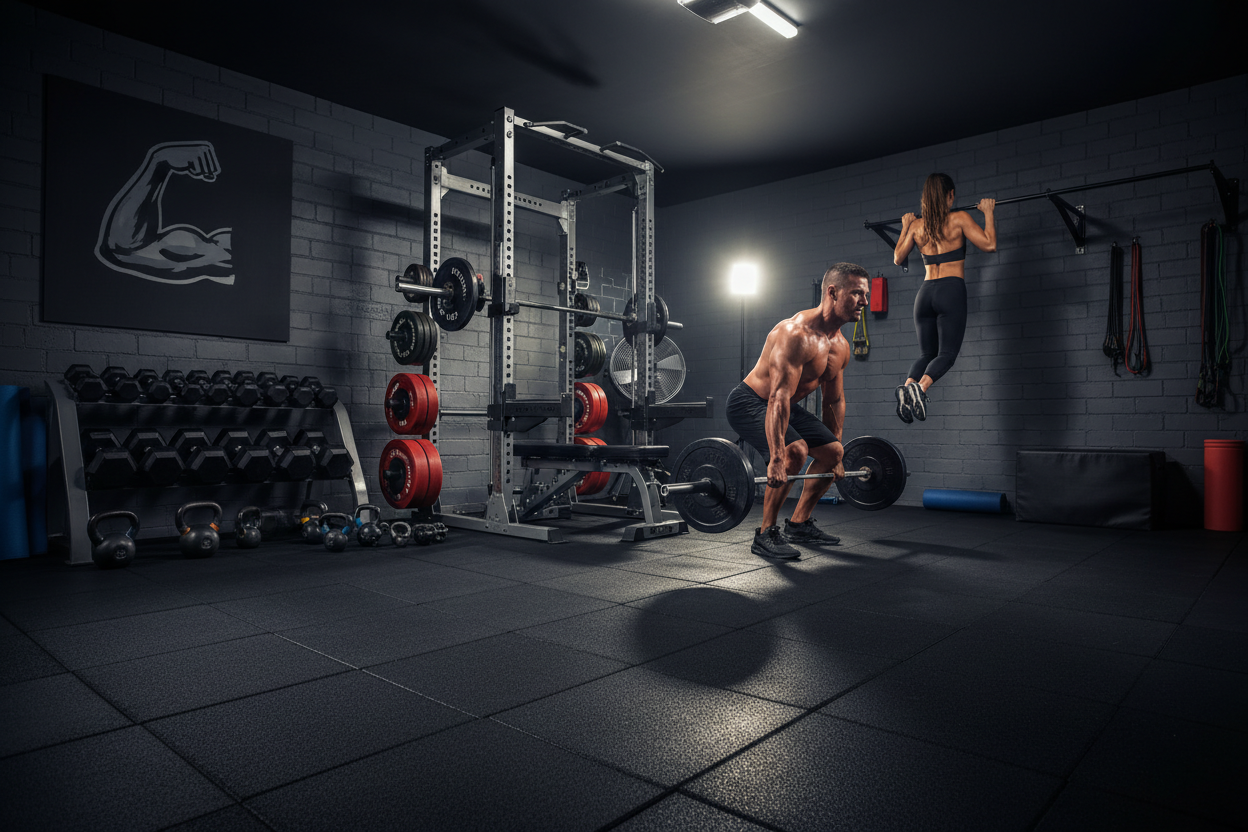
Gym Setup at Home: The Definitive Guide for Real Results
You don't need a warehouse or a five-figure budget to build a training sanctuary. In fact, the most effective training spaces are often the simplest. Creating a proper gym setup at home is about prioritizing function over flash and understanding the biomechanics of your training needs before you ever swipe your credit card.
Many people fall into the trap of buying cheap, all-in-one machines that turn into clothes hangers within months. We are going to avoid that. This guide focuses on building a facility that lasts decades, fits your space, and actually makes you want to train.
Quick Summary: The Blueprint
If you want the short version of what makes a successful gym home setup, here are the non-negotiables:
- Foundation First: Never lift directly on concrete or carpet; invest in high-density rubber flooring.
- The "Big Three" Priority: Allocate 70% of your budget to a rack, a barbell, and a bench.
- Spatial Awareness: Measure ceiling height, not just floor space, to accommodate overhead presses.
- Climate Control: Airflow and temperature regulation are critical for intensity in a garage or spare room.
- Lighting: Bright, cool-toned lighting prevents the "dungeon" feel that kills motivation.
Assessing Your Space for a Gym In Home
Before buying a single plate, you need to map your territory. A full home gym setup requires more than just square footage; it requires vertical clearance and structural integrity.
The Ceiling Height Factor
Most standard rooms are eight feet tall. If you plan on doing standing overhead presses or buying a full-height power rack, you need to measure exactly where the pull-up bar sits. I’ve seen countless gym set ups where the athlete hits the ceiling plates during a press or can't do a muscle-up because their head would go through the drywall.
Floor Slope and Integrity
If you are setting up in a garage, be aware that most garage floors slope toward the door for drainage. This subtle angle can wreak havoc on your squat mechanics and deadlift lockout. You may need to build a leveling platform or position your rack perpendicular to the slope to mitigate the imbalance.
The Core Equipment: Building a Complete Home Gym Setup
Forget the infomercial gadgets. A complete home gym setup is built around compound movements. Here is the hierarchy of importance.
1. The Power Rack
This is the centerpiece of any at home gym set. It provides safety for solo benching and squatting. Look for a rack with a 3x3 inch steel upright size and 1-inch hardware. This gauge of steel ensures the rack won't wobble when you re-rack a heavy squat, giving you the confidence to push harder.
2. The Barbell and Plates
Do not buy a cheap barbell. Cheap bars have poor knurling (grip) and often bend under heavy loads, which creates rotational torque that can injure your wrists. A decent comprehensive gym set at home needs an Olympic bar with tensile strength above 190,000 PSI. For plates, bumper plates are quieter and safer for home floors than cast iron.
3. The Adjustable Bench
A flat bench is fine, but an adjustable bench opens up incline pressing and chest-supported rows. Stability is key here; a wobbly bench destroys force transfer. If the bench moves while you press, your nervous system instinctively limits your power output to protect you.
Flooring: The Unsung Hero of Gym Set Ups
Do not use those cheap foam puzzle tiles sold at department stores. They compress too much under heavy loads, creating an unstable surface that is dangerous for squats and deadlifts.
For a proper home gym.set up, you need 3/4-inch thick horse stall mats (vulcanized rubber). They are dense, absorb shock effectively, and provide a firm surface that allows you to drive force into the ground without energy leaks.
Atmosphere and Organization
A full gym setup gets messy fast. Wall-mounted storage for plates and barbells is essential to keep your floor space usable. Furthermore, consider your environment. Mirrors aren't just vanity; they are feedback tools for checking form when you don't have a coach watching your back.
My Training Log: Real Talk
I want to share a specific detail from my own experience with my gym setup at home that specs don't tell you. It’s about the temperature.
I set up my first gym in an uninsulated garage in the Northeast. I spent thousands on a Rogue rack and calibrated plates, but I forgot about the climate. In January, the barbell was so cold it felt like it was burning my hands, even through chalk. The knurling bit into my skin differently when the steel was freezing—it was sharper, more painful, and made hook gripping miserable.
I eventually had to buy a specialized ceramic heater and store my barbell inside the house, carrying it out for every session. It was a hassle. The lesson? A gym in home isn't just about the iron; it's about the ecosystem. If you are miserable standing in the room, you won't train in it, no matter how nice the rack is.
Conclusion
Building a gym setup at home is an investment in your longevity. By focusing on quality essentials like a sturdy rack, a good bar, and proper flooring, you create a space that removes excuses. Start with the basics, respect your budget, and expand your arsenal only when your strength demands it.
Frequently Asked Questions
How much space do I need for a full gym setup?
Ideally, you need a 10x10 foot area. This allows space for a 7-foot Olympic barbell, the rack footprint, and enough clearance to load plates on either side without hitting walls.
Is a home gym cheaper than a membership?
Upfront, no. However, a quality gym home setup typically pays for itself within 2 to 3 years compared to a high-end gym membership, considering commute time and fees. Plus, resale value on quality equipment remains high.
Can I put a gym upstairs?
It depends on the structural load capacity of your house. A standard a home gym with heavy deadlifts can damage joists. If you are upstairs, stick to lighter equipment or consult a structural engineer before dropping heavy weights.

