Gym Running Machine Reality Check: Are They Worth the Space?
If you've ever tried doing sprint intervals on a cheap, wobbly treadmill, you know the frustration. The belt slips, the console shakes like a leaf, and the motor sounds like it's begging for mercy. Upgrading to a true gym running machine is one of the most significant investments you can make for your home fitness setup, but it's also where people make the most expensive mistakes.
Whether you're training for a winter marathon in your basement or just want a reliable way to get your daily steps, navigating the world of heavy-duty cardio equipment can be overwhelming. Let's cut through the marketing fluff and look at what actually matters when bringing commercial-grade performance into your home.
Key Takeaways
- Motor Power Matters: Look for at least a 3.0 CHP (Continuous Horsepower) motor for running, rather than peak horsepower.
- Space is King: Non-folding models offer better stability but require a dedicated footprint of at least 7 feet by 3 feet.
- Belt Size: Runners over 5'10" need a running deck of at least 60 inches long and 20 to 22 inches wide.
- Cushioning Tech: A quality running machine for gym use will feature zoned cushioning—softer at the front for impact, firmer at the back for push-off.
Anatomy of a True Gym-Quality Treadmill
There is a massive gap between a basic walking pad and a heavy-duty treadmill machine gym goers are used to. The difference comes down to three main components: the motor, the rollers, and the deck.
When evaluating a running machine for exercise, pay close attention to the roller size. Larger rollers (2.5 inches or more) reduce tension on the belt, which extends the life of both the belt and the motor. Additionally, a welded steel frame will provide that rock-solid, vibration-free experience you expect from premium gym equipment running machine models.
Space Planning for Your Home Setup
North American home gyms usually fall into two categories: the cavernous two-car garage or the space-constrained basement. If you are putting a treadmill gym machine in a basement, ceiling height is your biggest enemy. You need to account for the deck height (often 8-12 inches off the floor), your height, plus at least 15 inches of clearance so you don't bump your head when running on a steep incline.
While folding models have improved drastically, if you have the dedicated space, a non-folding exercise machine treadmill offers superior stability and fewer mechanical failure points over a decade of heavy use.
Training Versatility & Programming
Modern fitness running machines aren't just for endless, boring jogging. With quick-adjust incline and speed toggles, they are perfect for HIIT (High-Intensity Interval Training). A strong motor ensures the belt accelerates and decelerates quickly during sprint intervals, preventing that dangerous 'lag' that cheaper indoor running equipment often suffers from when you change speeds.
From Our Gym: Honest Take
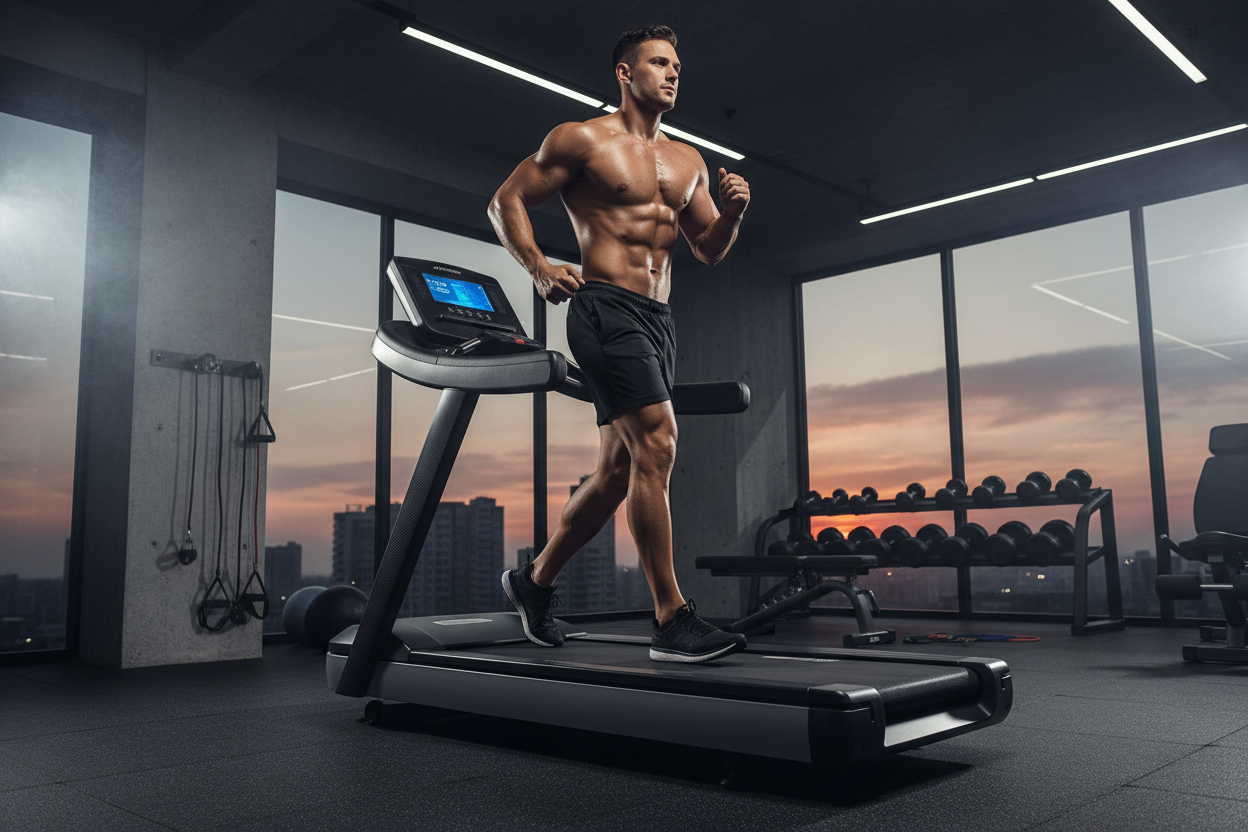
We've tested dozens of cardio units in our facility over the years. Last year, I swapped out a mid-tier folding treadmill for a heavy-duty, non-folding commercial running machine for gym environments. The difference was night and day.
At 190 lbs, doing 12mph sprint intervals used to feel sketchy on lighter frames. The heavy-duty deck didn't just absorb the impact; the 3.5 CHP motor didn't bog down for a split second when my foot struck the belt. However, I will be completely honest: moving a 300-pound treadmill into a basement is a nightmare. Pay for the white-glove delivery and assembly. Your lower back will thank you. Also, be aware that commercial-grade motors draw a lot of power—we had to put ours on a dedicated 20-amp circuit to stop tripping the breaker.
Frequently Asked Questions
Is a gym running machine worth the investment for a home gym?
Yes, if you run consistently or have multiple users in the house. Cheaper models wear out quickly under heavy use, while commercial-grade machines offer better joint protection, stability, and longevity, ultimately saving you money over time.
How much space do I need around the treadmill?
Beyond the footprint of the machine (typically 3 feet by 7 feet), safety guidelines require at least 6 feet of clear space directly behind the treadmill and 2 feet on either side to prevent injury in case of a fall.
What is the difference between peak horsepower and CHP?
Peak horsepower is the maximum power a motor can hit for a brief second, while CHP (Continuous Horsepower) is what the motor can sustain continuously without overheating. Always base your buying decision on CHP.