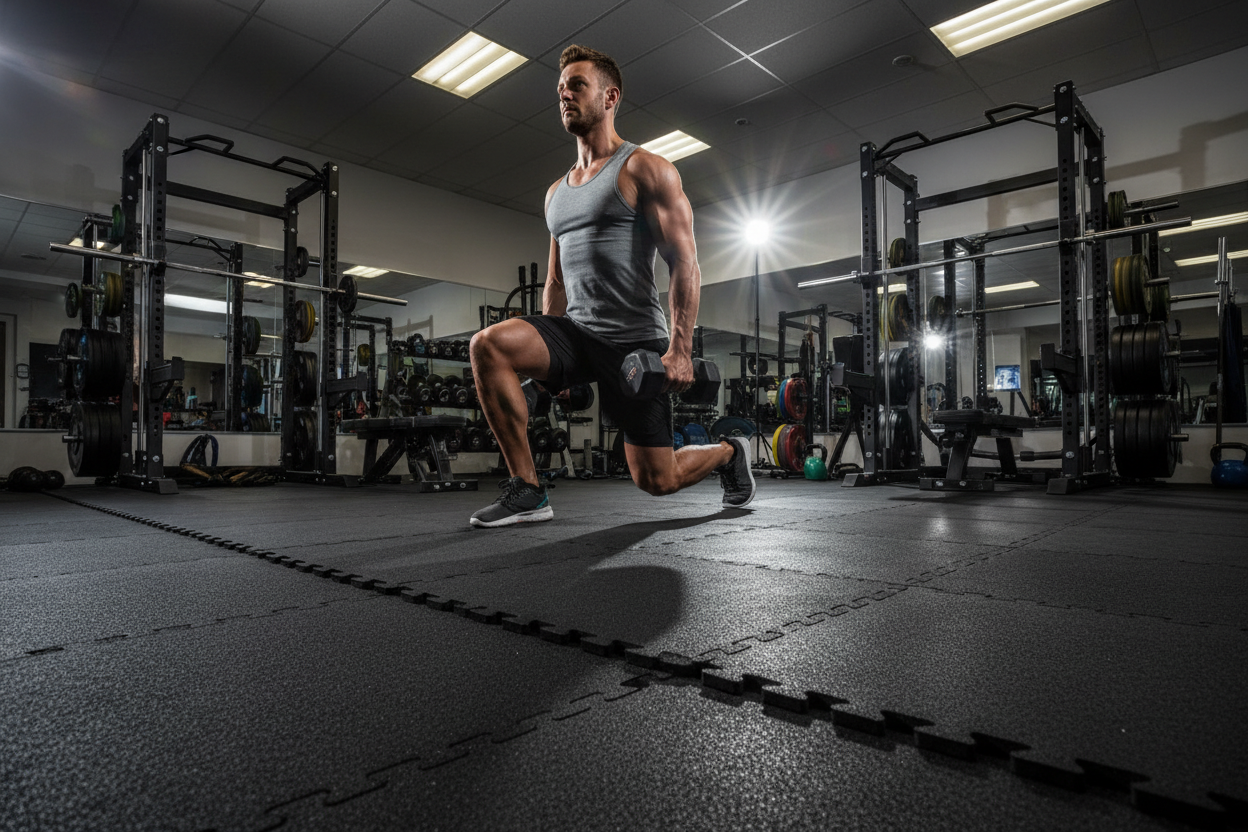
Gym Mat Manufacturer Guide: Stop Overpaying for Flooring
Anyone who has ever dropped a loaded barbell on a bare concrete garage floor knows the immediate, stomach-dropping panic that follows. Whether you are battling cracked foundation slabs, echoing noise, or equipment sliding out of place, your gym flooring is the literal foundation of your training space. Yet, it is often the last thing people budget for.
By understanding how to source directly from a reputable gym mat manufacturer, you can bypass massive retail markups and secure commercial-grade flooring for your home setup. This guide will walk you through exactly what to look for, how to avoid cheap fillers, and how to build a base that handles heavy abuse.
Key Takeaways
- Density Over Thickness: A dense 3/8-inch mat from a quality manufacturer will outperform a squishy 1-inch cheap foam mat every time.
- Vulcanized is King: Look for vulcanized rubber to prevent peeling, crumbling, and excessive moisture absorption.
- Direct Savings: Bypassing middlemen and buying from direct suppliers can save you up to 40% on large garage or basement builds.
- Beware the Smell: Commercial rubber off-gasses. Proper ventilation planning is essential for indoor spaces.
Decoding Flooring Specs: What Really Matters
Not all rubber is created equal. When evaluating different products, you need to look past the marketing jargon and focus on the manufacturing specs.
Material Quality: Vulcanized vs. Pressed Rubber
Most budget-friendly mats are made from crumb rubber pressed together with a polyurethane binder. Over time, heavy deadlifts and dropped dumbbells will cause these to flake and pit. A premium manufacturer uses vulcanized rubber—a heat-treated process that bonds the rubber molecules together. It is non-porous, meaning it won't absorb sweat, spilled pre-workout, or basement moisture.
Thickness and Drop Ratings
For a standard North American garage gym, 3/8-inch (8mm to 10mm) is the golden standard for general strength training. If you are regularly dropping Olympic lifts from overhead, you will want to look for 1/2-inch to 3/4-inch mats, or supplement your 3/8-inch base with dedicated drop pads. Always check the manufacturer's drop rating rather than just guessing based on thickness.
Direct Sourcing: Manufacturers vs. Retailers
If you are just buying a single 4x6 mat for a yoga corner, a big-box store is fine. But if you are outfitting a full basement or a two-car garage, finding direct gym mat suppliers is the smartest play. By ordering bulk rolls or palletized interlocking tiles directly from the source, you cut out the retail markup. Just be prepared to handle the freight shipping logistics, as these pallets easily weigh over 500 pounds.
From Our Gym: Honest Take
When we outfitted our 400-square-foot testing facility last year, we skipped the branded retail flooring and went straight to a commercial manufacturer for 3/8-inch rolled rubber. The difference in density was instantly noticeable—my chalked grip held solid through heavy deadlift sets because the floor didn't compress under my feet like cheap puzzle mats do. However, I have to be honest about the caveat: the off-gassing. For the first three weeks, the vulcanized rubber smell was intense. We had to leave the garage doors open with high-velocity fans running daily. If you are putting these in a closed-off basement, you absolutely must factor in a few weeks of ventilation time before moving your racks in.
Frequently Asked Questions
Is buying direct from a manufacturer worth it for a home gym?
Yes, if you are covering more than 100 square feet. The savings on the raw material usually offset the higher freight shipping costs associated with buying direct.
How thick should home gym mats be?
For general weightlifting and cardio equipment, 3/8-inch (approx 10mm) is ideal. For heavy Olympic weightlifting where bumper plates are dropped from overhead, opt for 1/2-inch to 3/4-inch thick mats.
Do I need to glue down rubber gym mats?
For most home and garage gyms, no. Heavy 4x6 stall mats or thick rolled rubber are heavy enough to stay put under their own weight, especially once your power rack and machines are placed on top. Double-sided carpet tape can secure the seams if needed.