
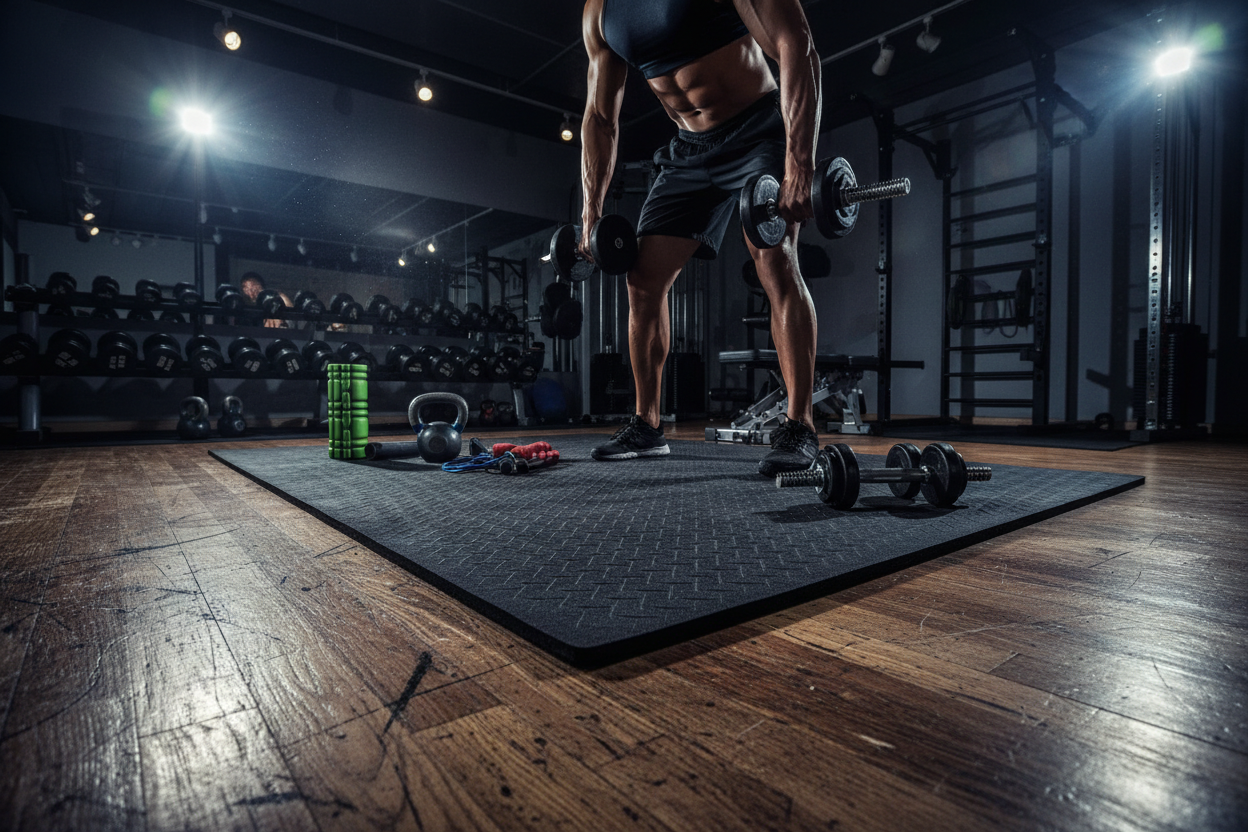
Gym Mat at Home Setup: Stop Ruining Your Floors
If you have ever tried doing a heavy kettlebell swing on a plush living room carpet, or burpees on a freezing concrete garage floor, you already know the struggle. Creating a safe, comfortable, and durable workout space starts from the ground up.
Choosing the right gym mat at home is the single most important foundational decision you will make for your training environment. In this guide, we will walk you through exactly how to select the right flooring to protect your joints, your equipment, and your property.
Key Takeaways
- Thickness dictates function: 8mm is great for yoga, but you need at least 3/4-inch rubber for dropping heavy weights.
- Material matters: High-density rubber reigns supreme for durability, while EVA foam is strictly for light bodyweight exercises.
- Space dictates style: Interlocking tiles offer flexibility, whereas roll-out mats provide a seamless, commercial feel.
- Carpet compatibility: Placing soft mats over plush carpets leads to dangerous instability; always use a rigid sub-floor or heavy rubber.
Finding the Right Fit for Your Space
Before you purchase a home gym workout mat, you need to assess your square footage and the permanence of your setup.
The Garage and Basement Lifter
If you are converting a raw space like a garage, you are likely dealing with a hard concrete subfloor. Here, heavy-duty vulcanized rubber is non-negotiable. It insulates against the cold and absorbs the shock of dropped barbells, preventing structural damage to your foundation.
The Apartment Dweller
For those in apartments or shared living spaces, noise reduction and storability are key. A high-quality portable gym mat that can be rolled up and slid under a bed is ideal. Look for closed-cell foam or hybrid PVC mats that provide enough cushion to dampen the sound of jumping jacks without permanently claiming your living room floor.
Materials and Thickness: The Ultimate Buying Guide
Not all flooring is created equal. Buying the wrong material is the fastest way to waste money and invite injury.
Rubber vs. Foam
EVA foam interlocking tiles are cheap and ubiquitous, but they compress under heavy loads. If you plan to squat or deadlift, foam will leave you dangerously unstable. Instead, invest in a dedicated workout mat home setup utilizing vulcanized rubber. Rubber offers superior grip, will not compress under a 500-pound squat rack, and lasts a lifetime.
How Thick Should You Go?
For a dedicated personal gym mat used for stretching and bodyweight work, 1/4-inch to 3/8-inch is sufficient. However, if you are dropping dumbbells or using heavy kettlebells, you need a minimum of 1/2-inch to 3/4-inch thickness to properly absorb the impact.
From Our Gym: Honest Take
We have tested dozens of flooring options over the years, from cheap puzzle tiles to premium commercial rolls. I will never forget outfitting my first garage gym with 1/2-inch EVA foam tiles because they were on sale. Within three months of heavy deadlifting, the tiles had permanently compressed, and the seams were constantly pulling apart during lateral lunges.
When I finally upgraded to 3/4-inch high-density rubber stall mats, the difference was night and day. My chalked feet felt completely planted during heavy lifts, and the noise reduction was incredible. The only caveat? They smell strongly of sulfur for the first week. You absolutely need to leave them outside to off-gas before bringing them into an enclosed basement or spare bedroom. But once that fades, they are bulletproof.
Frequently Asked Questions
Is a gym mat at home worth the investment?
Absolutely. Beyond protecting your floors from scratches and cracks, a proper mat reduces joint fatigue, prevents slips, and drastically dampens noise—making it essential for both your body and your living situation.
Can I put a home gym mat over carpet?
It depends on the carpet. For low-pile commercial carpet, heavy rubber mats work fine. For plush residential carpet, placing a flexible mat on top creates an unstable, squishy surface that is dangerous for lifting. You may need to lay down a rigid plywood subfloor first.
How do I clean my personal gym mat?
For rubber and closed-cell foam, avoid harsh chemicals like bleach which can degrade the material. A simple mixture of warm water and a few drops of mild dish soap, applied with a mop or rag, is all you need to keep your space hygienic and fresh.


