
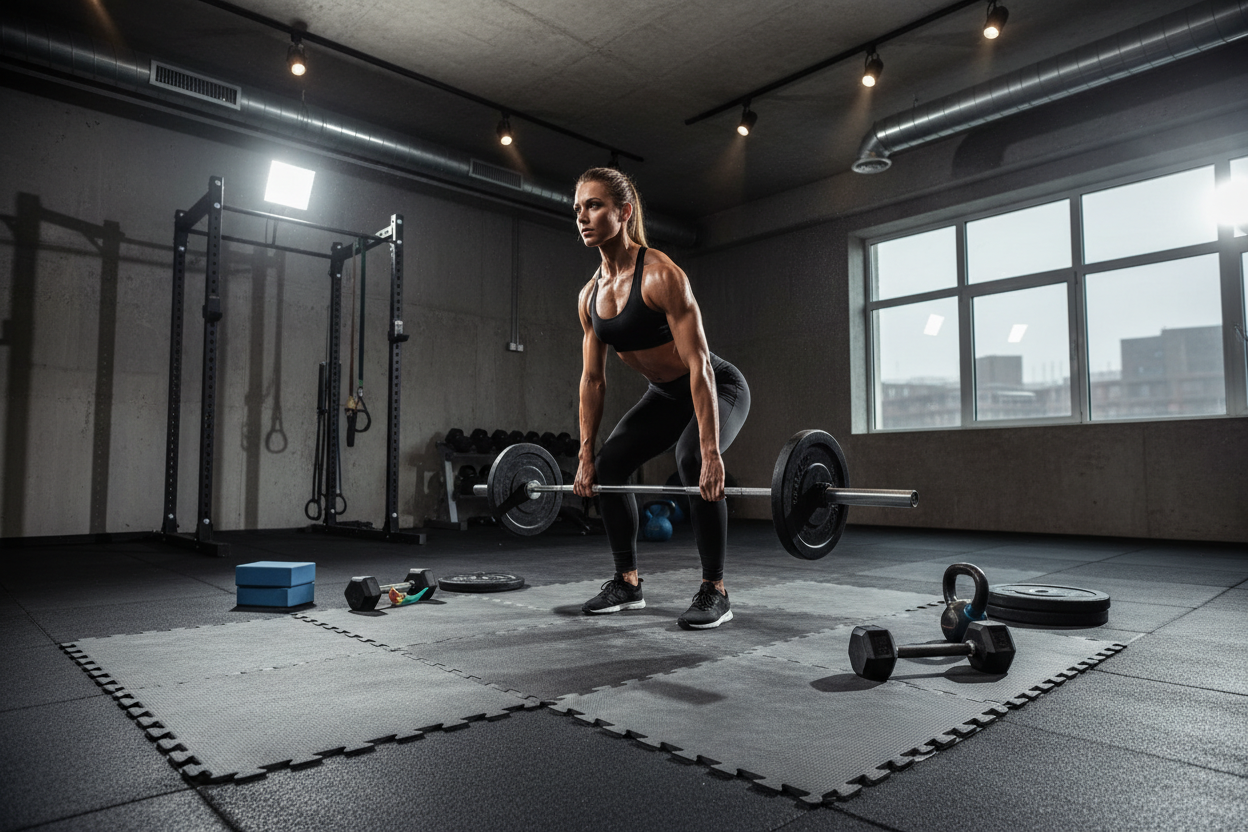
Gym Home Mat Reality Check: What You Actually Need
Nothing shatters the excitement of a heavy deadlift PR quite like the sound of your floorboards cracking beneath the weight. Whether you are lifting in a pristine spare bedroom or an unfinished garage, the foundation of your workout space dictates what you can and cannot do. Finding the right gym home mat is often an afterthought, but it is the single most important investment you will make to protect your property, your equipment, and your joints.
In this guide, we will cut through the marketing fluff to help you decide exactly which type of flooring makes sense for your specific training style and space constraints.
Key Takeaways
- Thickness matters: 8mm to 10mm is the gold standard for general fitness, while 3/4-inch rubber is necessary for heavy Olympic lifting.
- Material dictates performance: High-density vulcanized rubber outlasts cheap EVA foam in durability, stability, and grip.
- Format fits the room: Rolled rubber is ideal for large, permanent spaces; interlocking tiles work best for odd-shaped rooms.
- Subfloor prep is crucial: Even the best flooring will fail if placed on an uneven or heavily carpeted subfloor.
Choosing Your Base: Material and Thickness
EVA Foam vs. High-Density Rubber
When shopping for a gym mat for home use, you will quickly notice a massive price gap between foam puzzle tiles and heavy rubber rolls. EVA foam is cheap, lightweight, and fine for yoga or light dumbbell work. However, if you plan to squat, deadlift, or drop any serious weight, foam will compress, tear, and leave you dangerously unstable. High-density rubber provides the firm, grippy surface required for safe strength training.
How Thick Should You Go?
For most North American garage and basement setups, a 3/8-inch (approx. 8-10mm) rubber mat offers the perfect sweet spot of floor protection and affordability. If you are dropping heavy barbells from overhead, you will need to step up to 1/2-inch or 3/4-inch thickness, or invest in a dedicated wooden lifting platform to absorb the shock.
Sizing Your Setup: Garage to Spare Room
Rolled Mats vs. Interlocking Tiles
The layout of your space dictates the format of your flooring. If you are outfitting a standard two-car garage, rolled rubber is the most seamless option. It minimizes seams where dust and chalk can collect. On the other hand, if you are building a corner setup in an apartment, a modular mat for home gym spaces—like heavy-duty interlocking tiles—allows for easy installation without the need for messy adhesives or utility knives.
From Our Gym: Honest Take
We have tested everything from cheap foam squares to commercial-grade rolls. When we first set up our primary testing garage, we tried to save money by using 1/2-inch EVA foam tiles. Within three months, the foam had permanently compressed under our power rack, making the entire structure wobble during pull-ups.
We eventually upgraded to 3/8-inch vulcanized rubber rolls. The grip difference was night and day—my feet felt absolutely planted during heavy squats. One honest caveat: fresh rubber rolls have a distinct 'tire shop' smell. We had to leave our garage door open with a fan running for about two weeks before the off-gassing scent faded. If you are setting up in a basement with poor ventilation, look for 'low-odor' premium rubber or give the mats time to air out outdoors first.
Frequently Asked Questions
Is a mat home gym setup okay over carpet?
Placing heavy rubber mats directly over plush carpet creates an unstable surface that can lead to rolled ankles or wobbly racks. If you must build over carpet, we recommend placing a layer of 3/4-inch plywood down first, then placing your rubber matting on top to create a rigid foundation.
How do I clean my gym flooring?
Keep it simple. Sweep or vacuum loose chalk and dust regularly. For a deeper clean, use a mop with warm water and a few drops of mild dish soap or a pH-neutral cleaner. Avoid harsh chemicals like bleach, which can degrade the rubber over time.
Do I need to glue my mats down?
For most home applications, no. Heavy rubber rolls and 3/4-inch stall mats are heavy enough to stay put under their own weight, especially once you place a power rack or heavy dumbbells on them. Double-sided carpet tape is a great, non-permanent solution if you experience any edge curling.


