Gym Floor Tiles Explained: Don't Ruin Your Foundation
Building a home gym is an incredible investment, but nothing ruins the excitement faster than a dropped barbell cracking your garage floor or a treadmill vibrating through the entire house. Before you buy another piece of iron or cardio equipment, you need to think about your foundation. High-quality gym floor tiles are the unsung heroes of any serious training space.
They protect your concrete subfloor, extend the life of your expensive equipment, and save your joints during high-impact workouts. However, navigating the endless sea of options can be overwhelming. In this guide, we will break down exactly what you need to know to choose the perfect fitness flooring tiles for your setup, ensuring you buy the right gear the first time.
Key Takeaways
- Thickness matters: 3/8-inch is standard for general use, but heavy lifters need 1/2-inch to 3/4-inch rubber gym floor tiles to protect concrete from dropped weights.
- Material is key: Avoid cheap EVA foam. Always opt for vulcanized or recycled gym tiles rubber for long-term durability and compression resistance.
- Interlocking design: Rubber puzzle flooring prevents shifting under heavy equipment without the need for messy adhesives.
- Odor control: New rubber floor tiles for gym setups can smell initially; look for low-VOC options and plan to ventilate your space.
Decoding Thickness and Material Specs
Why Rubber Always Beats Foam
Many beginners make the mistake of buying cheap foam exercise floor tiles from big-box stores. While foam is fine for light stretching or yoga, it compresses permanently under heavy power racks and tears easily when shifting benches. For a durable, long-lasting setup, you need dense gym rubber tile flooring. Heavy-duty rubber gym floor squares absorb shock, deaden sound, and provide the firm grip needed for heavy squats and lunges.
Finding the Sweet Spot for Thickness
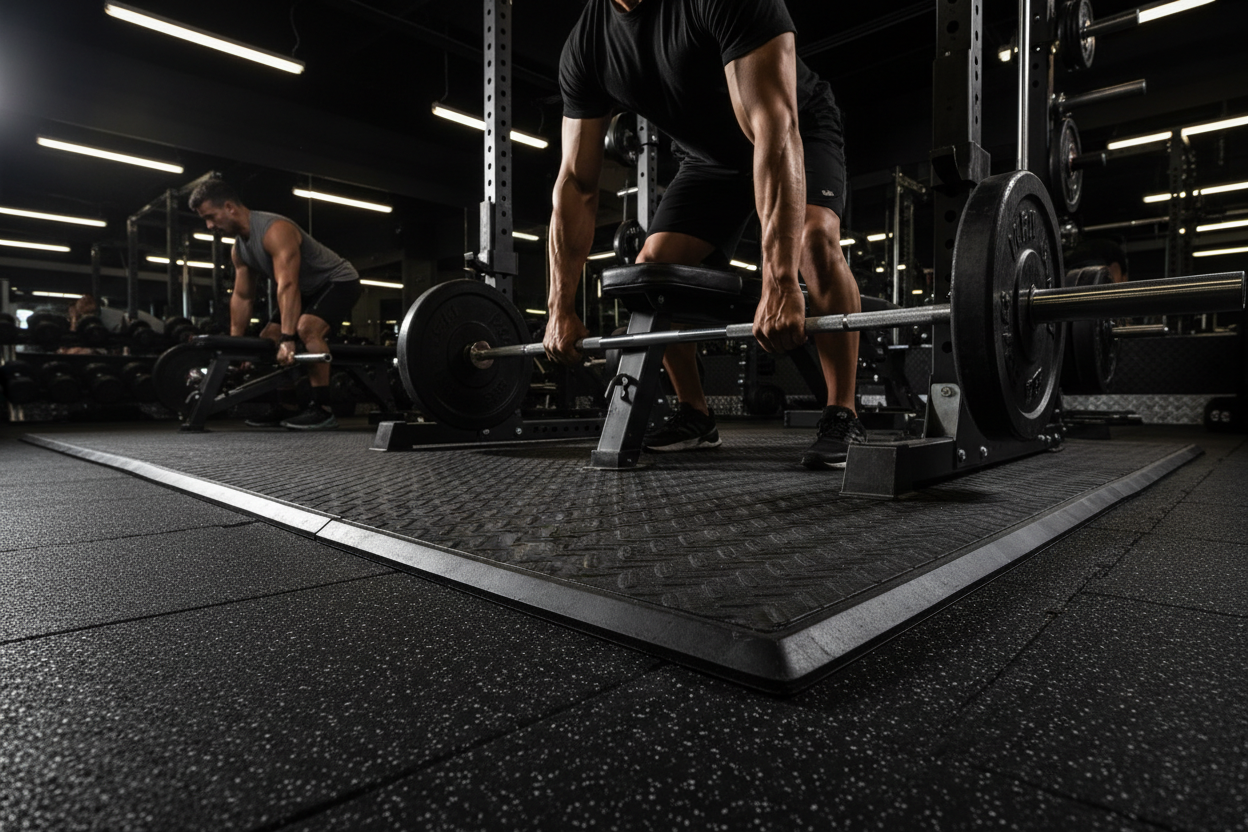
If you are parking a stationary bike, doing dumbbell work, or looking for general gym tile flooring, 5/16-inch to 3/8-inch thickness will suffice. However, if you are a powerlifter or Olympic weightlifter dropping heavy deadlifts and cleans, you need at least 1/2-inch to 3/4-inch workout floor tiles. Anything thinner risks transferring the impact directly into your subfloor, leading to expensive repairs.
Space Planning and Installation
Mapping Out Your Footprint
Whether you are converting a spare bedroom or a two-car garage, measuring accurately is crucial. Standard gym floor squares are typically 24x24 inches. When calculating how many gym mat squares you need, add an extra 10% to account for cutting around edges, pillars, and corners. Interlocking gym floor panels make it incredibly easy to customize your layout and expand later if your gym grows.
Dealing with Different Subfloors
Installing rubber gym flooring tiles over hard, flat concrete is straightforward and highly recommended. If you are installing over plush carpet, you may need to lay down a rigid underlayment (like plywood) first. Without it, your workout floor squares can separate at the seams under heavy loads. While you might be tempted by standard floor and decor gym flooring options, always ensure the product is specifically rated for heavy fitness equipment weight.
From Our Gym: Honest Take
We recently overhauled our primary testing garage and laid down 1,000 square feet of 3/4-inch rubber puzzle flooring. The density is fantastic—my chalked grip feels incredibly grounded during heavy pulls, and the sound dampening keeps the neighbors happy when we drop 405 lbs from the hips. However, I have to be completely honest: the initial 'new tire' smell of the rubber mat squares was overpowering. We had to leave the garage doors open with high-velocity fans running for a solid two weeks before the odor faded. Also, while the interlocking teeth on the gym tile mat are strong, we noticed a slight separation under the front uprights of the power rack after a few months of re-racking heavy weight. Adding a few strips of double-sided carpet tape underneath the heavy traffic zones completely solved the issue.
Frequently Asked Questions
Are rubber floor tiles gym friendly for home use?
Absolutely. High-quality exercise floor mat tiles are designed specifically for home and commercial environments to protect your subfloor from impact, moisture, and heavy equipment compression.
How do I clean my gym floor mat tiles?
Keep it simple. Vacuum up chalk and dust regularly, then mop your gym flooring squares with a diluted mixture of warm water and a pH-neutral cleaner. Avoid harsh chemicals like bleach, which can dry out and break down the gym floor rubber tiles over time.
Can I mix and match different tiles for gym setups?
It is highly discouraged. Different brands of gym tiles flooring have varying interlocking mechanisms, thicknesses, and tolerances. Mixing a gym mat tiles brand with another will likely result in uneven seams, creating a tripping hazard and a sloppy aesthetic.