Gym Floor Mats: Stop Ruining Your Subfloor Before It's Too Late
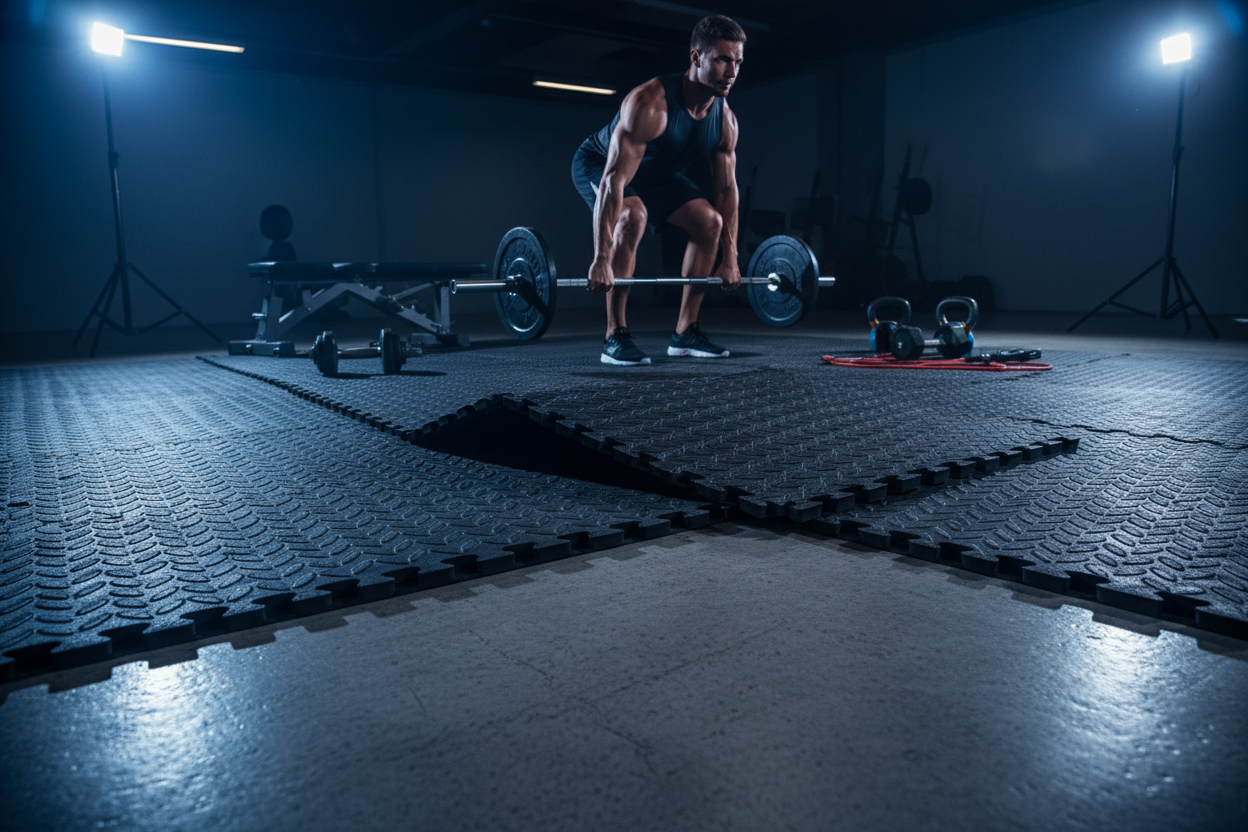
There is a specific, heart-sinking feeling that comes right after dropping a loaded barbell directly onto bare concrete. Whether you are battling limited space in a spare bedroom or trying to soundproof a drafty garage, neglecting your foundation is the quickest way to damage your gear and your home. That is where high-quality gym floor mats come into play.
More than just an aesthetic upgrade, proper flooring absorbs shock, protects your joints during plyometrics, and keeps your heavy equipment from sliding. In this guide, we will break down exactly what to look for so you can build a safer, quieter, and more professional training space.
Key Takeaways
- Thickness dictates function: 3/8-inch is standard for general fitness, while 1/2-inch to 3/4-inch is required for heavy deadlifts and Olympic lifting.
- Material is everything: Vulcanized rubber offers superior durability and shock absorption compared to cheap EVA foam.
- Measure twice, buy once: Always account for a 5-10% overage when calculating your square footage to handle awkward cuts around baseboards.
- Odor matters: Virgin rubber has less 'off-gassing' smell than recycled tire rubber, making it better for enclosed basement gyms.
Choosing the Right Thickness for Your Training
The biggest mistake people make when building a home gym is buying the wrong thickness for their specific training style. Go too thin, and your concrete cracks; go too thick, and you are wasting your budget.
Heavy Lifting vs. Cardio Zones
If your routine consists mostly of yoga, dumbbell work, and treadmill running, a standard 1/4-inch to 3/8-inch mat provides plenty of traction and joint relief. However, if you are dropping heavy barbells, you need serious impact absorption. Powerlifters and Olympic weightlifters should look exclusively at 1/2-inch to 3/4-inch heavy-duty rubber. This thickness dissipates the kinetic energy of dropped weights, saving your subfloor from catastrophic cracking.
Material Matters: Rubber vs. Foam
Not all flooring is created equal. While searching for a gym floor mat for sale online, you will likely be bombarded with cheap, lightweight options. Knowing the difference in materials will save you from replacing your floor in six months.
The Problem with Cheap Puzzle Mats
Those colorful, interlocking EVA foam puzzle mats might seem like a budget-friendly steal, but they compress under heavy loads. Leave a power rack on foam mats for a week, and you will find permanent divots. Foam also separates during lateral movements like skater jumps. For a true home gym, recycled or virgin vulcanized rubber is the gold standard. It resists moisture, handles thousands of pounds of static weight, and provides the grippy texture needed for heavy leg days.
Space Planning for North American Home Gyms
Whether you are outfitting a two-car garage in the Midwest or carving out a corner in a Toronto condo, your layout dictates your flooring style.
Garage vs. Spare Bedroom Setups
For large, rectangular garage gyms, rolled rubber is often the most economical and seamless choice. It requires fewer seams, which means less shifting and easier cleaning. If you are in a spare bedroom or a basement with awkward support columns, interlocking rubber tiles or standalone 4x6 foot mats are much easier to maneuver and cut to size. Just remember to leave a slight gap around the perimeter of the room, as rubber expands and contracts with temperature changes.
From Our Gym: Honest Take
We have tested just about every flooring option on the market in our own facility. For my personal garage gym, I initially tried to save money by using 3/4-inch agricultural horse stall mats. While they are practically indestructible and handled my 400lb deadlift drops with ease, there is a catch: the smell.
The recycled sulfur off-gassing was incredibly strong for the first three months, especially during humid summer workouts. If I were building an indoor basement gym today, I would absolutely spend the extra money on premium, low-odor virgin rubber tiles. However, if you have a well-ventilated garage and a tight budget, those heavy-duty agricultural mats are still an unbeatable value for pure strength training.
Frequently Asked Questions
How thick should my gym flooring be?
For general fitness and cardio, 3/8-inch is the industry standard. If you regularly drop heavy barbells or dumbbells, upgrade to at least 1/2-inch or 3/4-inch rubber to protect your foundation and equipment.
Can I put gym mats directly over carpet?
It is not recommended. Heavy rubber mats placed over plush carpet will shift and create an unstable, squishy lifting surface. If you must build over carpet, lay down a layer of rigid plywood first, then place your rubber mats on top.
How do I clean my rubber gym mats?
Keep it simple. Sweep or vacuum loose chalk and debris regularly. For a deep clean, use a damp mop with a pH-neutral cleaner or a simple mixture of warm water and a few drops of mild dish soap. Avoid harsh chemicals like bleach, which can break down the rubber over time.