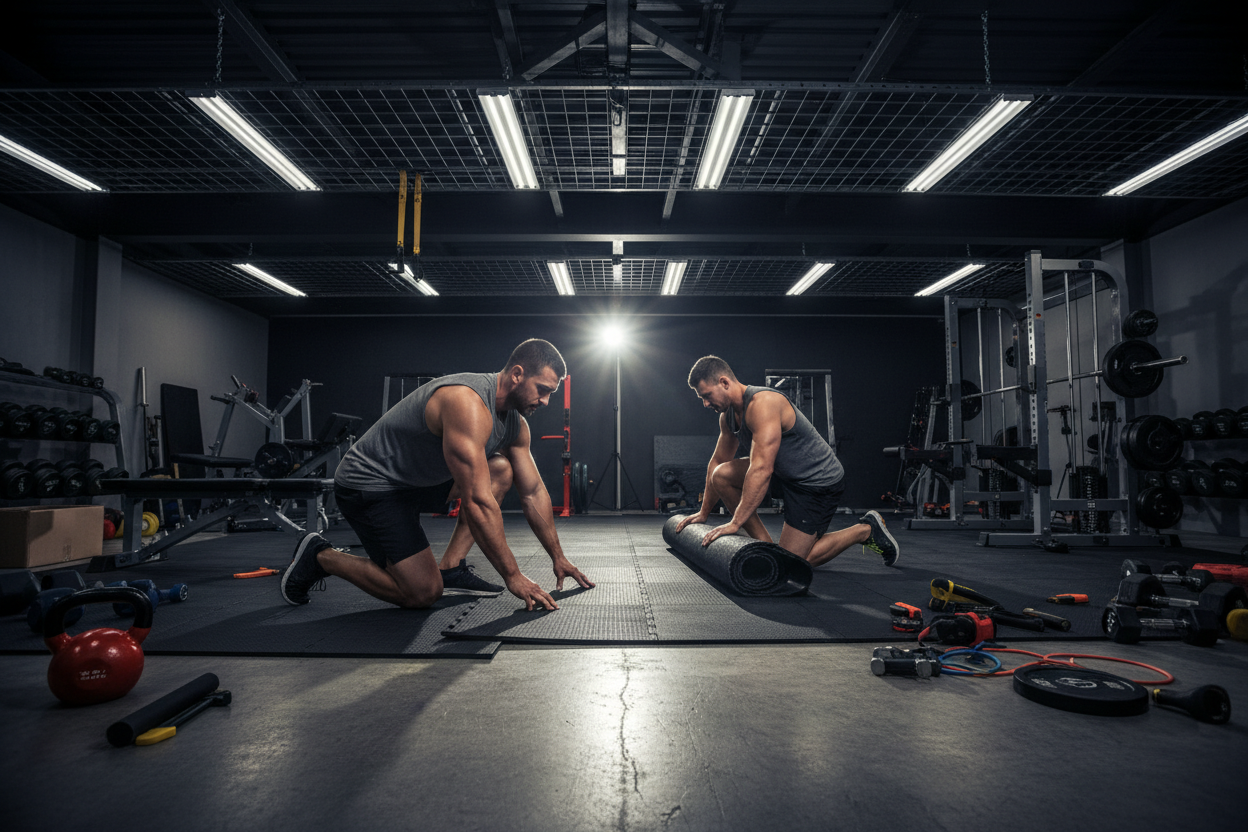
Gym Floor Installer vs DIY: What to Know Before You Build
Building a home gym is a massive investment in your health, but most people completely overlook the foundation. You can buy the highest-quality power rack and the best calibrated plates on the market, but if you are lifting on an uneven, shifting surface, your workouts will suffer. Whether you are dealing with a sloped garage floor, damp basement concrete, or a spare bedroom that needs soundproofing, your flooring dictates the safety and longevity of your entire setup.
While throwing down a few rubber squares might seem like an easy weekend project, hiring a professional gym floor installer is often the secret to achieving that premium, commercial-grade feel. In this guide, we will break down exactly when you should tackle the flooring yourself, when it is time to call in the pros, and how the right foundation protects both your equipment and your home.
Key Takeaways
- Professional installers excel at concrete leveling, moisture mitigation, and seamless rolled rubber installation.
- Improper flooring can void equipment warranties and cause permanent damage to your home's subfloor.
- DIY is best for simple interlocking tiles or horse stall mats in small, perfectly level spaces.
- Factoring in the cost of leveling compounds and adhesives, hiring a pro is often more cost-effective for spaces over 300 square feet.
Why Your Foundation Matters
Your gym floor does a lot more than just look good. It is the literal shock absorber for every deadlift, dropped dumbbell, and plyometric jump you perform.
Protecting Your Equipment and Subfloor
When you drop a 400-pound barbell, that kinetic energy has to go somewhere. If your flooring is too thin or improperly installed, the impact transfers directly into your home's foundation. Over time, this causes concrete to crack and wood joists to splinter. A professional installer knows exactly how to layer high-density rubber over a proper subfloor to disperse impact safely.
Seamless Wall-to-Wall Coverage
One of the biggest frustrations with DIY flooring is dealing with seams. Sweat, chalk, and dirt inevitably find their way into the cracks between mats, leading to unpleasant odors and bacterial growth. Professional installation of rolled rubber minimizes seams and utilizes industrial adhesives, creating a hygienic, waterproof barrier that is incredibly easy to clean.
DIY vs. Hiring Home Gym Floor Installers
Deciding between a weekend DIY project and hiring professional home gym floor installers comes down to your space, your budget, and the specific materials you want to use.
When to Do It Yourself
If you are setting up a compact 10x10 foot space in a spare room and plan to use interlocking foam or standard rubber tiles, DIY is absolutely the way to go. These materials are designed to be user-friendly. As long as the existing floor is flat and dry, you can complete the job in an afternoon with nothing more than a utility knife and a straight edge.
When to Call the Professionals
You should hire an installer if you are using heavy rolled rubber, dealing with an unlevel garage slope, or working in a basement with moisture issues. Rolled rubber is incredibly heavy (often weighing hundreds of pounds per roll) and notoriously difficult to cut cleanly without specialized tools. Furthermore, if your concrete needs to be floated and leveled before the rubber is glued down, a professional will ensure the job is done right so your squat rack does not wobble.
From Our Gym: Honest Take
When we built out our 500-square-foot equipment testing facility, we initially tried to save money by dropping 3/4-inch horse stall mats directly onto the bare, slightly sloped concrete. We thought it was a smart, gritty DIY move. We were wrong. Within three months of heavy lifting, the mats shifted. This created a half-inch tripping hazard right behind our primary power rack, and chalk dust constantly settled into the expanding gaps.
We eventually bit the bullet and brought in a local gym floor installer. They floated the concrete to fix the slope, applied a moisture barrier, and glued down 8mm commercial rolled rubber with a 10% color fleck. The difference in shock absorption and underfoot stability was night and day. My chalked grip felt more secure on heavy pulls because my feet were finally planted on a perfectly level surface. The only caveat? The industrial adhesive took a solid two weeks to fully off-gas, so we had to keep the garage doors open during training.
Frequently Asked Questions
How much does a gym floor installer charge?
Installation costs vary widely based on your location, the condition of your subfloor, and the material being used. On average, expect to pay between $2 to $5 per square foot for labor, not including the cost of the rubber flooring itself or extensive concrete leveling.
Can I just use horse stall mats instead?
Yes, horse stall mats are a popular and budget-friendly DIY option for garage gyms. However, they are prone to shifting, have strong rubber odors, and rarely feature perfectly straight edges. If you want a seamless, polished look, professional rolled rubber is superior.
Do I need a subfloor for my home gym?
If you are lifting on a concrete slab, a subfloor isn't strictly necessary, but a moisture barrier is highly recommended. If you are building a gym on a second floor or over wooden joists, a proper plywood subfloor layered with high-density foam is crucial to prevent structural damage from dropped weights.