Gym Equipment and What They Do: The Definitive Beginner Guide
Walking into a gym for the first time feels less like entering a fitness center and more like stumbling into an industrial factory. You are surrounded by pulleys, iron plates, and contraptions that look like they require an engineering degree to operate. This confusion is the number one reason people quit before they even start.
You aren’t alone in feeling overwhelmed. Understanding gym equipment and what they do is the bridge between looking at a machine with confusion and stepping up to it with intent. This guide cuts through the noise, explaining the mechanics and the physiological purpose behind the most common gear you will encounter.
Key Takeaways: Equipment Cheat Sheet
If you are in a rush, here is the high-level breakdown of the gym floor layout and equipment purpose.
- Cardio Machines (Treadmills, Rowers): Designed for cardiovascular health, warm-ups, and calorie expenditure.
- Selectorized Machines (Pin-Loaded): Equipment with weight stacks. They isolate specific muscle groups and provide a fixed path of motion for safety.
- Free Weights (Dumbbells, Barbells): Tools that require you to balance the load. They build stabilizer muscles and functional strength.
- Cable Towers: Adjustable pulley systems that provide constant tension on the muscle throughout the entire range of motion.
- Smith Machine: A barbell fixed within steel rails. It allows for heavy lifting without the need for a spotter, though it limits natural movement.
The Cardio Zone: More Than Just Calorie Burning
Most people start here because it feels safe. However, using these machines correctly requires understanding their specific impact on your energy systems.
The Rowing Machine (Ergometer)
Many assume this is just an arm workout. In reality, the rower is a posterior chain developer. It engages your legs, hips, back, and arms in a synchronized drive.
The Science: It forces your heart to pump blood vertically and horizontally, challenging your VO2 max efficiently without the high joint impact of running. It creates a metabolic demand that few other machines can match.
The Stair Climber
This isn't just about sweating; it is a glute and calf builder. By constantly stepping up, you are performing thousands of mini-lunges.
Pro Tip: Do not lean your entire body weight on the handrails. When you slump over the rails, you offload the tension from your legs to your wrists, effectively cheating yourself out of the workout.
Selectorized Machines: The Isolation Specialists
These are the machines with the pin you stick into a weight stack. They are excellent for hypertrophy (muscle growth) because they stabilize the body for you.
The Leg Press
This machine allows you to move heavy loads with your legs without compressing your spine the way a barbell squat might. It targets the quadriceps and glutes.
Safety Note: Never lock your knees out completely at the top of the movement. Keeping a slight bend maintains tension on the muscle and keeps the pressure off your knee joints.
Lat Pulldown
This machine simulates a pull-up. It targets the Latissimus Dorsi (the large wing-shaped muscles in your back). It is crucial for building a V-taper physique.
Common Mistake: pulling the bar behind your neck. This puts your rotator cuff in a precarious position. Always pull the bar down to your upper chest while leaning back slightly.
Free Weights: The King of Functional Strength
Once you leave the machines, you enter the free weight zone. This is where the real athletic base is built.
The Barbell
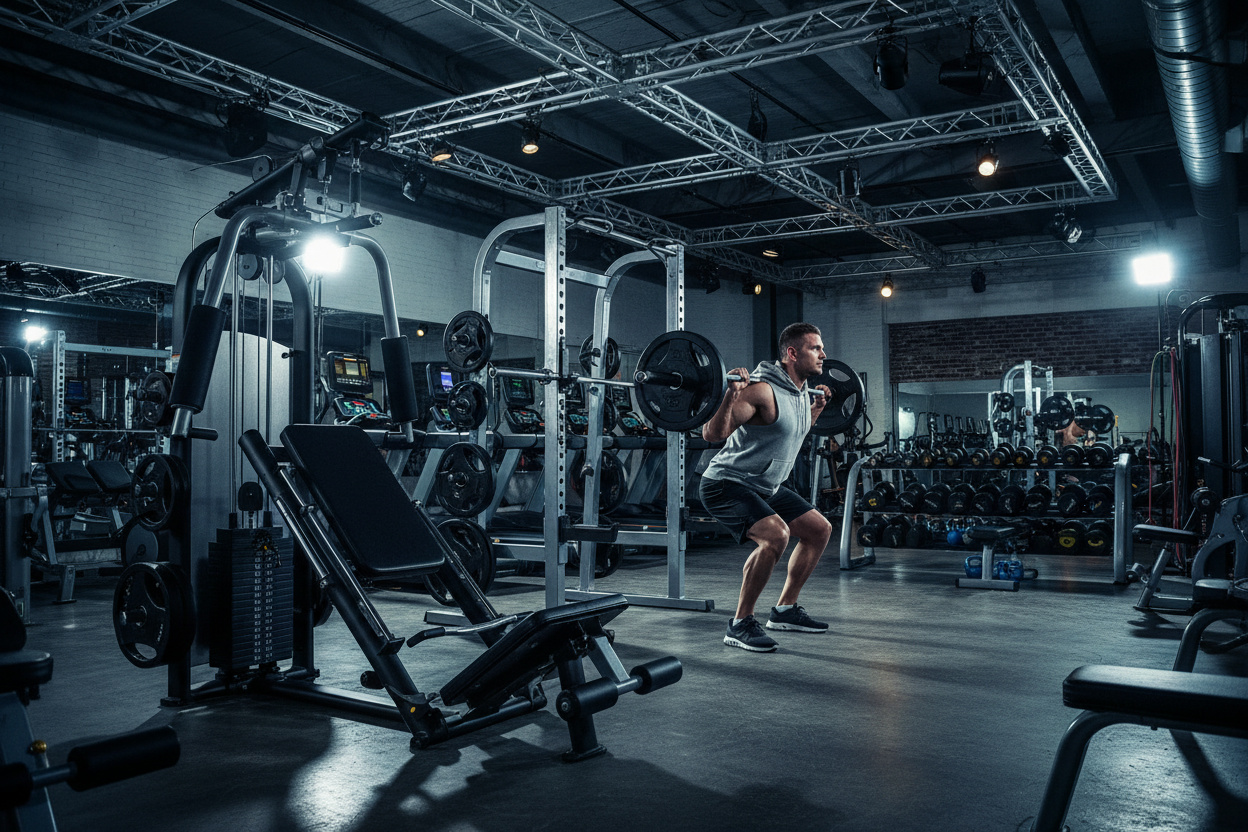
A long metal bar that can hold heavy plates. It is used for compound movements like squats, deadlifts, and bench presses.
Why it works: Because the weight isn't attached to a rail, your body must recruit smaller "stabilizer" muscles to keep the bar steady. This translates to real-world strength better than any machine.
Dumbbells
These allow for unilateral training (training one side at a time). If your right arm is stronger than your left, a barbell lets the right arm compensate. Dumbbells expose that weakness immediately.
The Cable Tower: Constant Tension
You will see a large frame with adjustable pulleys. Cables are unique because gravity doesn't dictate the resistance curve the same way it does with free weights.
With a dumbbell curl, the weight is easy at the bottom and hard in the middle. With a cable, the tension is consistent from the moment you pull until you release. This creates a unique stimulus for muscle growth known as "time under tension."
My Personal Experience with gym equipment and what they do
I want to be real about the learning curve here. I can discuss biomechanics all day, but I vividly remember my first month lifting. I walked up to a seated chest fly machine, sat down, and realized the handles were way too far back for my reach.
I tried to adjust the seat while sitting in it—which, by the way, is impossible on most older models. I had to awkwardly stand up, pull the yellow pin (which was stuck and coated in grease), and wrestle the seat up three notches while the weight stack clanged loudly.
There’s also the sensory experience no one mentions in textbooks. It’s the feeling of a cold, aggressive knurling on a barbell digging into your palms before calluses form. It’s the specific, slightly stale rubber smell of a medicine ball when you’re gasping for air during wall balls. Or the panic when you rack a dumbbell and catch the skin of your pinky finger between the weight and the rack. These gritty, awkward moments are part of the process. If you feel clumsy adjusting a machine, just know that even the biggest guy in the gym has pinched his finger or set the pin wrong a hundred times.
Conclusion
The gym floor is just a collection of tools. A hammer builds a house, but only if you know how to swing it. By understanding gym equipment and what they do, you transform them from intimidating metal sculptures into useful instruments for your physical goals.
Don't try to master every machine in one day. Pick three, learn how they feel, and execute with good form. The confidence will follow the competence.
Frequently Asked Questions
Which gym equipment is best for losing belly fat?
No single machine spot-reduces fat. However, the rowing machine and the treadmill (used for incline walking or sprints) burn a high number of calories per hour. Combine this with compound lifting (like squats) to increase your metabolic rate at rest.
Should beginners start with machines or free weights?
A mix is usually best. Machines are great for learning movement patterns safely, while free weights (like goblet squats with a dumbbell) help build necessary coordination and core stability. Don't fear the free weight section; just start light.
What is the most underrated piece of equipment in the gym?
The cable machine is often overlooked by beginners because it looks complex. However, its versatility allows you to train almost every muscle group safely with constant tension, making it excellent for both rehab and muscle building.