Green Gym Mat Explained: Upgrading Your Floor Space
Building a home gym isn't just about hoarding dumbbells and power racks; it's about creating an environment you actually want to train in. If you're tired of staring at harsh, industrial black flooring or slipping on cheap living room rugs, upgrading to a dedicated green gym mat might be the exact aesthetic and functional shift your space needs.
Beyond just looking great and bringing a touch of nature indoors, the right mat protects your joints, dampens noise for your downstairs neighbors, and defends your subflooring from dropped weights. Let's break down exactly what to look for before you roll out your new workout surface.
Key Takeaways
- Psychological edge: Green promotes focus and reduces workout anxiety, mimicking outdoor training environments.
- Thickness dictates function: Choose 5-8mm for yoga/mobility, and 1/2-inch or thicker for HIIT and weightlifting.
- Material matters: TPE offers eco-friendly cushioning, while high-density PVC or vulcanized rubber provides serious durability.
- Maintenance: Darker shades like forest or olive green hide scuffs and chalk much better than neon variants.
Why Color and Material Matter
The Psychology of a Green Workout Space
Most home gyms default to black rubber stall mats. While functional, they can make a basement or garage feel like a dungeon. A green mat introduces a biophilic element—a connection to nature—which sports psychologists suggest can lower perceived exertion and increase workout enjoyment. It's particularly effective in windowless garage setups or compact apartment corners.
Matching Thickness to Your Training Style
Your training style dictates your mat's specs. If your routine consists of bodyweight exercises, Pilates, or mobility work, a 5mm to 8mm TPE (Thermoplastic Elastomer) mat provides excellent grip and joint support without feeling 'mushy'. However, if you're dropping kettlebells or performing high-impact plyometrics, you need a high-density EVA foam or rubber mat at least 1/2-inch to 3/4-inch thick to absorb shock and prevent subfloor damage.
Space Planning for Your Home Setup
Before clicking 'add to cart', measure your functional footprint. A standard single exercise mat (usually 24 by 68 inches) is fine for stretching in an apartment living room. But for a dedicated basement or garage gym, consider interlocking green floor tiles or a large 6x4 foot rollout mat. Leave at least 12 to 18 inches of clearance around the perimeter of the mat so you don't accidentally step off during lateral lunges or wide-stance kettlebell swings.
From Our Gym: Honest Take
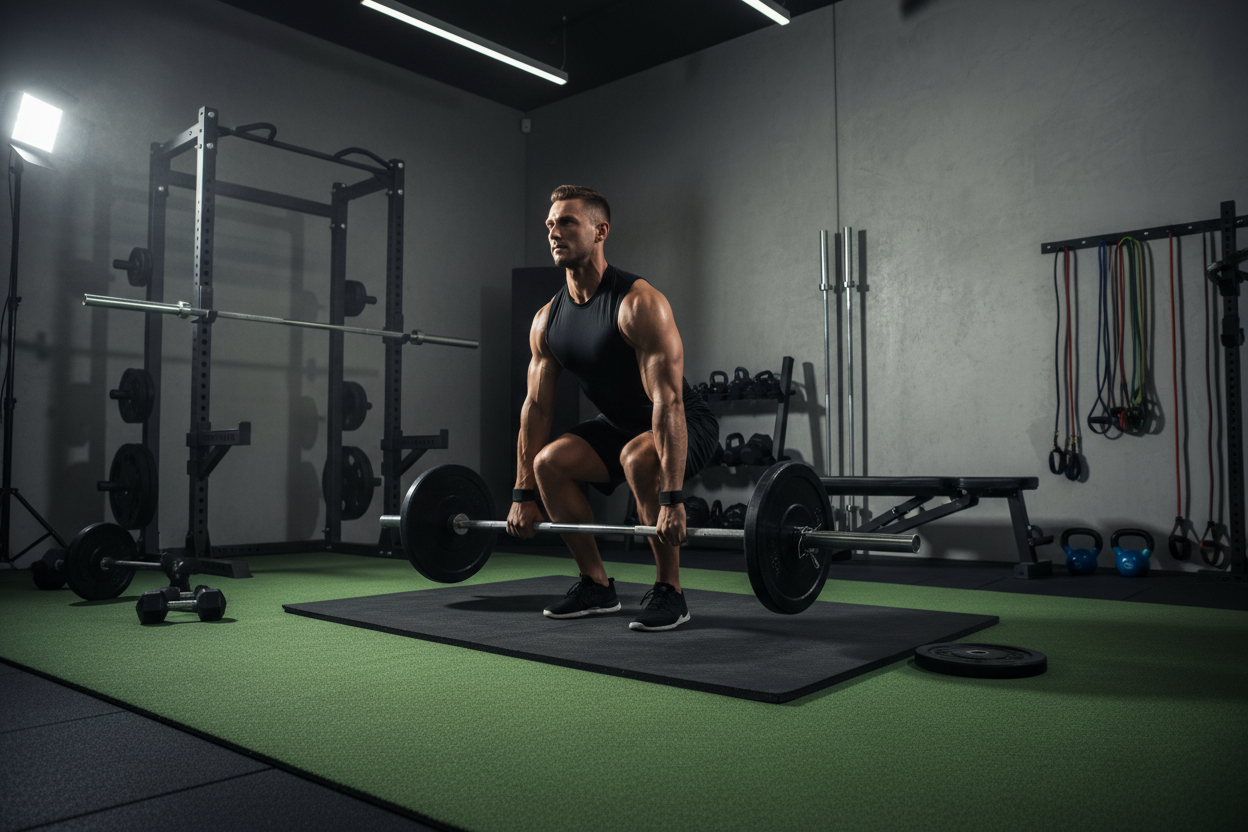
We've tested dozens of flooring options over the years, and I recently swapped my standard black interlocking tiles for a large, forest green high-density rollout mat in my own garage gym. The visual difference was immediate—the space felt brighter and more inviting. Functionally, the texture is fantastic. During heavy kettlebell snatches, my bare feet felt glued to the floor. However, a quick warning: if you use a lot of liquid chalk, it will show up vividly against the green surface. I find myself wiping it down with a damp cloth and mild soap more often than I did with my old gray mats. Stick to darker olive or forest greens; the lighter 'mint' greens show every single scuff mark from black-soled training shoes.
Frequently Asked Questions
How do I clean a green gym mat without fading the color?
Avoid harsh bleach or heavy chemical cleaners. A simple solution of warm water and a few drops of mild dish soap, wiped down with a microfiber cloth, will keep the color vibrant and remove sweat and chalk.
Is a 1/2-inch mat thick enough for heavy dumbbells?
For dumbbells up to 50 pounds, a high-density 1/2-inch mat offers adequate protection for concrete floors. If you are dropping heavier weights or have hardwood subfloors, you should upgrade to 3/4-inch vulcanized rubber to prevent denting.
Will a colored mat stain my carpets or hardwood?
High-quality TPE or high-density PVC mats generally will not bleed color. However, cheap dyed rubber can sometimes leave residue. If placing your mat over light-colored carpet or expensive hardwood, we recommend using a thin, non-slip underlayment pad for peace of mind.