Good At Home Workouts: Why Time Blocks Beat Rep Counts
I remember staring at my living room floor back in 2020, looking at a single pair of 15-pound dumbbells. My clients were doing the exact same thing in their cramped apartments, texting me in a panic because they had maxed out their rep ranges. When you only have light weights, finding good at home workouts feels like a losing battle. You do three sets of ten, it gets easy, and you stop seeing results.
As a personal trainer who has designed dozens of home gym programs, I constantly hear the same complaint. People think they need to drop a thousand dollars on a massive power rack to keep building muscle. The truth is, you just need to stop counting reps and start watching the clock.
Quick Takeaways
- Standard rep counts fail at home when you lack heavy weights to drive progressive overload.
- Escalating Density Training (EDT) uses strict 15-minute time blocks to maximize muscle fatigue.
- Pairing opposing muscle groups prevents local burnout while keeping your heart rate spiked.
- Tracking your total reps per block gives you a clear target to beat during your next session.
The Problem with Traditional Home Training
Most commercial gym programs rely on a simple formula: do 3 sets of 8 to 12 reps, and when that gets easy, add five pounds. This works perfectly when you have a rack of dumbbells ranging from 5 to 100 pounds. At home, you probably have a single kettlebell, some resistance bands, or an adjustable dumbbell set that maxes out at 52.5 pounds.
When you ask what are good home workouts, the standard fitness industry answer is to just do more reps. But doing sets of 40 bodyweight squats or 30 light dumbbell presses is incredibly boring. It also shifts your training from muscle hypertrophy to pure muscular endurance. If you want good workouts to do at home that actually build tissue, high-rep marathon sets are not the answer.
The frustration of outgrowing your equipment is exactly why most people abandon their living room routines. You need workouts I can do at home that challenge the muscles deeply without requiring heavier loads. This requires a fundamental shift in how you measure your intensity. Instead of managing the weight on the bar, you need to manage the density of your work.
What Makes Good At Home Workouts Actually Effective?
The secret to forcing muscle growth with light weights is Escalating Density Training (EDT). Originally popularized by strength coach Charles Staley, this method flips traditional programming on its head. Instead of aiming for a specific rep count, you set a strict timer. Your only goal is to complete as many total repetitions as possible before the clock runs out.
Learning how to do home workouts with EDT completely changes the intensity of your sessions. Let's say you have a 15-minute block. You pick two exercises and alternate between them. You might start by doing sets of 5, then drop to sets of 3 as fatigue sets in. Because rest periods are entirely up to you, your cardiovascular system works overtime while your muscles reach near total failure. This is what makes density blocks the most effective exercises at home.
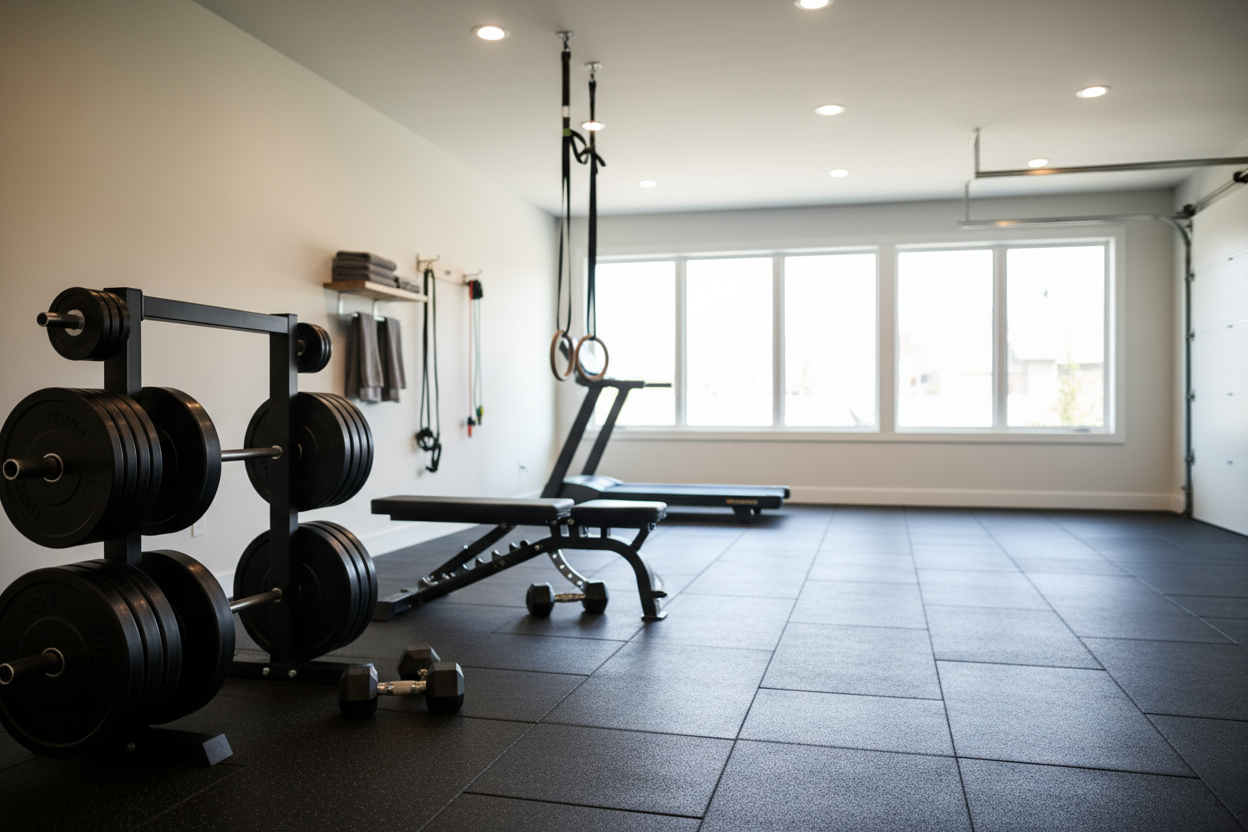
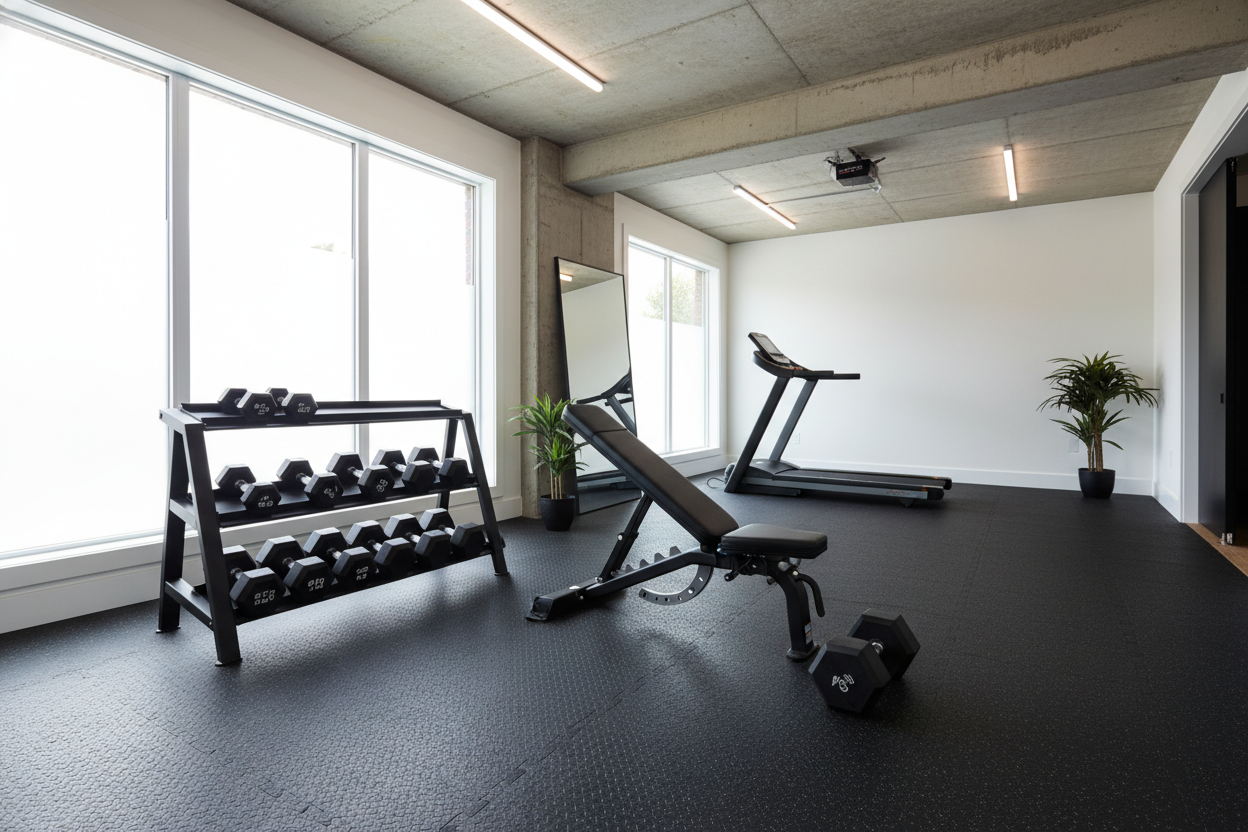
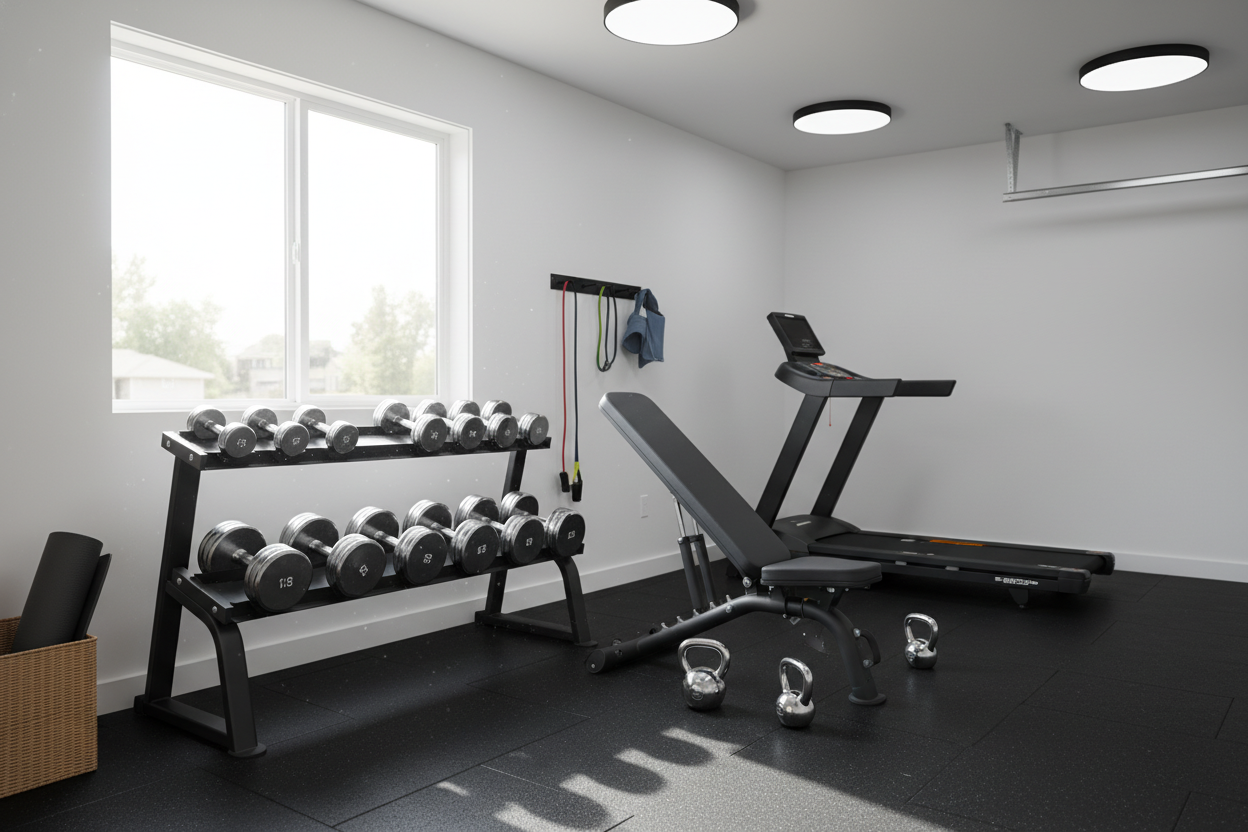
When you are racing against the clock, stability is everything. You will be dropping to the floor, popping back up, and moving fast. Having a dedicated, slip-free space like a large exercise mat for home gym setups is critical. I have seen clients try to do density blocks on hardwood floors wearing socks, and it always ends in a pulled groin or a stubbed toe. Good home workouts require an environment where you can push hard without worrying about your footing.
By the end of that 15-minute window, a pair of 20-pound dumbbells will feel like 50-pounders. You get the mechanical tension needed for growth, massive metabolic stress, and a serious sweat. This is easily the best exercise at home strategy for anyone stuck with limited equipment.
Structuring Your Time-Block Density Sessions
Building the best home workout using EDT is straightforward, but it requires smart exercise selection. You cannot just pick two random movements. The golden rule is to choose two opposing exercises. Think push and pull, or upper body and lower body. This allows one muscle group to recover slightly while the other is working, keeping your overall work rate incredibly high.
Set your timer for exactly 15 minutes. Start with a rep target that feels easy, usually around 5 reps per exercise. Perform 5 reps of the first move, then immediately perform 5 reps of the second. Rest only when you absolutely need to. As the minutes tick by, your muscles will fatigue. It is completely normal to drop your sets to 4 reps, 3 reps, or even singles by the end of the block. The goal is continuous, grinding work.
Rapid transitions between floor and standing exercises are the hallmark of these routines. You will be moving from your back to your feet dozens of times. Because of this high traffic, durable gym flooring for home workout safety and joint protection is non-negotiable. A cheap, thin yoga mat will bunch up and slide around when you are moving this fast.
If you want different workouts to do at home, you can easily stack two 15-minute blocks back-to-back. Take a strict 5-minute rest between blocks. In just 35 minutes, you will have completed a massive amount of volume that rivals any hour-long session at a commercial facility.
Upper Body Density Pairs: Chest and Shoulders
When programming top workouts at home for the upper body, I love pairing horizontal pressing with vertical pulling, or vertical pressing with horizontal pulling. One of my favorite 15-minute blocks pairs dumbbell floor presses with bent-over dumbbell rows. You hit the chest, triceps, back, and biceps all in one relentless cycle.
If you want to focus heavily on the anterior chain, you need to integrate effective chest workouts with dumbbells into your density block. Try pairing a deficit push-up (using your dumbbells as handles for a deeper stretch) with a dumbbell pullover. This combination creates incredible local muscle fatigue. People constantly ask what are some good home workouts for building a bigger chest without a bench, and this specific pairing is the answer.
For the shoulders, isolation movements work beautifully in a density format. You can reference specific workouts for shoulders at home to find the right exercises. A brutal 15-minute block involves pairing seated dumbbell Arnold presses with dumbbell lateral raises. Because the lateral raises use a lighter weight, you might need to use a resistance band if your dumbbells are too heavy. This is what are some good workouts to do at home look like when you want a massive shoulder pump in record time.
Lower Body and Core Density Blocks
Lower body density blocks are notoriously difficult. When clients ask what are some good at home exercises for legs, I always point them toward unilateral (single-leg) movements. Bodyweight squats are too easy, but alternating reverse lunges paired with a core stabilization move will absolutely wreck you in 15 minutes.
Try pairing dumbbell Bulgarian split squats (5 reps per leg) with a heavy dumbbell plank drag (5 reps per side). The split squats demand massive quad and glute activation, while the plank drag forces your core to stabilize against rotation. You get immense metabolic stress with zero heavy barbells compressing your spine.
Another excellent pairing for what are some good at home workouts is the dumbbell Romanian deadlift paired with lying leg raises. You hammer the hamstrings and lower back, then immediately attack the lower abdominals. The pump in your posterior chain will be intense, proving you do not need a 300-pound barbell to grow your legs.
Tracking Progress: How to Beat Your Score
The beauty of density training is how easily you can track progressive overload. You do not need to add weight to the bar; you just need to do more work. Keep a notebook handy. Every time you finish a 15-minute block, tally up your total reps for each exercise. If you completed 45 reps of floor presses and 45 reps of rows today, your only goal for next week is to hit 46.
I have tested this exact protocol using adjustable dumbbells ranging from 5 to 52.5 lbs. While I love the space-saving nature of adjustable weights, the one honest downside is that changing the weight dials mid-workout absolutely kills your momentum during a timed block. That is why I prefer picking one moderate weight and sticking to it for the full 15 minutes. It keeps the intensity high and the transitions seamless.
Finding workouts that can be done at home without feeling like a compromise is entirely possible. By shifting your focus from hitting an arbitrary rep count to beating the clock, you force your body to adapt, grow, and get stronger.
Frequently Asked Questions
How heavy should my weights be for density blocks?
Choose a weight you could comfortably lift for 10 to 12 reps if you were doing a single set. Since you will be doing multiple micro-sets with very little rest, this moderate weight will feel incredibly heavy by the 10-minute mark.
Can I do density training every day?
No. EDT causes significant muscle damage and metabolic fatigue. I recommend doing these intense 15-minute blocks 3 to 4 times a week, allowing your muscles adequate time to recover and rebuild.
What if I only have bodyweight to work with?
Density training works perfectly with bodyweight movements. Pairing push-ups with inverted rows (under a sturdy table) or jump squats with V-ups will provide an incredible workout without a single piece of iron.