Glutes Flexing Guide: Activation Mechanics, Movement Drills, and Home Gym Floor Setup
Understanding Voluntary Glute Activation and Muscle Tension
Voluntary glute contraction, often referred to simply as glutes flexing, is the intentional recruitment and sustained tension of the gluteal complex without relying solely on external load. While compound movements like squats and deadlifts move the hips through full ranges of motion, many lifters execute these patterns with suboptimal posterior chain involvement. When hip extension occurs passively or under dominance of the lumbar spine and hamstrings, the gluteal muscles do not reach full mechanical engagement.
Developing the ability to consciously contract the glutes in static and semi-dynamic positions builds a direct mind-muscle connection. This intentional neuromuscular recruitment establishes baseline awareness, allowing lifters to feel the musculature shorten and stabilize before loading heavy resistance. Establishing this mind-muscle link is an essential foundation for balanced movement patterns and effective ground-based training sessions.
Biomechanical Roles of Intentional Glute Contraction
The gluteal complex consists of three primary muscles, each contributing distinct mechanical functions to lower-body stability and locomotion:
- Gluteus Maximus: As the primary hip extensor and external rotator, the gluteus maximus provides propulsion, controls upright trunk positioning, and locks out hip extension at the top of hinges and thrusts.
- Gluteus Medius: Positioned along the lateral hip, this muscle drives hip abduction and stabilizes the pelvis in single-leg stance, preventing lateral pelvic drop.
- Gluteus Minimus: Working in concert with the medius, the minimus assists in abduction, internal rotation, and fine-tuning femoral head stability inside the acetabulum.
Deliberate glute flexing trains these muscles to fire cohesively. Emphasizing isometric contractions helps reinforce pelvic alignment, preventing excessive anterior pelvic tilt during standing and loaded drills.
Core Drills for Mastering Mind-Muscle Glute Contractions
Refining voluntary contraction requires low-load, high-focus floor drills that isolate hip extension and abduction without compensatory spinal movement.
Prone Hip Extension Holds
Lie face down on a supportive exercise mat with legs extended straight. Keeping the pelvis pinned firmly to the floor and the knee locked, initiate movement by squeezing one glute to lift the thigh slightly off the surface. Hold the top contraction for a brief pause before lowering slowly. Focusing on initiating the lift from the glute rather than arching the lower back ensures targeted muscular tension.
Quadruped Kickbacks
Begin on hands and knees with wrists aligned beneath shoulders and knees beneath hips. Keeping one knee bent at a right angle, drive the heel toward the ceiling by contracting the glute. The movement should occur strictly at the hip joint without rotating the pelvis or extending the lumbar spine. Pause at the top to reinforce maximal muscle shortening.
Isometric Glute Bridge Holds
Lie supine with knees bent and feet planted flat on the floor, roughly hip-width apart. Pressing through the midfoot and heels, raise the hips toward the ceiling until knees, hips, and shoulders form a straight line. Consciously squeeze both glutes at the peak of the movement, holding the static contraction while maintaining steady diaphragmatic breathing.
Integrating Active Flexing with Dynamic Hip Stretches
Active glute flexing plays a key role in movement preparation and active recovery through the principle of reciprocal inhibition. When the posterior hip musculature actively contracts, neural signaling encourages opposing anterior muscles, such as the psoas and rectus femoris, to relax and lengthen.
Pairing deliberate glute squeezes with half-kneeling hip flexor mobility drills or dynamic runner's lunges helps open the front of the hips more effectively than passive stretching alone. By actively squeezing the trailing glute during a lunge or split-stance drill, the hip achieves deeper extension without forcing the lumbar spine into hyperextension.
Upper Body Contrast: Comparing Glute Activation to Upper Quadrant Mechanics
Developing intentional tension in the lower body shares fundamental biomechanical parallels with upper-body stability. Just as gluteal engagement anchors the pelvis and provides a solid base for the spine, intentional scapular and shoulder control anchors the upper kinetic chain. Lifters looking to balance their full-body isometric control can explore our flexing guide for upper-body cues that mirror these lower-body contraction techniques.
Whether setting the lats during a heavy pull or locking the glutes at the top of a hip thrust, deliberate isometric tension ensures stability across multi-joint compound movements.
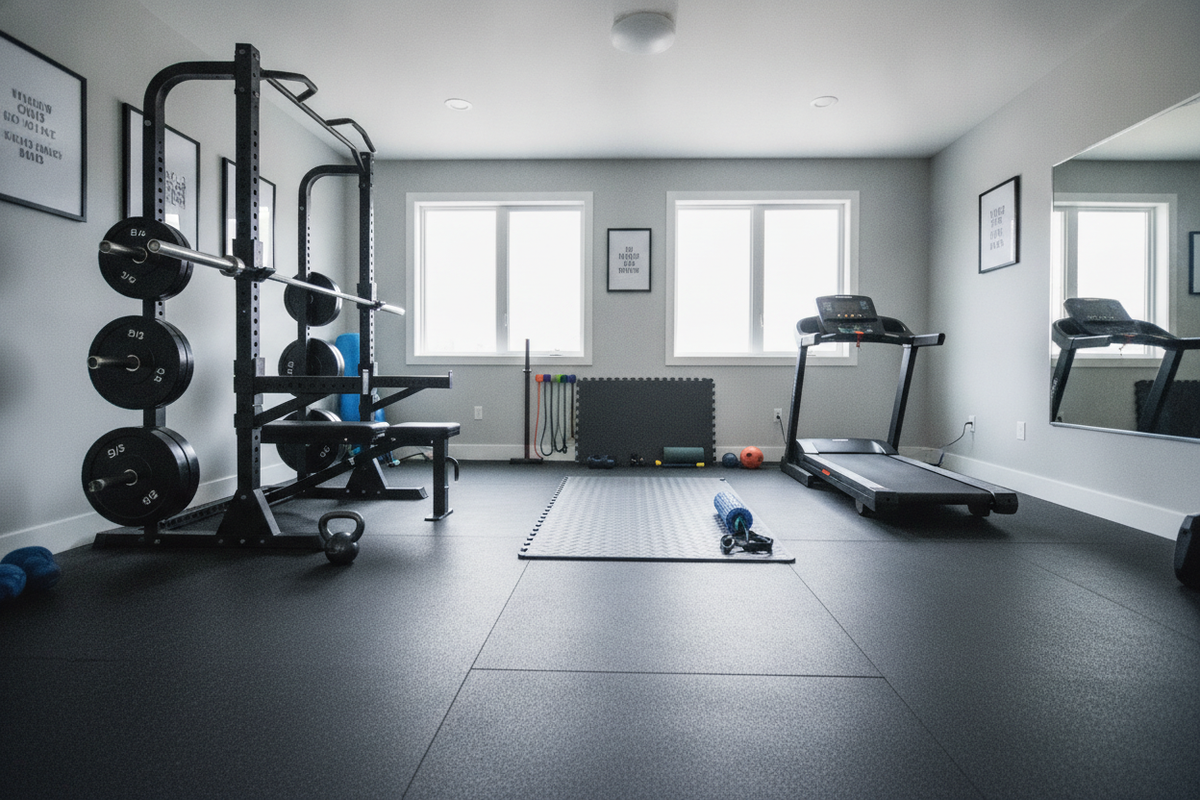
Home Gym Floor Staging and Mat Selection for Ground-Based Activation
Executing focused floor activation routines requires a dedicated surface that provides comfort, traction, and floor protection. Because glute activation drills often involve kneeling, prone positions, or supine bridging, the flooring setup directly impacts training quality.
- Supportive Cushioning: Floor drills place direct pressure on the knees, hips, elbows, and wrists. A high-density mat provides firm yet forgiving cushioning, preventing joint discomfort during quadruped or kneeling exercises.
- Surface Traction: Dynamic glute bridges and lateral band walks demand dependable grip. A textured, non-slip surface ensures feet do not slide during bridge lockouts or wide-stance stabilization drills.
- Subfloor Protection: Large-format home gym mats protect hardwood, tile, or concrete surfaces from ground friction, band anchors, and sweat exposure during extended workouts.
- Adequate Dimensions: A spacious workout mat allows seamless transitions between prone, supine, and standing activation drills without shifting off the training area.
Care and Maintenance for High-Tension Training Mats
Maintaining clean and durable gym flooring preserves traction and extends the lifespan of training equipment. Floor-based bodyweight and band activation sessions transfer sweat, skin oils, and dust to the mat surface over time.
To maintain peak performance, wipe down high-density exercise mats regularly with a mild, non-abrasive soap solution or specialized gym mat cleaner. Avoid harsh chemical solvents that can degrade textured rubber or foam surfaces. Ensure the mat is completely dry before rolling or laying it flat to prevent moisture buildup beneath the base, keeping your home gym floor clean and ready for daily training.