Glute Pushdown Explained: Transform Your Leg Day
Tired of barbell hip thrusts bruising your pelvis? If you are looking for a joint-friendly way to isolate your posterior chain, the glute pushdown might be your new favorite movement. Often performed on repurposed gym equipment, this exercise provides continuous tension without loading your spine.
Whether you are trying to break through a lower-body plateau or simply want a safer alternative to heavy step-ups in your garage gym, mastering this movement can completely transform your leg day programming while maximizing the equipment you already own.
Key Takeaways
- Utilizes an assisted dip or pull-up tower for heavy, controlled lower-body isolation.
- Targets the gluteus maximus, hamstrings, and quads with an incredibly deep stretch.
- Perfect for unilateral training to identify and fix left-to-right muscle imbalances.
- Requires minimal new equipment if your home gym already features a weight stack tower.
Mastering the Movement & Equipment
Repurposing the Pull Up Machine for Legs
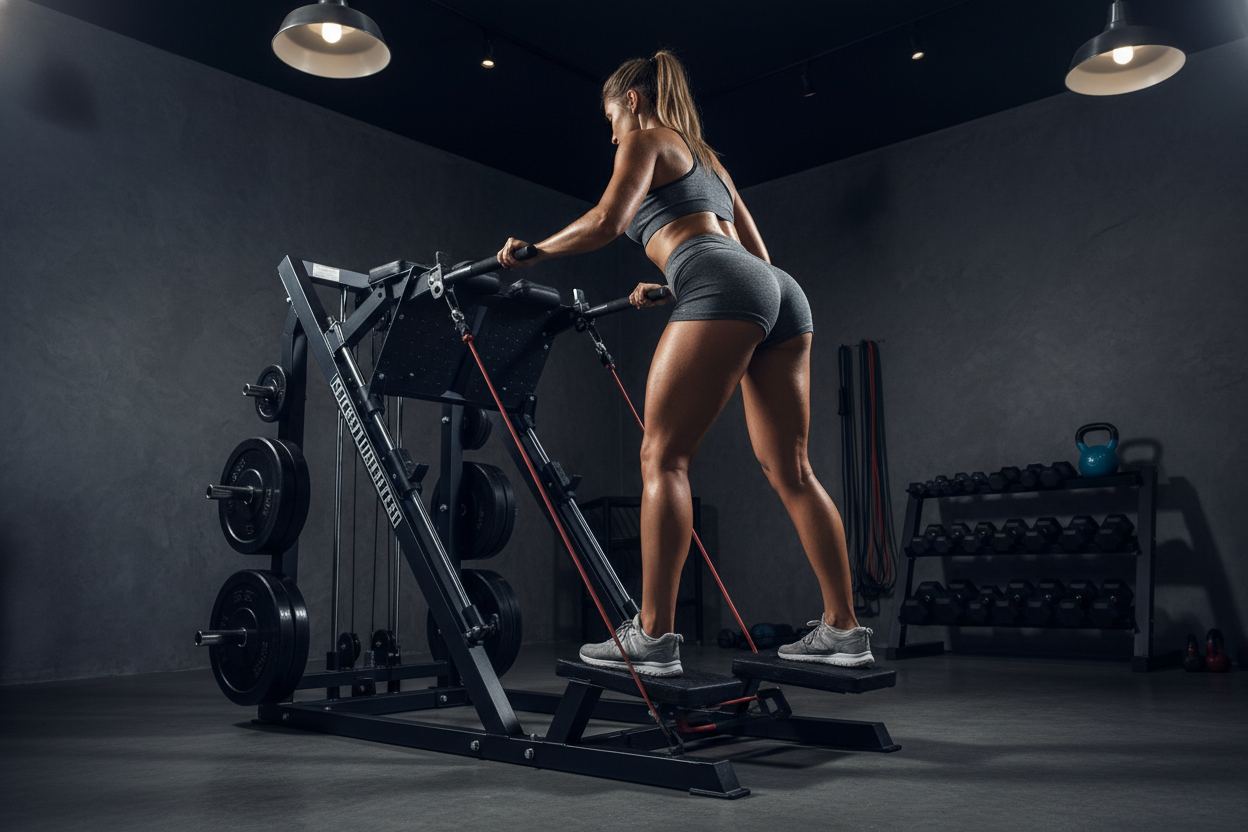
Most home gym owners don't realize their assisted pull-up tower is essentially a hidden leg push down machine. By standing on one of the side foot pegs and pressing the assisted knee pad downward with your working leg, you create a makeshift dip machine leg pushdown. This setup allows for a massive range of motion and a deep stretch that is hard to replicate with traditional free weights.
Targeted Anatomy & Execution
Glute Pushdown Muscles Worked
When you execute a proper glute press down, the primary driver is the gluteus maximus. However, because the biomechanics mimic a high step-up, leg push-downs also heavily engage your quads and hamstrings. For the most effective glute push, drive through your heel, lean your torso slightly forward, and keep your core braced to prevent your lower back from taking over the movement.
Home Gym Adaptations
Finding a Glute Pushdown Alternative
Don't have the floor space or budget for a massive weight stack tower? A highly effective glute pushdown alternative is using heavy resistance bands anchored to the top crossmember of your power rack. You can also perform a single leg glute push down using a functional cable trainer and a heavy-duty ankle strap. Whether you call them single legged glute pushdowns or a single leg push down, the key to success is maintaining stability and strictly controlling the eccentric (upward) portion of the rep.
From Our Gym: Honest Take
I've been programming the glute pushdown in our facility for over two years now. Honestly, repurposing our commercial assisted dip machine for leg days was a lightbulb moment. The thick vinyl pad holds up surprisingly well to sneaker treads, though I do make it a habit to wipe it down immediately after use to prevent premature wear. One minor caveat I've noticed: if you are under 5'4', getting your foot onto the pad for that initial push can feel incredibly awkward. I highly recommend keeping a small plyo box nearby for a safe, stable step-up into the starting position.
Frequently Asked Questions
Is a dedicated glute pushdown machine worth the space?
For most residential setups, no. Unless you run a specialized glute-building studio, investing in a single-use glute pushdown machine isn't the best use of square footage. Utilizing a multi-functional cable tower or assisted pull-up machine offers much better versatility for your dollar.
How do I prevent lower back pain during a leg push down?
Keep your core tight and hinge slightly at the hips. Do not overextend your lumbar spine at the bottom of the movement. Focus on letting your glutes and hamstrings absorb the resistance rather than hyperextending your back to gain extra depth.
Can beginners perform this exercise safely?
Yes, it is actually fantastic for beginners. Because the machine's guide rods dictate the path of motion, it is significantly safer and requires less balance than heavy barbell step-ups or walking lunges.