Getting Sweaty Isn't the Best Way to Train for Strength
I spent years in my garage gym chasing the wrong metric. I thought if I wasn't dripping sweat and gasping for air by the end of a session, I hadn't worked hard enough. I was 'exercising' myself into a hole, wondering why my bench press hadn't budged in six months despite my heart rate being pegged at 160 bpm. The truth is, the best way to train for strength often feels surprisingly boring compared to a high-intensity circuit.
- Strength is a neurological skill, not just a metabolic tax.
- Rest periods of 3-5 minutes are mandatory, not optional.
- Progress is measured in pounds on the bar, not calories burned on a watch.
- Compound movements should make up 80% of your programming.
The Trap of 'Exercising' Instead of 'Training'
There is a massive difference between exercising to get tired and training to get a result. Exercising is what you do when you just want to burn some off some steam. It’s random. It’s chasing a 'burn' in the muscles. Training, however, is a calculated approach toward a specific goal. If your goal is to move a house, you don't start by running sprints until you puke; you start by lifting a slightly heavier brick every single day.
When you train for strength, you are essentially teaching your nervous system how to recruit more muscle fibers simultaneously. This doesn't happen when you are fatigued. In fact, fatigue is the enemy of strength. If you're too winded to maintain a rigid spine during a pull, you aren't getting stronger—you're just practicing bad form under pressure.
So, How Do You Train for Strength Exactly?
If you're tired of plateauing, you have to ask: how do you train for strength without burning out? It comes down to three pillars: mechanical tension, progressive overload, and recovery. You need to lift heavy enough to create tension, track it so you can beat it next time, and rest enough so your body actually builds back the tissue.
Rule 1: Stop Chasing the Burn
Soreness is a terrible indicator of a good workout. If you can't walk for three days, you haven't 'won'—you've just ruined your ability to train legs again on Thursday. Chasing absolute exhaustion is actually the worst way to train for strength because it fries your Central Nervous System (CNS). A fried CNS means your brain can't send the high-voltage signals required to lift max loads. You want to leave the gym feeling like you could have done one or two more reps, not like you need a nap in the parking lot.
Rule 2: Track Something Measurable
You cannot manage what you do not measure. I don't care if it's a leather-bound journal or a spreadsheet on your phone, you need to know exactly what you lifted last session. This is where strength training accessories like fractional plates become your best friend. When you're nearing your limit, adding 5 lbs to a press is impossible. But adding 1.25-lb plates? That's a PR. Those tiny wins compound into massive gains over a year.
Rule 3: Master the Big Lifts
Stop wasting 45 minutes on cable flyes and concentration curls. If you want real-world power, you need to move heavy weights through large ranges of motion using multiple joints. This means squats, deadlifts, presses, and rows. If you want to build a foundation that lasts, focus on the best exercise for legs: the barbell back squat. It forces your entire body to stabilize under a load, which builds more 'functional' strength than any machine ever could.
Why Your Garage Gym is the Perfect Environment
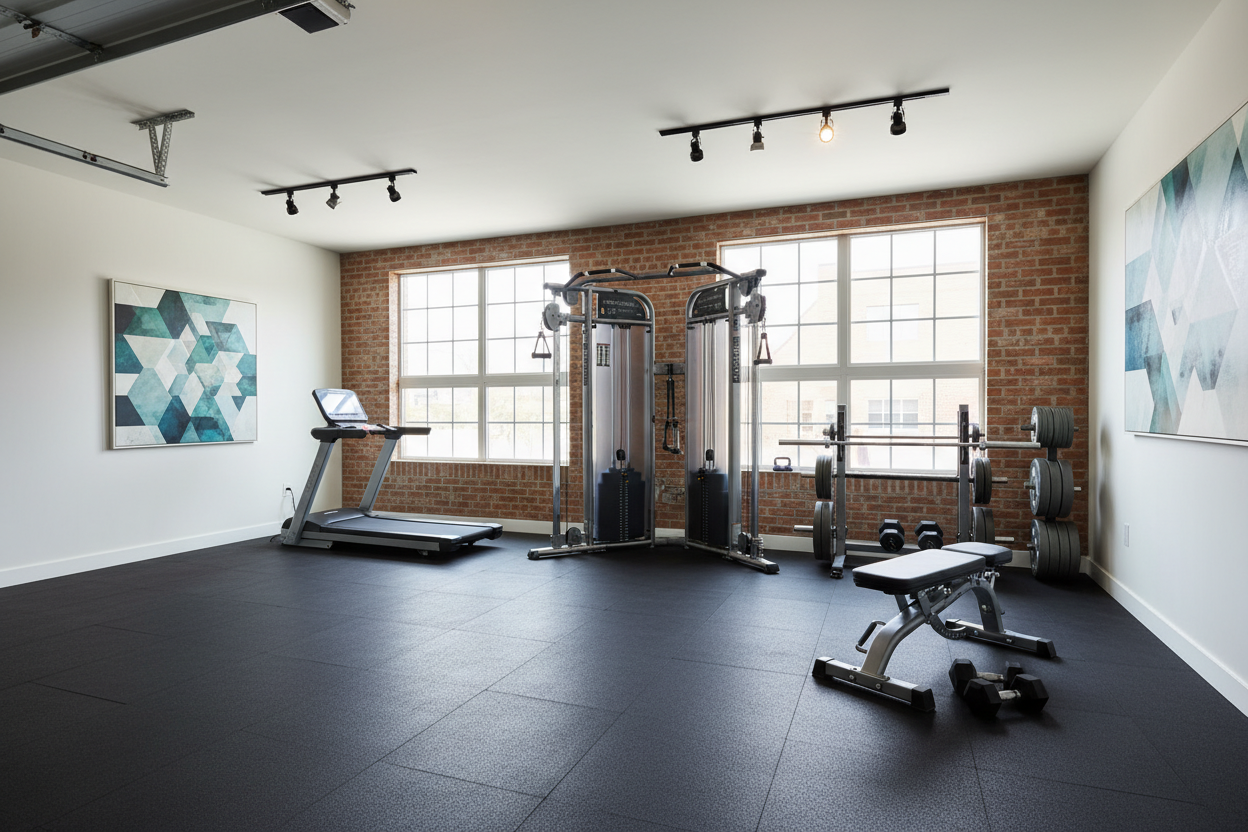
Commercial gyms are designed for people who want to look busy. They have rows of machines and 30-second rest rules. In a home gym, you have the freedom to take the 5-minute rest you actually need between sets of heavy triples. You aren't fighting for a rack or feeling pressured to move because someone is hovering. By investing in quality strength equipment—a solid power rack and a bar with decent knurling—you create a sanctuary where the only thing that matters is the weight on the sleeves.
Personal Experience: The 500-lb Mistake
A few years back, I tried to combine a high-volume 'beach body' program with a heavy powerlifting routine. I was in the gym six days a week, sweating buckets, and feeling 'hardcore.' Within three weeks, my deadlift dropped 40 lbs and my elbow tendonitis got so bad I couldn't grip a coffee mug. I was doing too much. I stripped everything back to basics: three days a week, five main lifts, and actual rest. My strength exploded. More isn't better; better is better.
FAQ
How long should I rest between sets?
For strength, 3 to 5 minutes is the sweet spot. You want your ATP stores to replenish so you can attack the next set with 100% intensity. If you're breathing hard, you aren't ready yet.
Can I still do cardio?
Yes, but don't let it interfere with your lifting. Low-intensity steady state (LISS) like walking is great. High-intensity intervals right before a squat session is a recipe for a plateau.
How many reps should I do?
The 1-5 rep range is the gold standard for pure strength. It allows for the highest intensity (weight) while keeping fatigue manageable enough to maintain perfect technique.