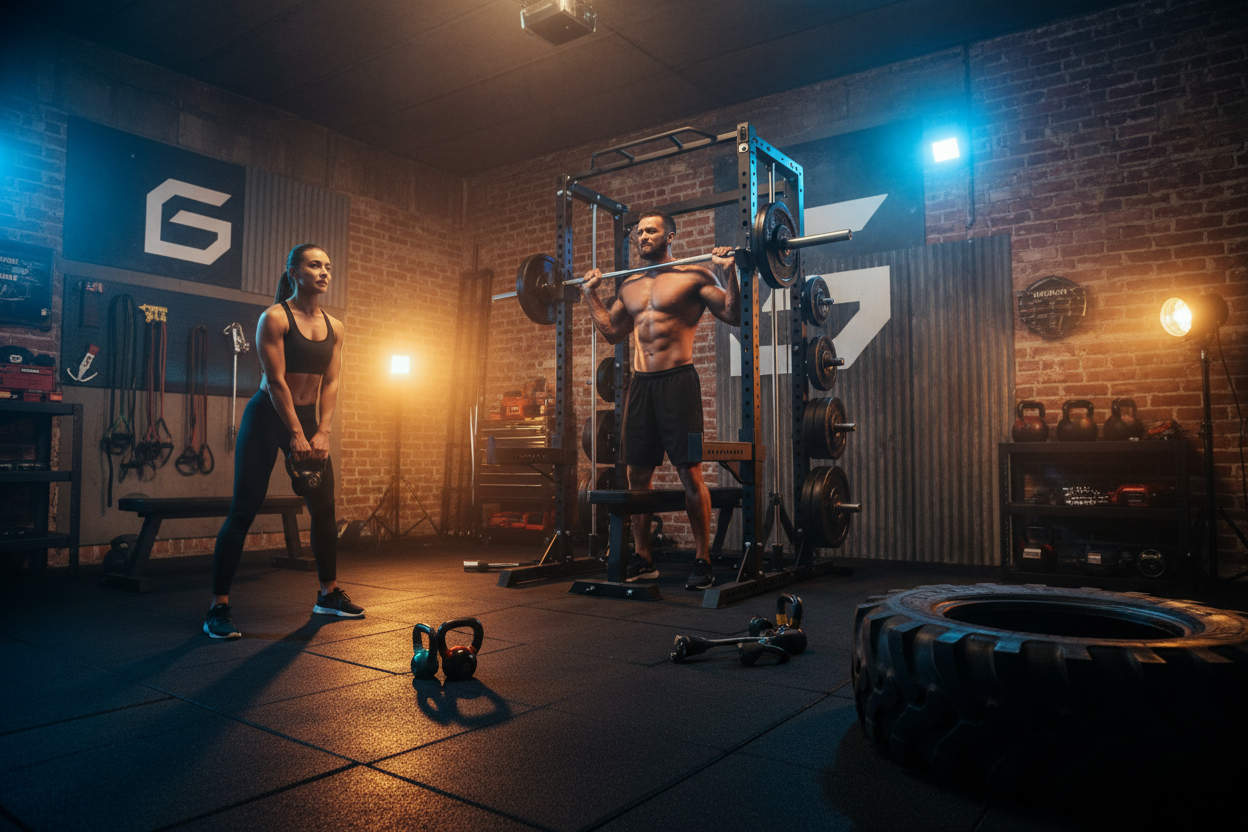
Garage Gym Reviews: The Honest Truth Before You Buy
You have cleared out the junk, measured the floor space, and saved up the cash. Now you are staring at a screen with fifty tabs open, paralyzed by the sheer volume of equipment options. Navigating the world of garage gym reviews can feel harder than the actual workout.
Here is the reality: Most equipment looks fantastic under studio lighting. But a barbell that shines on Instagram might rust in your humid garage within a month. If you want to build a training space that lasts, you need to stop looking at the aesthetics and start looking at the engineering.
Key Takeaways: Evaluating Home Gym Gear
- Ignore Static Weight Capacity: Look for tensile strength (PSI) in bars and gauge thickness in racks.
- Check the Footprint: Equipment must fit your specific space while allowing for movement (e.g., plate loading).
- Assess the Ecosystem: Ensure your rack has standard hole spacing (like Westside spacing) for future attachments.
- Warranty Matters: Lifetime warranties on structural steel are the industry standard for quality brands.
Decoding the Hype: What Actually Matters
When you are scrolling through gym garage reviews, it is easy to get sold on features you will never use. Manufacturers love to list specs that sound impressive but mean very little for your actual training stimulus.
The Steel Quality Myth
A rack claiming a "1,000lb capacity" means nothing if it wobbles every time you re-rack a squat. You need to look at the steel gauge. 11-gauge steel is the gold standard for stability. If a review doesn't mention the gauge or the dimensions of the uprights (e.g., 3x3 inch), move on. Thin steel might hold the weight, but it lacks the rigidity required for heavy lifting safety.
Knurling and Finish
Barbells are your primary connection point. Many generic garage reviews gloss over knurling texture. Is it a passive hill pattern or a sharp volcano? If you are lifting heavy, you need a grip that bites without shredding your hands. Furthermore, the finish dictates longevity. Black oxide looks cool but rusts fast. Cerakote or Stainless Steel are superior for non-climate-controlled garages.
The "All-in-One" Trap
You will often see content promising "garage gym reviews everything included" packages. Be very careful here. Often, companies bundle a high-quality rack with a low-quality bench and a subpar bar to move inventory.
It is almost always better to buy piece-by-piece. Prioritize your barbell and rack first. These are your buy-once-cry-once items. You can save money on bumper plates and dumbbells, where precision matters less, but never compromise on the equipment that keeps you from getting crushed.
My Training Log: Real Talk
Let me tell you about a mistake I made early on. I bought a budget adjustable bench based on a five-star rating on a major retail site. It looked sturdy in the photos.
Three months in, I was setting up for a heavy dumbbell press. As I leaned back with 80lbs in each hand, I felt the back pad shift. It wasn't a break, but a distinct "clunk" and a wobble in the adjustment pin mechanism. That fraction of an inch of instability completely broke my bracing. I spent the rest of the set fighting the bench rather than lifting the weight.
You can't see that wobble in a JPEG. You can't feel the cheap vinyl getting slippery when you sweat. That experience taught me that stability isn't a luxury; it's a safety requirement. Now, I physically shake every piece of gear I test before I trust it with my max effort.
Conclusion
Building a home gym is an investment in your health and discipline. Don't let flashy marketing dictate your setup. Focus on the specs, understand your space, and prioritize structural integrity over bells and whistles. Build it right, and it will outlast you.
Frequently Asked Questions
What is the most important piece of equipment for a garage gym?
The barbell. It is the tool you interact with the most. A cheap bar can bend, has poor rotation (causing wrist strain), and the knurling can wear down. Invest the most money here.
Are budget racks safe for heavy lifting?
generally yes, provided they are bolted down. However, budget racks often use lighter steel (14-gauge) which results in significant sway. For safety and peace of mind, look for at least 12-gauge steel.
How much space do I really need for a garage gym?
At a minimum, you need a 10x10 foot area to comfortably fit a rack and have room to load a 7-foot barbell. Remember to account for vertical clearance if you plan on doing overhead presses or pull-ups.