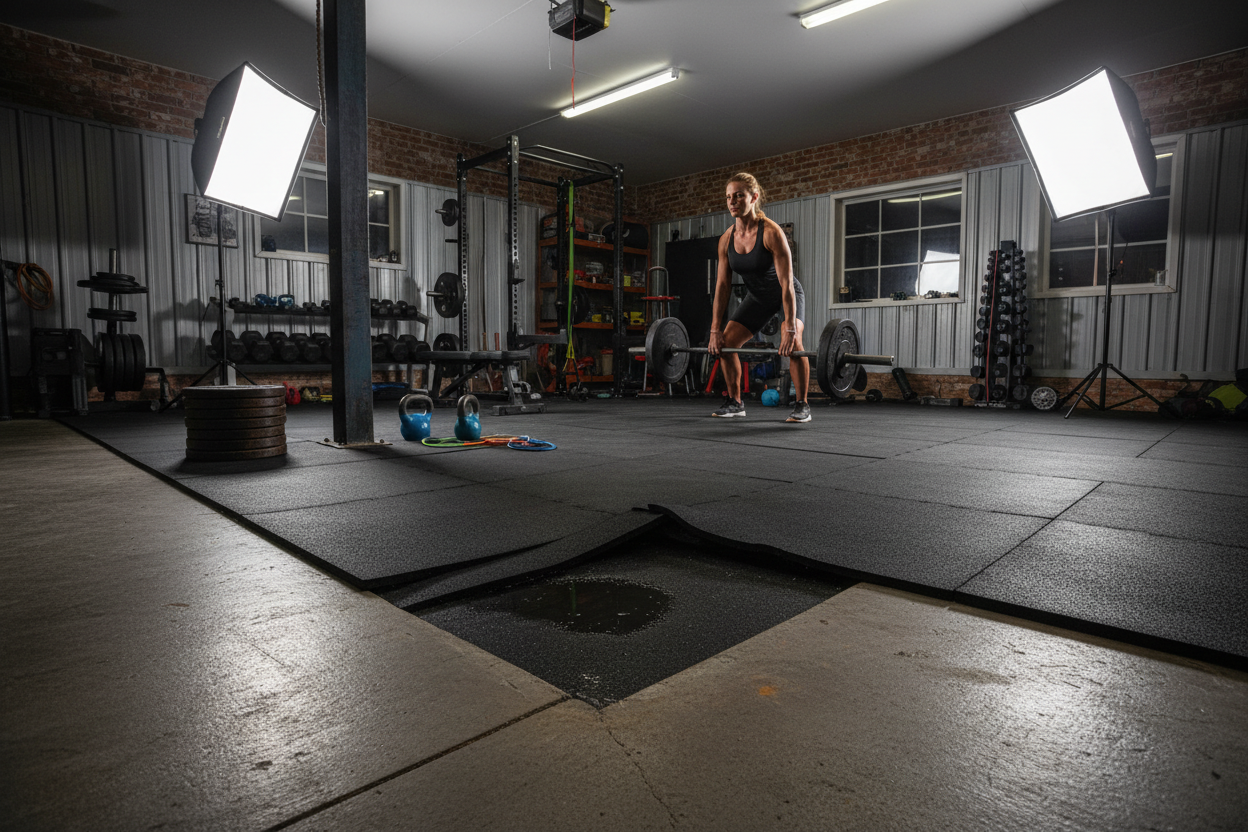
Garage Gym Flooring: Avoid These Costly Mistakes in 2025
Building out your dream training space starts from the ground up. If you are lifting on bare concrete, you are one dropped deadlift away from a cracked foundation and ruined bumper plates. Investing in proper garage gym flooring is the single most important decision you will make for your space, dictating both the safety of your equipment and the health of your joints.
Whether you are looking for a simple garage gym mat for kettlebell swings or planning wall-to-wall workout flooring for garage spaces, navigating the sea of rubber, foam, and turf can be overwhelming. This guide breaks down exactly what you need to build a durable, functional base.
Key Takeaways
- Rubber is the undisputed king of durability for heavy lifting and equipment protection.
- Aim for at least 3/8-inch thickness for general use, and 3/4-inch if you drop heavy barbells.
- Horse stall mats offer the best budget-to-durability ratio, though they require some heavy lifting to install.
- Always account for temperature fluctuations; leave a slight gap around the edges for expansion.
Finding the Best Flooring for Garage Gym Setups
Not all gym mats for garage use are created equal. Your training style directly dictates the type of garage floor gym mats you should invest in.
Rubber Rolls vs. Garage Gym Floor Tiles
When searching for rubber garage gym flooring, you typically choose between rolled rubber and interlocking tiles. Garage gym floor tiles are incredibly DIY-friendly and perfect for oddly shaped spaces. They snap together easily, making them the best floor for garage gym owners who want a quick weekend project. However, rolled rubber offers fewer seams, which means less chance of water, chalk, or sweat seeping through to your concrete. If you want a seamless gym floor for garage look, rolls are superior, though they are heavier to maneuver.
Thickness Matters: Protecting Your Foundation
A thin workout mat for garage floor yoga sessions will not survive a 400-pound deadlift. For standard strength training, 3/8-inch rubber matting for garage gym use is the industry standard. If you are an Olympic lifter or powerlifter, you need thick gym mats for garage setups—specifically 3/4-inch weight lifting mats for garage use. This thickness absorbs the shock, dampens the noise, and protects both your plates and the concrete below.
Space Planning and Practical Considerations
Transforming a parking space into a dedicated training zone requires some strategic planning, especially if it remains a multi-use area.
Multi-Use Spaces: Parking and Lifting
One of the most common questions we get is about garage gym flooring you can drive on. If you still need to park your car inside, high-density vulcanized rubber is essential. Avoid foam or low-density workout tiles for garage setups, as vehicle tires will permanently compress and tear them. Standard 3/8-inch rolled rubber or heavy-duty floor mats for garage gym use can withstand vehicle traffic, but be mindful of turning your steering wheel while parked, as this can bunch up the flooring.
DIY Home Gym Floor Installation Tips
Creating a diy home gym floor is completely manageable. Before laying down your garage home gym flooring, thoroughly sweep and mop the concrete. If you are using large rubber mats for garage gym setups (like 4x6 stall mats), use heavy-duty double-sided carpet tape to keep the edges from curling. Always leave a 1/4-inch gap around the walls; rubber expands and contracts with garage temperature swings.
From Our Gym: Honest Take
When we built our testing facility in a standard two-car garage, we initially tried to save money by using cheap, interlocking EVA foam garage floor workout mats. That was a mistake. Within a month of dragging benches and dropping dumbbells, the foam was shredded. We eventually upgraded to 3/4-inch vulcanized rubber weight mats for garage use (specifically, horse stall mats from a local farm supply).
Here is the honest truth: they smell like a tire factory for the first three weeks. We had to leave the garage door open and run high-velocity fans daily to off-gas the rubber. But two years later? They are virtually indestructible. My chalked grip drops heavy deadlifts on them weekly, and there is not a single gouge. If I had to do it again, I would skip the foam entirely and go straight to heavy-duty garage gym rubber mats.
Frequently Asked Questions
What is the cheapest home gym flooring?
The cheapest home gym flooring that actually lasts is the classic 4x6 foot, 3/4-inch thick horse stall mat. While they require effort to transport and install, they offer commercial-grade durability at a fraction of the cost of branded fitness flooring.
Are foam interlocking tiles good for a garage?
Foam workout mats for garage use are only suitable for bodyweight exercises, yoga, or light dumbbell work. They compress permanently under heavy power racks and will tear if you drop weights on them. For serious lifting, always choose rubber.
How do I clean rubber garage gym flooring?
Maintenance is simple. Vacuum up chalk and dust weekly. For a deeper clean on your garage gym mat flooring, use a damp mop with a pH-neutral cleaner and warm water. Avoid harsh chemicals like bleach, which can break down the rubber over time.