Funktional fitness training: The Ultimate Home Setup Guide
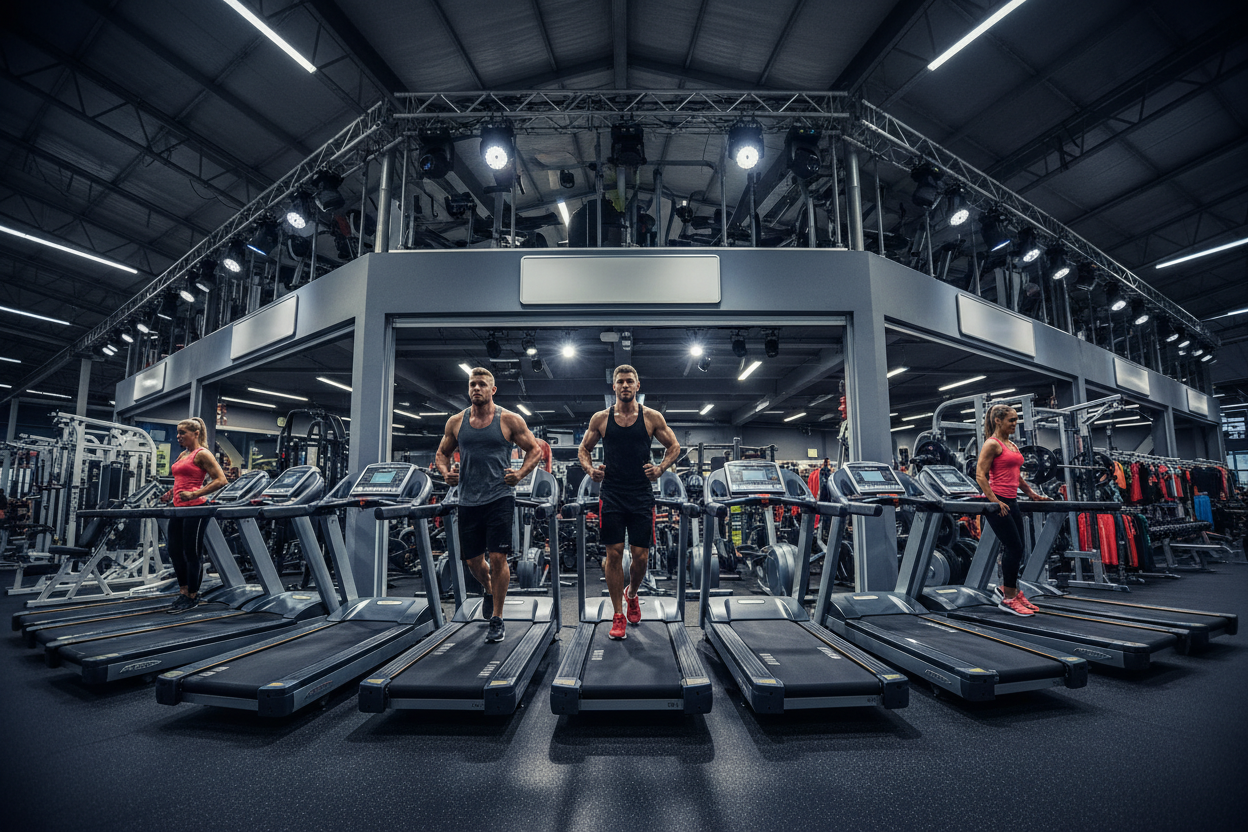
If you're tired of feeling stiff, dealing with nagging joint pain, or hitting a plateau with traditional bodybuilding splits, it might be time to rethink how you move. We often build home gyms to look like commercial facilities—packed with rigid, single-axis machines that isolate muscles but ignore how the body operates in real life.
That is where funktional fitness training comes in. By focusing on movements that mimic daily activities—pushing, pulling, hinging, and rotating—you build strength that translates outside the garage. In this guide, we will break down exactly how to equip and program your space for peak performance without wasting money on gear you don't need.
Key Takeaways
- Space over machines: A proper setup prioritizes open floor space over bulky, single-use equipment.
- Versatility is king: Focus on tools like kettlebells, sandbags, and suspension trainers that allow for multi-planar movement.
- Real-world strength: Workouts emphasize core stability, balance, and mobility alongside raw power.
- Budget-friendly scaling: You can start a highly effective routine with just two or three pieces of versatile gear.
Essential Gear for a Funktional Gym
Building a funktional gym at home doesn't require massive square footage or a second mortgage. It requires smart, intentional equipment choices that maximize your training footprint.
Free Weights: Kettlebells and Dumbbells
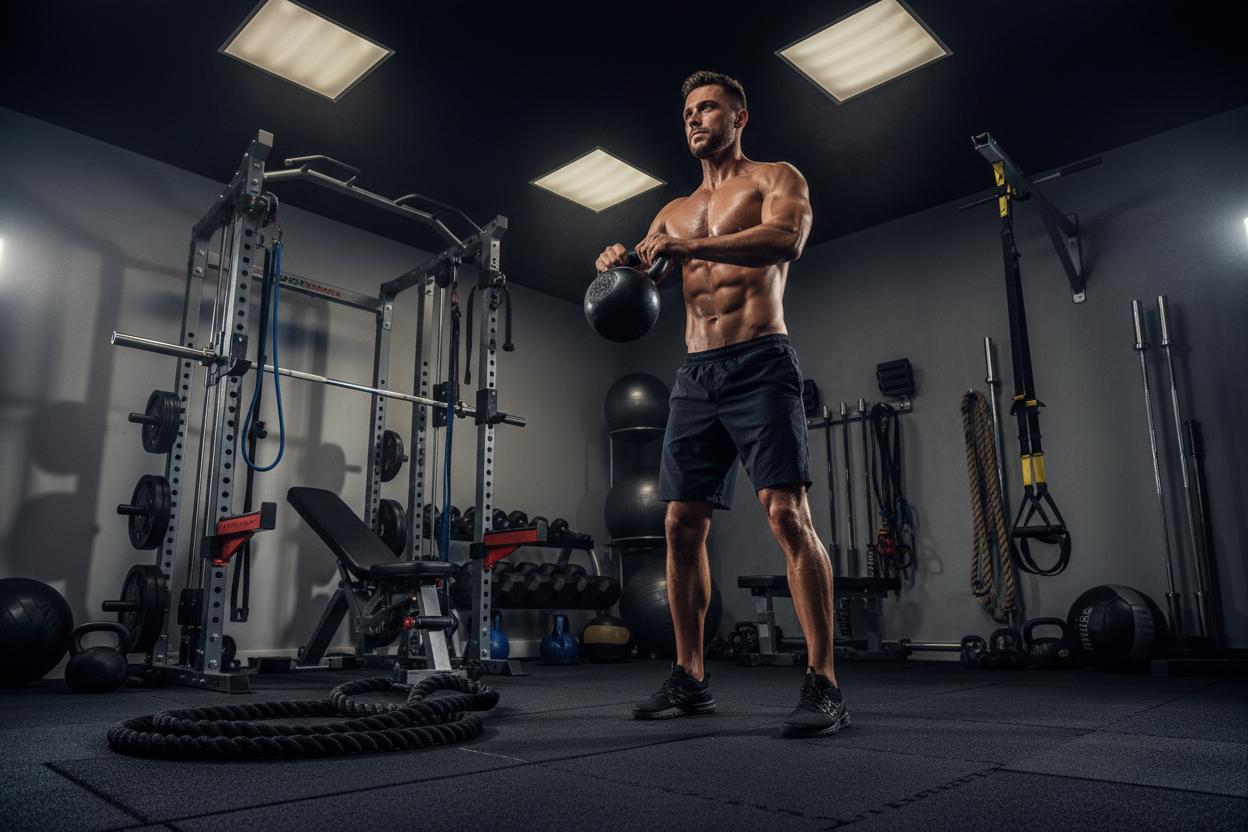
The cornerstone of any funktional setup is unilateral weight. Unlike barbells, which lock you into a fixed path, kettlebells and dumbbells force your stabilizing muscles to fire. A pair of adjustable dumbbells or a small range of kettlebells (16kg, 24kg, and 32kg for men; 8kg, 12kg, and 16kg for women) will cover 90% of your pressing, pulling, and hinging needs.
Suspension Trainers and Rings
If there is one non-negotiable for funktional fitness, it is a suspension trainer or a set of gymnastic rings. Hanging these from a ceiling joist or power rack gives you access to hundreds of bodyweight movements that scale to any fitness level. They are unparalleled for building deep core strength and bulletproofing your shoulders.
Space Planning: Making It Fit
North American garages and basements have their quirks—sloped floors, low ceilings, and tight clearances. When planning your layout, prioritize an open 'flow zone.'
The 6x8 Footprint Rule
You don't need a two-car garage to train effectively. A 6-by-8 foot rubber-matted area is the gold standard for a home setup. This gives you enough clearance to swing a kettlebell overhead, perform walking lunges, and jump onto a plyo box without clipping a wall or a parked car.
From Our Gym: Honest Take
Over the last three years, I've transitioned my own two-car garage away from a pure powerlifting setup into a dedicated space for funktional fitness training. The biggest eye-opener? The flooring matters just as much as the weights.
I initially used cheap, interlocking foam mats. Big mistake. During heavy kettlebell swings and Turkish get-ups, the mats separated, and I actually sprained my wrist when a 24kg bell caught the lip of a tile. I upgraded to 3/4-inch vulcanized horse stall mats, and it completely changed the game. The dense rubber provides the rock-solid stability you need for dynamic, barefoot training. One minor caveat: they smell strongly of rubber for the first two weeks, so keep your garage door open to let them off-gas.
Frequently Asked Questions
What makes funktional fitness training different from traditional weightlifting?
Traditional weightlifting often isolates specific muscle groups using machines or linear barbell paths. Funktional training focuses on movement patterns (squat, hinge, push, pull, carry) that engage multiple joints and stabilizers, preparing your body for real-world physical demands.
How much does it cost to start a funktional gym at home?
You can start a highly effective setup for under $300. A quality suspension trainer, a single moderate-weight kettlebell, and a jump rope provide enough resistance and cardiovascular challenge to keep you progressing for months before needing to upgrade.
Can I build muscle with this style of training?
Absolutely. While you might not build the sheer mass of a competitive bodybuilder, applying progressive overload to movements like weighted pull-ups, heavy goblet squats, and kettlebell clean-and-presses will build dense, athletic, and highly capable muscle.