Full Body Workouts With Weights: The Ultimate Home Gym Guide
If you are juggling a packed schedule and limited garage space, spending two hours a day on isolated muscle splits just isn't realistic. The secret to maximizing your home gym efficiency lies in mastering full body workouts with weights. By targeting multiple muscle groups in a single session, you can build serious strength without living in your basement gym.
Whether you are working with a basic pair of adjustable dumbbells or a fully decked-out power rack, a complete body workout with weights delivers the highest return on your training investment. In this guide, we will break down the essential gear, programming strategies, and space-saving tips to help you train smarter.
Key Takeaways
- Compound movements (squats, deadlifts, presses) are the foundation of any efficient full-body routine.
- Adjustable dumbbells and kettlebells offer the best versatility-to-space ratio for home gyms.
- Training 3 to 4 days a week provides optimal stimulus and recovery for natural lifters.
- Proper flooring (at least 3/4-inch rubber) is non-negotiable when handling heavy free weights at home.
Essential Equipment for Home Training
You don't need commercial-grade machines to get a phenomenal workout. The right free weights allow for endless variations.
Adjustable Dumbbells vs. Fixed Sets
For apartment dwellers or tight garage setups, adjustable dumbbells are the gold standard. They replace up to 15 pairs of traditional weights, saving massive amounts of floor space. If you have the luxury of a larger footprint, a fixed hex dumbbell rack offers faster transitions between exercises, which is ideal for high-intensity circuits.
Space-Saving Racks and Benches
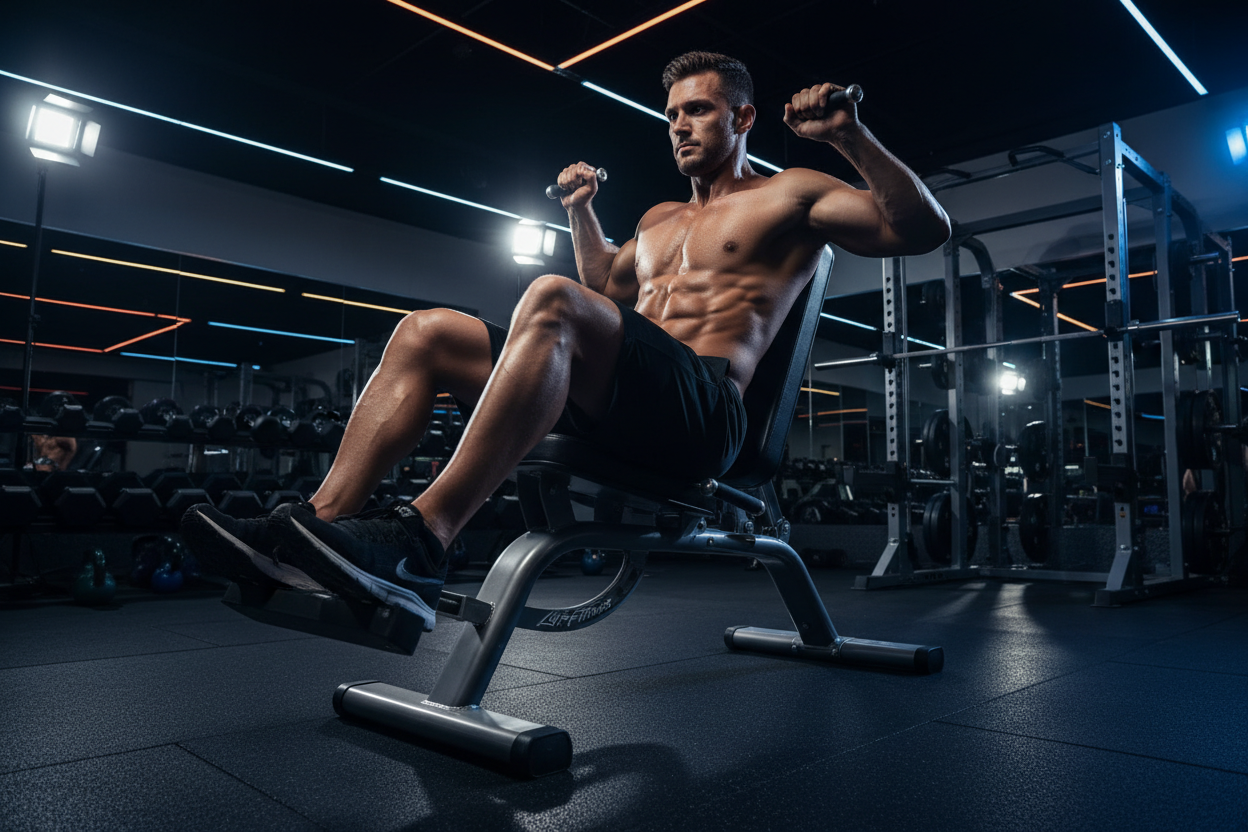
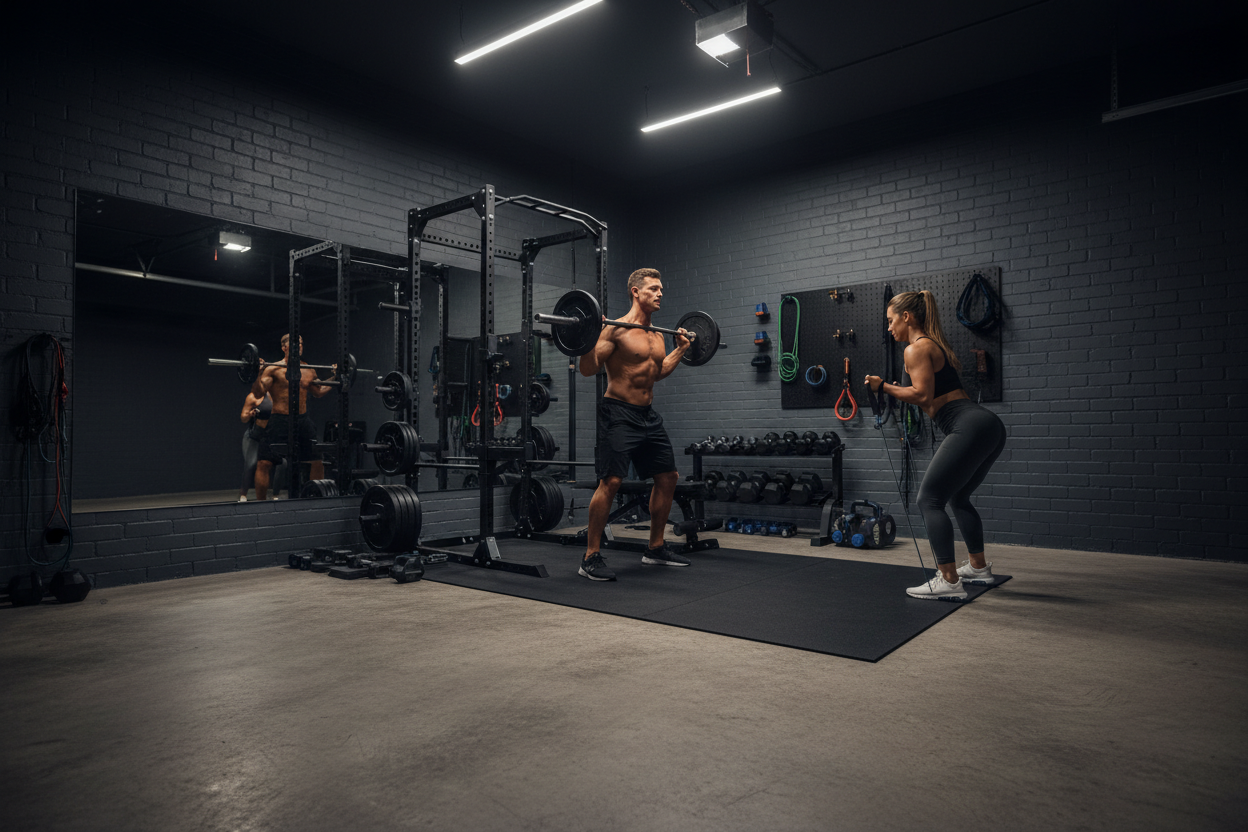
A folding wall-mounted power rack paired with an adjustable flat-to-incline (FID) bench opens up your exercise arsenal. This combo allows you to safely execute heavy barbell squats and bench presses, which are critical components of any effective strength program.
Structuring Your Routine
Randomly picking exercises won't yield long-term results. A structured approach ensures balanced muscle development and prevents overtraining.
The Big Five Movements
Every session should include a squat variation, a hip hinge (like a Romanian deadlift), a horizontal push (bench press), a vertical pull (pull-ups or heavy rows), and a core stability movement. Hitting these five categories guarantees a comprehensive session.
Sets, Reps, and Recovery
For hypertrophy and strength, aim for 3 to 5 sets of 6 to 12 repetitions per exercise. Because you are taxing the entire nervous system, resting 48 hours between sessions is crucial. More is not always better when you are moving heavy iron.
From Our Gym: Honest Take
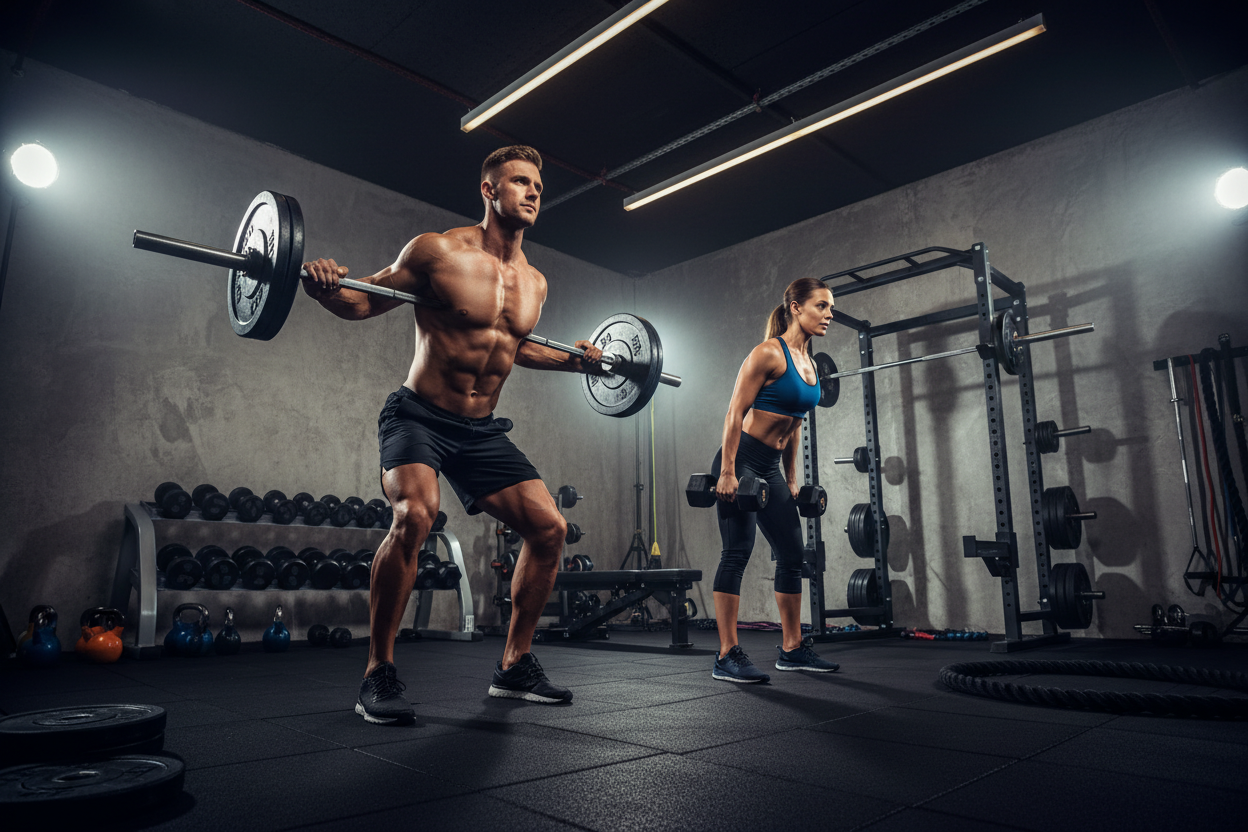
Over the past year, I transitioned my own garage gym programming entirely to full-body routines using primarily a barbell and adjustable dumbbells. One specific detail most people overlook is the importance of handle knurling on adjustable weights. During heavy goblet squats and sweaty lunges, the aggressive knurling on my urethane dumbbells was a lifesaver—my grip never slipped. However, I will admit that doing heavy deadlifts and squats in the same session can be brutally exhausting. I learned the hard way to alternate my heavy days (e.g., heavy squats on Monday, heavy deadlifts on Friday) to keep my lower back from completely burning out.
Frequently Asked Questions
Is it okay to do full body workouts with weights every day?
No. Your muscles need time to repair and grow. Training with heavy weights every day can lead to central nervous system fatigue and overtraining. Stick to 3 or 4 non-consecutive days per week.
What weights should a beginner buy for home use?
A high-quality pair of adjustable dumbbells (ranging from 5 to 50 lbs) and a sturdy adjustable bench are the best starting points. They require minimal space and support hundreds of exercise variations.
How long should a full-body session take?
If you are resting properly between sets (60 to 90 seconds) and focusing on compound movements, a highly effective session should take between 45 and 60 minutes. Anything longer usually means you are resting too much or adding unnecessary junk volume.