Full-Body Power Workout: Why Most Home Gym Routines Fail
Hitting a wall with your garage gym routine? You are not alone. Many home gym owners eventually find themselves stuck in a rut of isolation exercises and slow, grinding reps. The secret to breaking through that plateau and building athletic, functional muscle is integrating a full-body power workout into your weekly programming.
This isn't just about moving heavy weight; it is about moving weight quickly. By combining explosive movements with heavy compound lifts, you recruit fast-twitch muscle fibers that traditional bodybuilding routines miss. In this guide, we will break down exactly how to structure your training and the specific equipment you need to execute it safely in a home gym environment.
Key Takeaways
- A true power-focused routine requires moving sub-maximal loads with maximum velocity.
- Essential equipment includes a sturdy power rack, an Olympic barbell with good whip, and bumper plates.
- Adequate rest (3 to 5 minutes) between explosive sets is critical for central nervous system recovery.
- Proper flooring, like 3/4-inch vulcanized rubber mats, is non-negotiable to protect your foundation when dropping weights.
The Anatomy of a Full Body Workout for Strength and Power
Designing a routine that maximizes both force production and raw strength requires a strategic approach. You cannot just throw heavy weights around and hope for the best. A properly programmed full body workout for strength and power balances explosive primers with heavy structural lifts.
Explosive Primers vs. Heavy Grinders
Your session should always start with explosive movements while your central nervous system is fresh. Think power cleans, push presses, or heavy kettlebell swings. Once you have fired up those fast-twitch fibers, you transition into the heavy compound lifts—squats, deadlifts, and bench presses—that form the foundation of any full-body strength and power workout.
Essential Gear for Your Home Setup
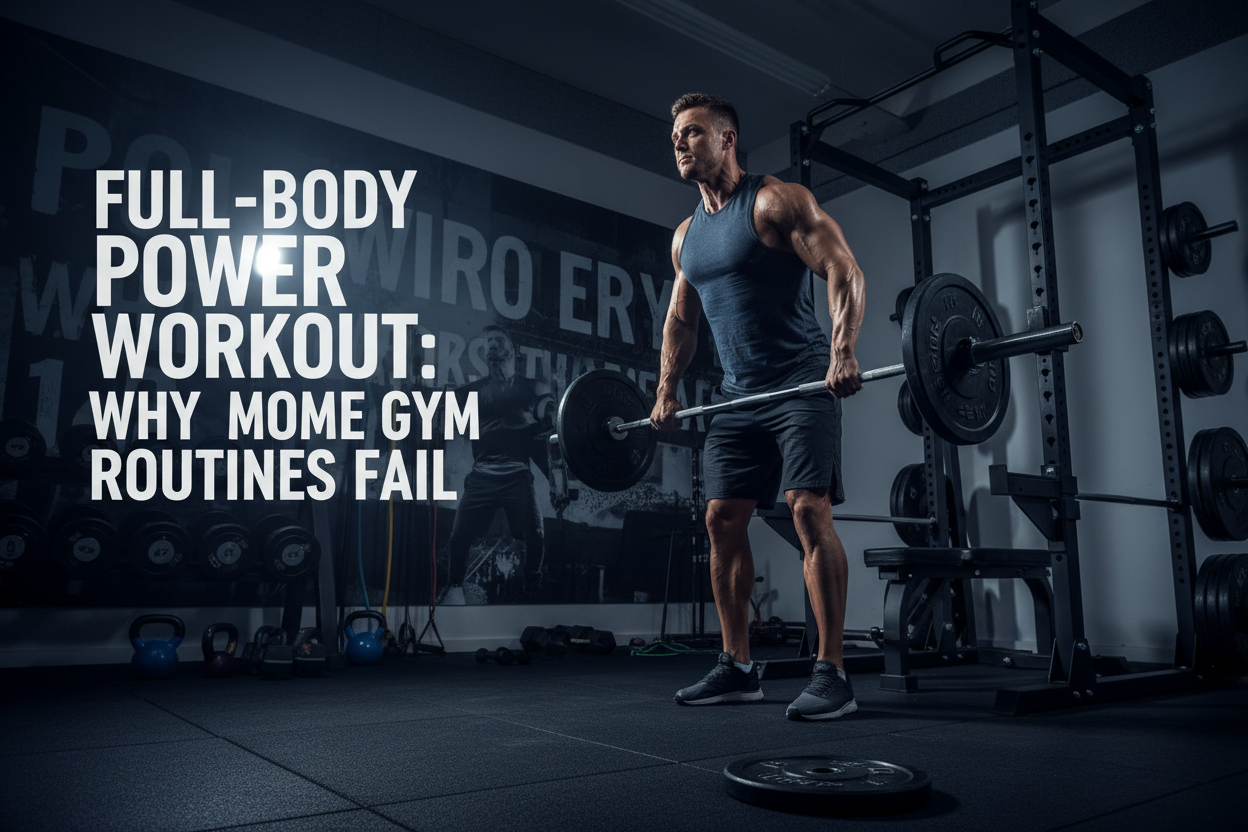
To execute a full body strength and power workout safely, your home gym needs a specific baseline of equipment. A budget standard barbell will not survive repeated power cleans. You need a 28mm or 28.5mm Olympic bar with brass bushings or bearings for a smooth sleeve spin. Pair this with high-density urethane or virgin rubber bumper plates to minimize bounce and noise in tight residential spaces.
Programming Your Full-Body Workout for Strength and Power
When transitioning from traditional hypertrophy to a full-body workout for strength and power, the biggest adjustment is volume. Power training is about quality, not quantity.
Rep Ranges and Rest Periods
For the power movements (cleans, snatches, plyometrics), keep the rep range between 1 and 5 reps per set. The goal is bar speed. If the bar slows down, the set is over. Rest periods must be strictly observed; give yourself 3 to 5 minutes between heavy power sets. Rushing your rest periods turns a power workout into a cardio session, completely defeating the purpose.
Space and Flooring Requirements
Doing explosive lifts at home requires distinct spatial planning. You need overhead clearance and a floor that can take a beating.
Protecting Your Foundation
If you are lifting in a garage or basement, standard foam puzzle mats are a recipe for disaster. When dropping 225 pounds from shoulder height during a push press, you need at least 3/4-inch thick horse stall mats or dedicated gym turf over a plywood lifting platform. Additionally, ensure you have at least 96 inches of ceiling clearance if you plan on doing overhead Olympic lifts.
From Our Gym: Honest Take
We test a lot of gear, but when I shifted my personal programming to a power-focused routine, the flaws in my budget equipment became glaringly obvious. The cheap bearings in my starter barbell seized up during power cleans, wrecking my wrists. I upgraded to a mid-tier 28mm Olympic weightlifting bar with a passive center knurl. The difference was night and day—the bar whipped perfectly during the transition, and the knurling held my chalked grip without tearing up my collarbone in the front rack position. One caveat: if you train in a humid basement like I do, you will need to oil a bare steel bar monthly, or it will flash-rust within weeks. It is a minor maintenance trade-off for vastly superior performance.
Frequently Asked Questions
How often should I do a full-body strength and power workout?
For most home gym athletes, 2 to 3 days per week is the sweet spot. Power training is highly taxing on the central nervous system, so you need at least 48 hours of recovery between sessions to maintain peak force production.
Do I absolutely need bumper plates for power training?
If your routine includes Olympic lifts (cleans, snatches) or heavy deadlifts that you intend to drop, bumper plates are mandatory. Iron plates will destroy your floor, your barbell, and potentially crack your home's concrete foundation over time.
Can I build power with just kettlebells and dumbbells?
Yes. While a barbell is the gold standard for absolute power development, heavy kettlebell swings, dumbbell snatches, and plyometric jumps are excellent alternatives if you are working with limited space or a tight budget.