Full Body Home Gym Workout: The Micro-Station Method
I remember walking into a client's garage a few years ago. It was packed with fantastic equipment, but they were barely working out. Why? Because every time they wanted to switch from squats to dumbbell rows, they had to move a bench, step over a barbell, and shift a pile of kettlebells. They were spending more time moving gear than actually lifting.
That is when I introduced them to the Micro-Station Method. By physically dividing your space into distinct zones, you can execute a seamless, commercial-gym style full body home gym workout without the constant equipment bottlenecks.
If you are tired of tripping over dumbbells and losing your heart rate between sets, it is time to rethink your layout.
Quick Takeaways
- Divide your room into specific zones: Machine, Free Weight, and Floor Work.
- Anchor your space with one primary multi-use machine to handle heavy mechanical tension.
- Use visual boundaries like exercise mats to define your free movement zones.
- Program your circuits to physically move you from heavy lifting to dynamic stability work.
The Micro-Station Concept For Home Training
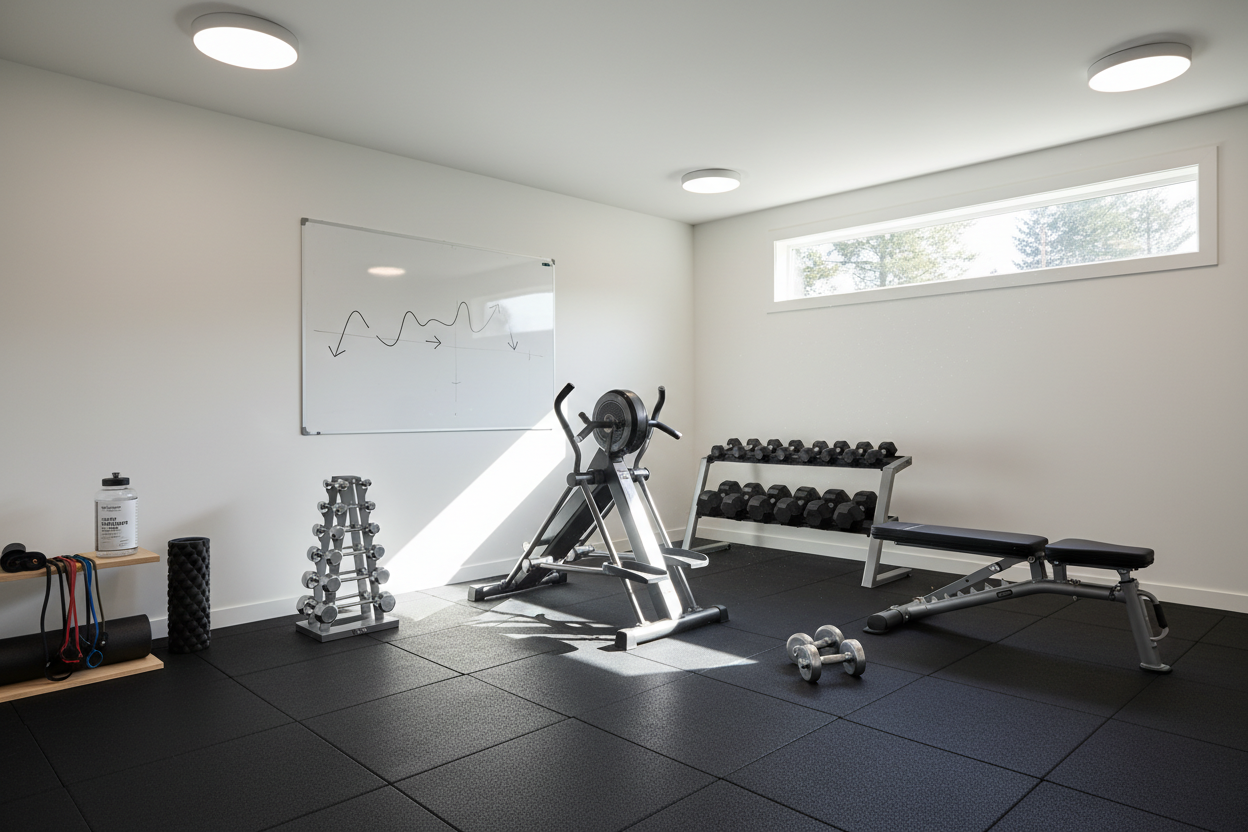
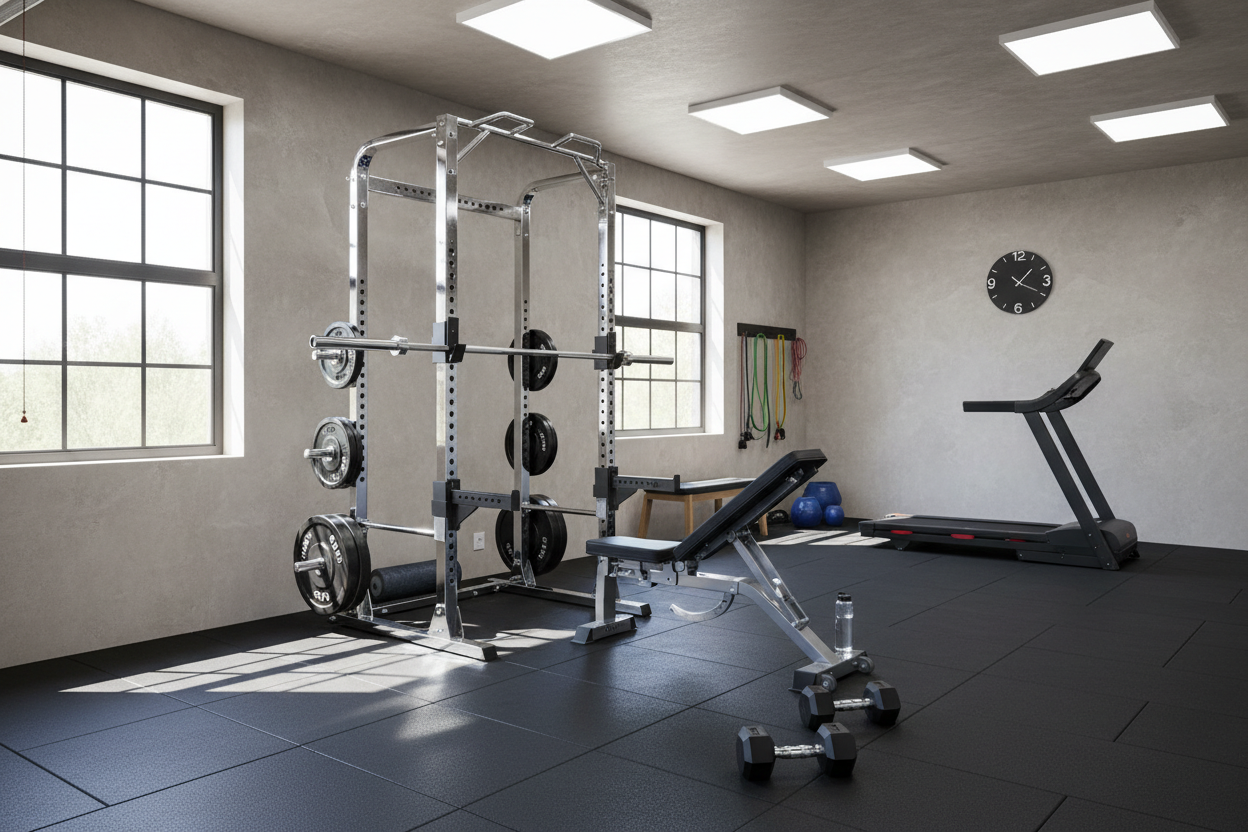
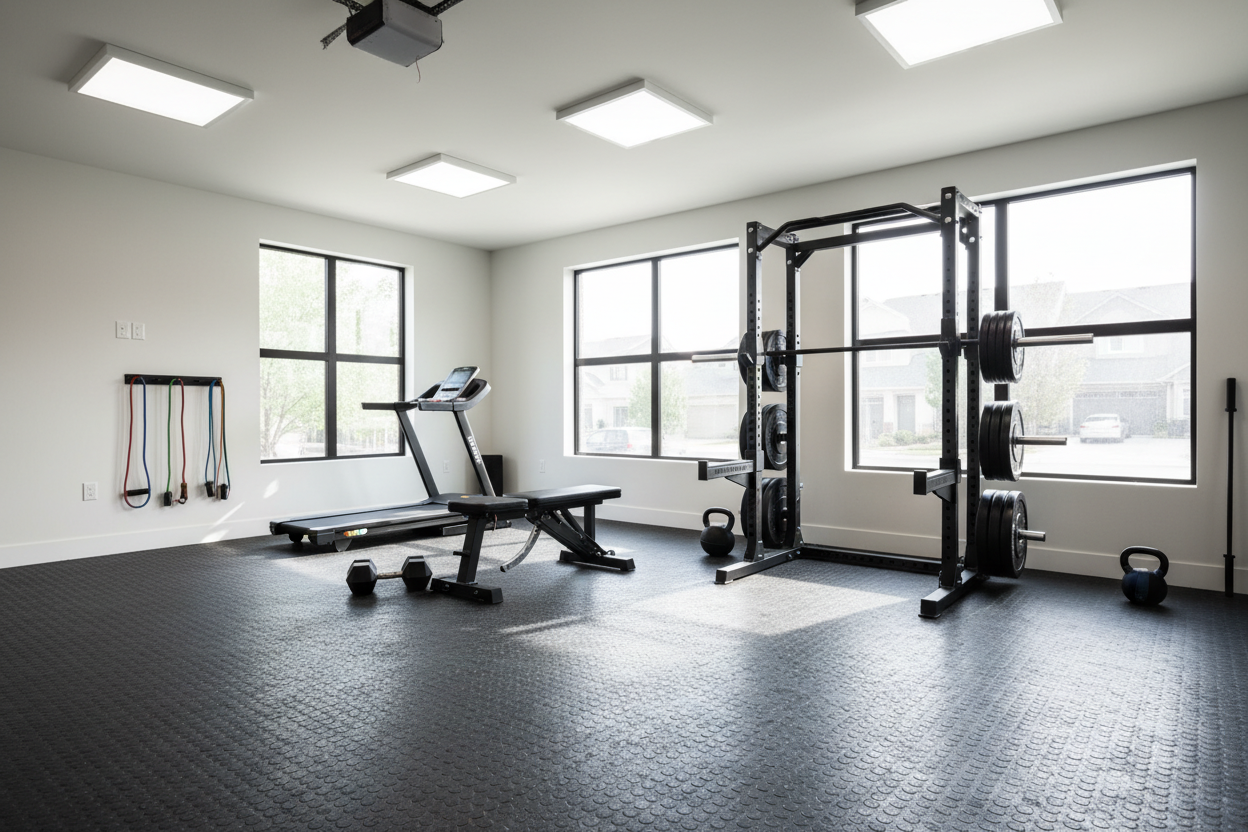
Most home gyms fail because they are treated like storage units rather than functional training spaces. The Micro-Station concept changes this by applying commercial gym logic to your spare bedroom or garage. Instead of keeping everything pushed against the walls, you create dedicated physical zones for specific types of movement.
I have built and tested dozens of setups, and the difference this makes in a 10x12 foot room is massive. When you separate your heavy machine work from your dynamic floor exercises, you eliminate transition time. You do not have to unload a barbell just to make room for burpees. You simply take two steps to your left.
In my own garage, I set up a strict two-zone system. It kept my heart rate elevated because I was not resting while moving gear. However, there is one honest downside to this method: it requires strict discipline. If you leave a 25-pound plate in your floor work zone, the whole system breaks down. You have to respect the boundaries of each micro-station.
Zone 1: The Primary Machine Anchor
Zone 1 is the heavy hitter. This is the area of your room dedicated to your primary strength driver. For most of my clients, this means anchoring the space with a functional trainer, a half-rack, or a Smith machine hybrid. This zone handles the heavy mechanical tension for both your upper and lower body.
When you are looking at the top full body workout machines, you want something with a compact footprint but high versatility. A functional trainer with dual 200-pound weight stacks typically requires about a 4x5 foot area. This is where you will do your heavy chest presses, lat pulldowns, and cable squats.
I always tell clients to place this anchor against the strongest wall or in a corner to maximize the remaining floor space. If you are unsure what fits your specific dimensions, take the time to choose the right full body machine before buying anything else. This single piece of equipment dictates the flow of the rest of the room.
Keep your attachments—ropes, straight bars, and ankle cuffs—on a wall-mounted pegboard right next to the machine. If you have to walk across the room to grab a triceps rope, Zone 1 is not functioning properly.
Zone 2: The Free Movement Floor Space
Directly adjacent to your machine anchor is Zone 2: The Free Movement Floor Space. This is where the magic happens for dynamic stability, core work, and unilateral movements. You will stock this area with a set of 5-52.5 pound adjustable dumbbells, a few kettlebells, and resistance bands.
The critical element here is traction and joint protection. You cannot do heavy goblet squats or plyometric lunges on bare concrete or slick hardwood. You need to define this micro-station with proper flooring. I highly recommend looking into large exercise mats for home gyms to create a clear visual and physical boundary.
For a standard spare bedroom, dropping down a 6x8ft exercise mat gives you exactly 48 square feet of dedicated free movement space. A 7mm thick high-density mat provides the right balance—firm enough so your ankles do not roll during heavy Bulgarian split squats, but cushioned enough to protect your knees during floor presses.
Keep this zone completely clear of clutter. Your adjustable dumbbells should sit on a small stand at the edge of the mat, not directly in the middle. This allows you to transition instantly from a heavy cable row in Zone 1 to a set of dumbbell walking lunges in Zone 2.
Programming Your Full Body Home Gym Workout
Having the right layout is only half the battle. To get a commercial-grade stimulus, you have to program your workouts to flow naturally through the micro-stations. The goal is to alternate between heavy mechanical tension in Zone 1 and dynamic, heart-pumping stability work in Zone 2.
I design these circuits using antagonist supersets or upper/lower pairings. For example, if you just fatigued your chest on the cable machine, your next move should be a lower body or pulling movement on the floor. This allows specific muscle groups to recover while your cardiovascular system keeps working.
Keep your rep ranges varied. Hit 8-12 reps on your heavy machine exercises, then push for 15-20 reps on your free weight and bodyweight movements. Because you do not have to change plates or move benches between stations, your rest periods drop from 90 seconds down to 30 seconds. This drastically increases the metabolic demand of the workout.
Sample 4-Station Circuit Routine
Here is a brutal but highly effective circuit I use with my remote clients. Run through this 4-station loop four times, resting 60 seconds only after you complete all four movements.
- Station A (Zone 1): Heavy Cable Chest Press. Set your functional trainer pulleys at chest height. Push for 10-12 reps, focusing on a deep stretch.
- Station B (Zone 2): Dumbbell Goblet Squats. Step onto your floor mat, grab a 50-pound dumbbell, and hit 15 deep reps to fire up your quads and core.
- Station C (Zone 1): Standing Cable Rows. Step back to the machine, attach a straight bar, and pull 12 heavy reps to target your lats and rhomboids.
- Station D (Zone 2): Kettlebell Swings. Finish the loop on the mat with 20 explosive kettlebell swings to spike your heart rate and hammer your glutes.
Layout Mistakes That Ruin Workout Flow
Even with the best equipment, a poor layout will ruin your rhythm. The most common mistake I see is cramped transition areas. If you have to squeeze past a bench press to get to your dumbbells, you are going to skip exercises. Keep at least a two-foot walking lane between your zones.
Another major issue is improper flooring in those transition lanes. Sweaty shoes on bare floors lead to slips. If your space is tight, bridging the gap between your heavy machine and your main floor space with a smaller 6x4ft exercise mat keeps the entire workout area safe and visually connected.
Finally, avoid the temptation to buy single-use machines. A leg extension machine is great, but it eats up 15 square feet for one movement. Stick to versatile anchors and open floor space.
Frequently Asked Questions
How much space do I need for a micro-station setup?
You can comfortably build a two-zone setup in a 10x10 foot room. Dedicate about 4x5 feet for your machine anchor and 6x6 feet for your free movement floor space.
Can I do this method with just dumbbells?
Yes. If you do not have a large machine, your Zone 1 becomes your heavy dumbbell station (using an adjustable bench), and Zone 2 becomes your bodyweight and plyometric area.
How long should a full body circuit take?
Because the micro-station method eliminates transition times, you can easily complete a high-volume full body circuit in 35 to 45 minutes.