
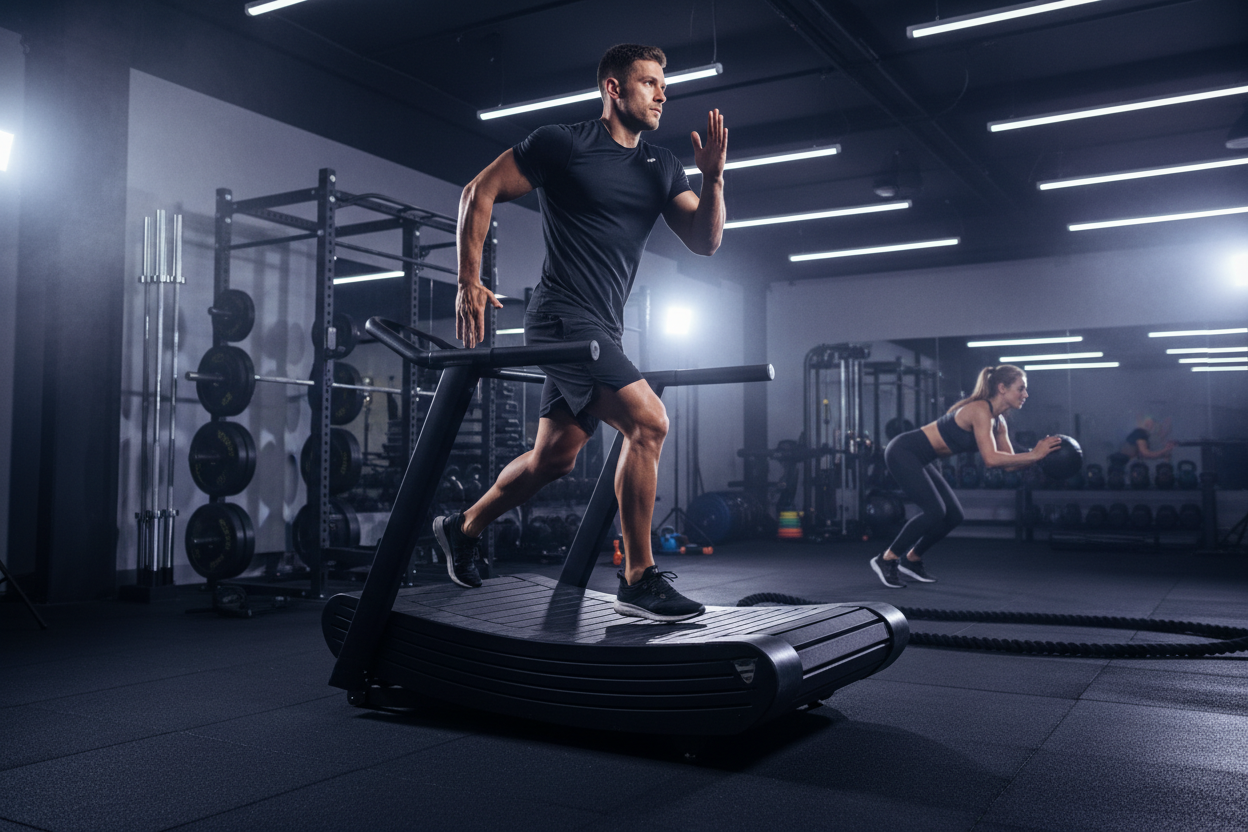
Free Run Treadmill: Why Motorless Cardio Changes Everything
If you have ever had a motorized treadmill die mid-sprint or listened to the agonizing whine of a struggling belt in your quiet basement, you know the frustration of traditional cardio equipment. Enter the free run treadmill—a motorless, curved powerhouse that puts you entirely in control of your workout.
Instead of pressing a button to dictate your speed, your body mechanics do the work. Whether you are aiming to break through a conditioning plateau or just want a piece of equipment that will not hike up your electricity bill, this guide covers everything you need to know before bringing one into your home gym.
Key Takeaways
- 100% User-Powered: No motor means you control the acceleration and deceleration instantly.
- Higher Caloric Burn: Studies show you can burn up to 30% more calories compared to motorized treadmills.
- Zero Electricity Required: Place it anywhere in your garage or basement without worrying about outlet proximity.
- Built to Last: Fewer moving electrical parts translate to significantly lower maintenance over the lifespan of the machine.
Why Ditch the Motor? Understanding the Appeal
The Mechanics of a Free Running Machine
A free running machine relies on a slatted, curved belt and gravity. When you strike the front curve of the deck, your body weight pulls the tread downward and backward. To speed up, you simply run further up the curve. To slow down, you drift toward the center. This creates an incredibly responsive training environment, ideal for HIIT (High-Intensity Interval Training) and sprint work where waiting for a motorized belt to speed up feels like an eternity.
Caloric Output and Muscle Engagement
Because you are the engine driving the belt, your posterior chain—specifically your glutes and hamstrings—works overtime. The lack of a motorized assist means you are actively pulling the belt backward with every stride, mimicking real-world outdoor running much closer than a flat, motorized deck ever could.
Space and Setup for North American Home Gyms
Footprint and Overhead Clearance
While you save on electricity, you need to be prepared for the physical footprint. Most commercial-grade free run treadmills are robust, often weighing between 250 and 350 pounds. If you are setting this up in a typical residential basement, pay attention to the deck height. The curved design often places the runner 10 to 15 inches off the floor. If you are over 6 feet tall and have standard 8-foot basement ceilings, overhead clearance can become surprisingly tight.
From Our Gym: Honest Take
We have had a commercial-grade free run treadmill in our main garage testing facility for over a year. The first thing I noticed? The learning curve is real. During my first few sessions, I felt like a toddler learning to walk—overcompensating on the curve and accidentally sprinting when I meant to jog.
However, once I found the 'sweet spot' in the middle of the deck, it completely transformed my interval days. The heavy-duty rubber slats absorb impact beautifully, and my knees have never felt better after a heavy running session. The one major caveat I will share: moving this beast is a two-person job. Even with the built-in transport wheels, navigating a 300-pound awkward frame over a garage lip required serious effort. Pick your spot and plan to leave it there.
Frequently Asked Questions
Is a free run treadmill good for beginners?
Yes, but it requires patience. Beginners should start with brisk walking to get a feel for the curved deck and how their body position affects the speed of the belt. Always hold the handrails during your first few sessions until you build confidence.
How much space do I need for a free running machine?
Plan for a footprint of at least 70 inches long by 35 inches wide. Additionally, ensure you have at least 24 inches of clearance on either side and 48 inches behind the treadmill for safety during high-speed sprints.
Is the lack of a motor bad for your joints?
Actually, many users find it better for their joints. The rubber slatted belts offer excellent shock absorption, and the curved design naturally promotes a mid-foot to forefoot strike, which reduces the harsh heel-striking impact common on flat, motorized treadmills.


