For Rear Delt Exercises, Dumbbells Actually Beat Machines (Here's How)
I remember my first commercial gym membership. I spent half my time waiting for the one reverse pec deck machine that wasn't broken or occupied by someone scrolling their phone. When I finally built my own garage gym, I realized I didn't need that clunky machine anyway. For rear delt exercises dumbbells are actually the superior choice if you understand how to manipulate gravity rather than relying on a fixed-path machine.
- Dumbbells allow for a natural range of motion that fits your specific shoulder anatomy.
- The secret to isolation is the 'reach out' cue, not pulling the weight up.
- Stability is non-negotiable; if your feet are sliding, your delts aren't growing.
- High reps and controlled eccentrics beat heavy, ego-driven swinging every time.
Why You Don't Need a Reverse Pec Deck to Grow Posterior Shoulders
The gym bros love the reverse pec deck because it is easy. You sit down, grab the handles, and swing your arms back. But machines often force your shoulders into a fixed arc that might not match your joint structure. This leads to impingement or, more commonly, just a mediocre workout where your mid-back does all the heavy lifting.
With dumbbells, you have total freedom. You can adjust your hand angle—neutral, pronated, or even supinated—to find the exact spot where that tiny muscle on the back of your shoulder actually fires. Gravity doesn't care if you are using a $3,000 machine or a pair of $50 hex weights. If you are bent over at the correct angle, the tension is constant and often more localized than what you would get on a cable stack.
Why Your Rear Deltoid Workout With Dumbbells Feels Like a Trap Day
The biggest mistake I see—and I did this for years—is the 'shrug-fly.' People try to pinch their shoulder blades together at the top of the movement. That is a row, not a fly. When you retract your scapula, you are training your traps and rhomboids, leaving the rear delts as an afterthought. To make a rear delt workout with dumbbells effective, you have to keep your shoulder blades spread wide.
Think about pushing the weights toward the side walls, not the ceiling. I have posted more detailed form breakdowns for upper body isolation over at the Workout Hub if you are struggling to feel the right muscles. If you 'reach' away from your body, you create a long lever that forces the posterior deltoid to stay under tension throughout the entire rep.
The 3-Move Rear Delts Dumbbell Workout I Actually Use
I keep my posterior training simple. I do not need fancy cables or specialized bands. I use these three movements to hit the muscle from different angles and with different loading profiles.
1. The Forehead-Supported Reverse Fly
Momentum is the enemy of the rear delt. If you are standing and swinging, you are using your lower back and legs to move the weight. Set your incline bench to about 45 degrees. Lean over it and rest your forehead on the top of the pad. This 'head-pinning' technique keeps your torso dead still. Use light weights—I usually grab the 15s—and focus on that 'reach' cue I mentioned earlier. It is humbling, but it works.
2. The Supinated Rear Delt Row
Most people pull with their palms down. Flip them over. A supinated (palms forward) grip changes the shoulder rotation and lets you pull your elbows out wider. This targets the rear deltoid workout dumbbell through a different range of motion, allowing you to move slightly more weight than a standard fly without the shoulder joint getting cranky. Keep the weights close to your body but flare the elbows high.
3. The Heavy Partial Swing (Done Right)
This is my favorite finisher. Grab weights that are about 50% heavier than what you would use for standard flyes. Lean over and just swing them in the bottom third of the range of motion. It looks like you are cheating, but it overloads the muscle at its longest point. You can plug this into a broader Build 3D Delts With This Dumbbell Shoulder Workout At Home routine to finish off your shoulder day with a massive pump.
Don't Let Footing Ruin Your Rear Delt Workout With Dumbbells
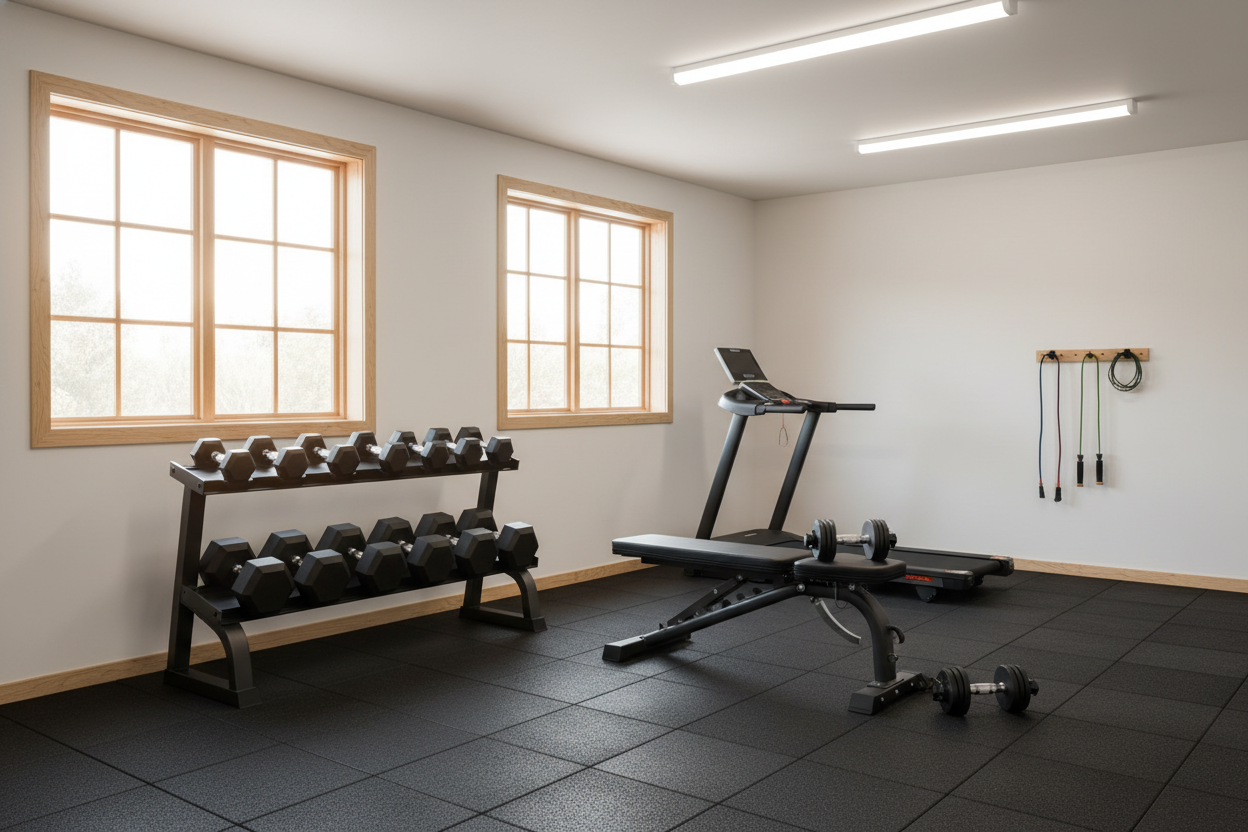
If you are training on slippery garage concrete, your brain will not let you output maximum force. You are subconsciously worried about your feet sliding out during a bent-over movement. I spent a year sliding around before I finally put down a 6X8Ft Exercise Mat Yoga Mat Gym Flooring For Home Workout. The traction change was immediate. When your feet are glued to the floor, you can actually hinge properly and focus on the rear delts dumbbell workout instead of your balance.
Personal Experience: My Ego vs. My Rear Delts
I used to be the guy who grabbed the 40-lb dumbbells for rear delt flyes. I looked like a bird trying to take flight, and my mid-back was huge, but my shoulders were flat as a board. I had to swallow my pride, drop to 12.5-lb weights, and actually learn the 'reach' cue. It felt embarrassing to use the tiny weights at first, but my shoulders finally started rounding out. Don't let your ego pick the weight; let the muscle do the work.
FAQ
How often should I train rear delts?
They are a small muscle group and recover fast. You can safely train them 2-3 times a week, usually at the end of a pull or shoulder session.
What weight should I start with?
Start lighter than you think. If you cannot hold the contraction at the top for a split second, the weight is too heavy and your traps are likely taking over.
Can I do these seated?
Yes. Seated bent-over flyes are excellent for further reducing leg momentum. Just make sure you lean forward far enough so your chest is almost touching your knees.