
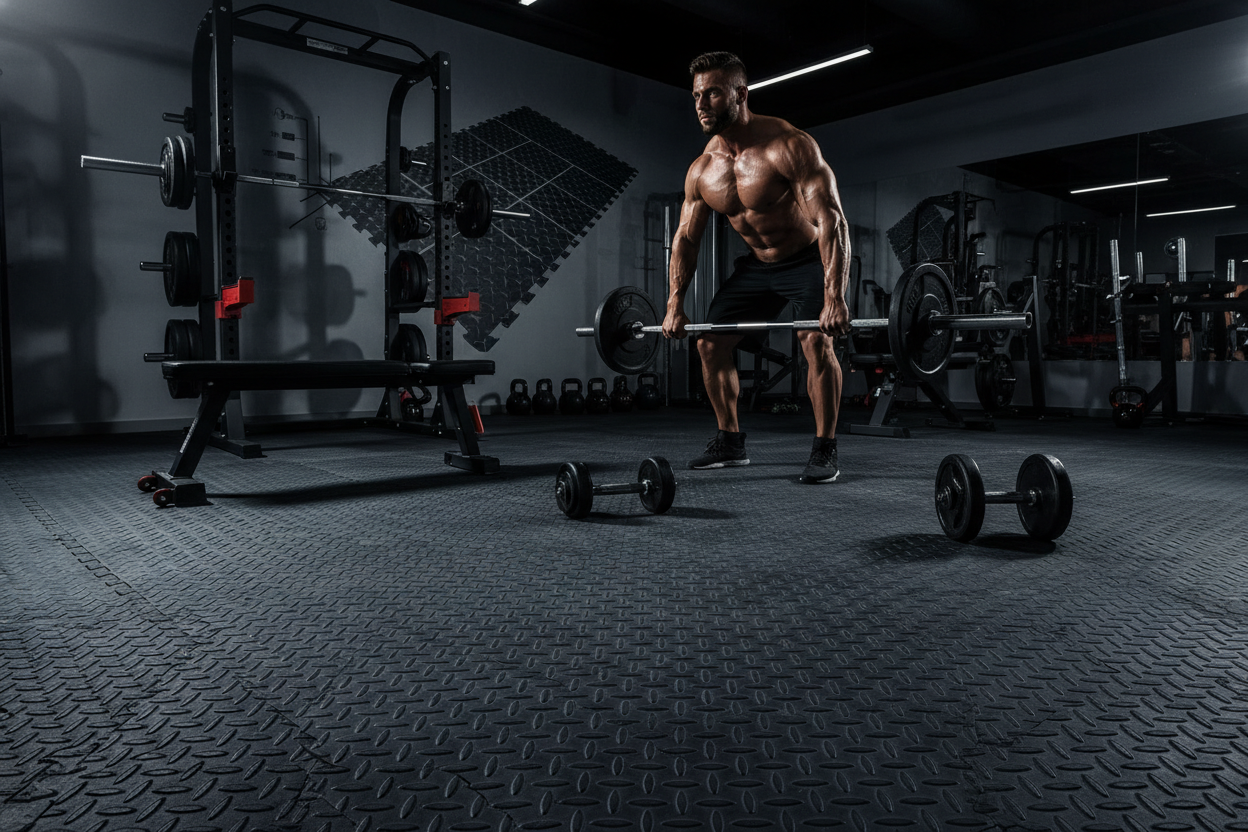
Foam Rubber Floor Mats: Why Most Home Gyms Get Flooring Wrong
Building a home gym usually starts with the glamorous stuff: shiny new barbells, heavy-duty power racks, and adjustable dumbbells. But if you are setting up shop in a spare bedroom, basement, or garage, ignoring your flooring is a fast track to cracked concrete and aching joints. That is where high-quality foam rubber floor mats come into play.
Choosing the right foundation dictates what kind of workouts you can actually perform. Whether you need a soft landing for plyometrics or a dense surface to handle heavy deadlifts, this guide will help you build your gym from the ground up without making costly mistakes.
Key Takeaways
- Not all gym flooring is created equal; high-density EVA combined with a rubber top layer offers the best of both worlds.
- A dedicated foam rubber mat provides excellent joint relief for HIIT, yoga, and bodyweight exercises.
- For heavy lifting, you need a minimum thickness of 3/4-inch to adequately protect your subfloor from dropped weights.
- Interlocking tiles are ideal for custom-shaped basement spaces, while rolled mats suit standard garage bays.
Understanding the Hybrid: Foam vs. Rubber
When outfitting a home gym, you typically see two extremes: squishy puzzle mats meant for playrooms, or heavy-duty stall mats made of vulcanized rubber. A hybrid rubber foam mat bridges this gap, offering the lightweight shock absorption of foam with the durability and grip of rubber.
Density Matters Most
If your mat is too soft, heavy equipment like a power rack will compress the material, creating a dangerous, uneven lifting surface. Look for a high-density rating. The rubber top layer resists abrasions from dropped dumbbells, while the foam core absorbs the sound and impact.
Space Planning for North American Homes
The Classic Two-Car Garage
Garages are notorious for sloping floors and cold temperatures. Interlocking tiles are incredibly DIY-friendly here. Because they are lighter than traditional heavy-duty stall mats, you can easily pull them up if you need to deep clean your garage floor after a messy, salty winter.
Basement and Apartment Setups
Noise reduction is the primary concern for indoor spaces. Thick flooring deadens the sound of jumping rope or setting down kettlebells, keeping your family (or downstairs neighbors) happy. Plus, hybrid mats are generally odor-free out of the box, unlike raw recycled rubber which can gas off for weeks.
From Our Gym: Honest Take
We have tested dozens of flooring options over the years, and I will be perfectly honest about where these hybrid mats shine and where they fall short. Last winter, I outfitted half of my own basement gym with 3/4-inch interlocking tiles.
The Good: The comfort level is unmatched. I can do Turkish get-ups and ab rollouts directly on the floor without bruising my knees. The top rubber laminate also provides excellent traction for heavy kettlebell swings, and they were incredibly easy to cut to fit around my support beams with just a utility knife.
The Catch: I left a 50-pound cast-iron dumbbell resting on its edge for three days. When I moved it, it left a permanent half-moon indentation in the foam. If you are parking a 300-pound treadmill or a loaded squat rack on these, you absolutely need to place rigid plywood or hard plastic furniture coasters underneath the contact points to prevent permanent compression.
Frequently Asked Questions
Are foam rubber floor mats good for heavy deadlifts?
They are acceptable for moderate weights, but if you are routinely dropping heavy barbells (over 315 lbs), you should build a dedicated wooden deadlift platform or use solid 3/4-inch vulcanized rubber stall mats to prevent subfloor damage.
How do I clean a rubber foam mat?
Keep it simple. Sweep or vacuum daily debris. For a deep clean, use a damp mop with a mild soap and warm water solution. Avoid harsh chemicals like bleach, which can degrade the foam core and dry out the rubber surface.
Can I park my car on interlocking foam gym mats?
No. The weight of a vehicle, combined with the heat from the tires and turning the steering wheel, will tear and permanently crush the foam. If you share your garage gym with your car, stick to rolled solid rubber or clear the mats out of the parking zone.


