
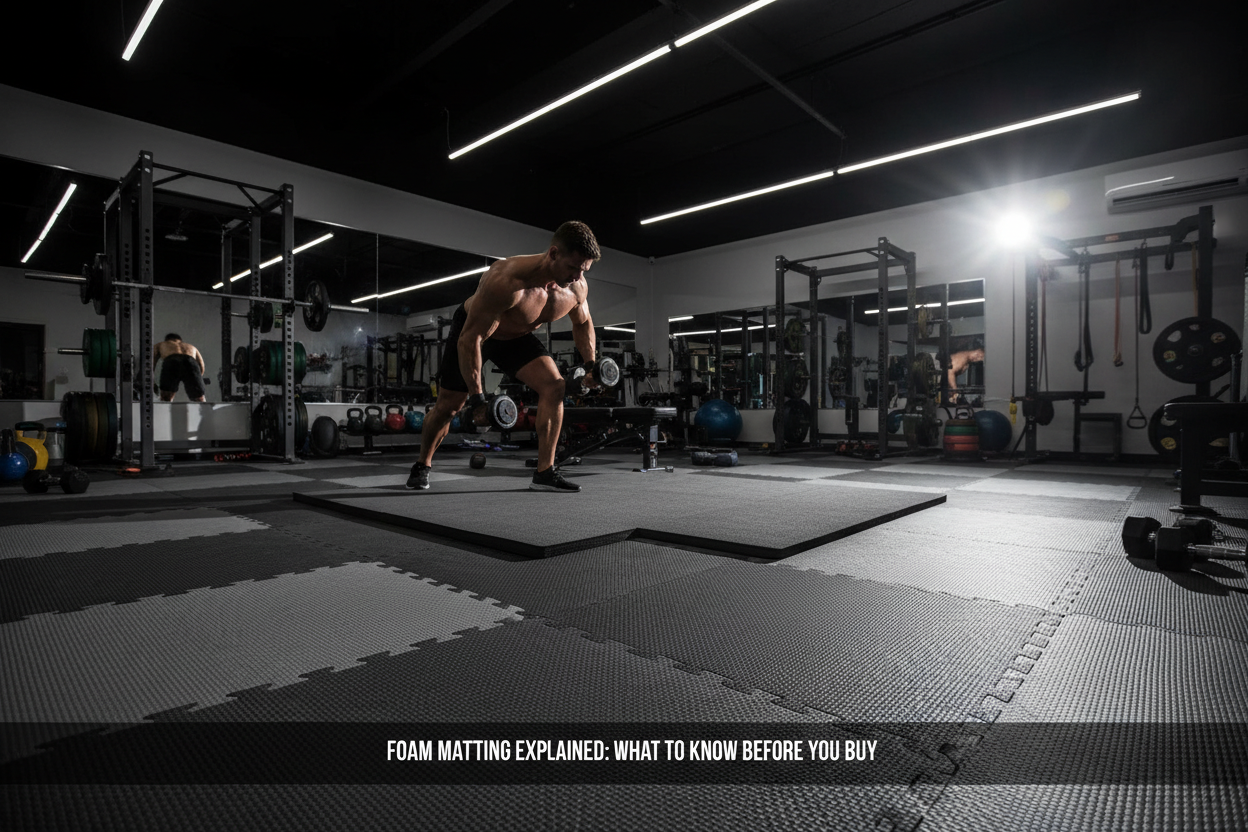
Foam Matting Explained: What to Know Before You Buy
Building a home gym usually starts from the ground up. If you are tired of dropping dumbbells on cold concrete or worrying about scuffing your apartment's hardwood, you have probably started looking into flooring options. Foam matting is often the first choice for budget-conscious fitness enthusiasts, but is it actually the right foundation for your training style?
In this guide, we will break down exactly what you need to know before covering your workout space in foam, separating the high-quality options from the cheap sponge tiles that fall apart after one workout.
Key Takeaways
- High-density EVA foam flooring tiles offer excellent shock absorption for bodyweight exercises, HIIT, and light dumbbell work.
- Interlocking foam mats are highly customizable and perfect for awkward basement corners or spare bedrooms.
- Avoid using soft foam floor tiles under heavy power racks or during maximal barbell lifts due to foam compression.
- Thickness dictates durability; opt for at least 3/4-inch foam floor padding for a dedicated home gym setup.
The Buying Guide: Decoding Foam Floor Tiles
When shopping for a foam tile floor, the sheer variety can be overwhelming. From cheap play mat floor tiles to high-end eva foam flooring tiles, not all floor mat foam is created equal.
Density and Thickness Matter
If you are buying foam floor tiles cheap from a big-box store, you might end up with thin, 3/8-inch padded floor squares. These are fine for a kid's playroom, but for a home gym, you need dense flooring foam. Look for square foam floor mats that are at least 1/2-inch to 3/4-inch thick. This ensures your foam interlocking floor won't permanently compress under the weight of a utility bench or kettlebells.
The Locking Mechanism
The beauty of lock together foam flooring lies in its versatility. Quality foam linking mats feature tight, precision-cut teeth. This means your interlocking floor foam tiles won't separate when you do burpees or lateral bounds. A secure interlocking foam floor mat creates a seamless surface, preventing dangerous tripping hazards.
Space Planning: Fitting Interlocking Mats in Your Gym
One of the biggest advantages of an interlocking floor mat system is adaptability. Whether you have a sprawling two-car garage or a tight 8x10 spare room, foam squares floor configurations can be tailored to your exact dimensions.
Measuring for Foam Floor Padding
Most foam gym flooring tiles come in 24x24 inch squares. To calculate what you need, measure your room's square footage and add 10 percent for waste. Large foam interlocking mats are surprisingly easy to trim. Using a sharp utility knife and a straight edge, you can cut your foam block mat to fit perfectly around baseboards or structural pillars. If you want a finished look, many sets of decorative interlocking foam floor tiles come with straight edge borders.
Training Applications: When to Use (and Avoid) Foam
Let's set expectations: foam for floor protection is fantastic, but it has specific use cases within a fitness environment.
Ideal Workouts for Soft Flooring Tiles
If your routine consists of yoga, Pilates, kickboxing, or light dumbbell work, a floor foam mat setup is ideal. The padded floor tile surface reduces joint impact during jumping jacks and provides a comfortable base for floor exercises. Colored foam floor tiles can also brighten up a dark basement gym while offering the necessary cushion.
However, if you are deadlifting 400 pounds, foam rubber mats or pure rubber stall mats are a safer bet. Heavy loads on a soft tile floor can cause instability and uneven footing.
From Our Gym: Honest Take
Over the years, we have tested everything from premium rubber rolls to interlocking foam mats cheap enough to buy with spare change. Here is my honest experience with foam pad squares: When I set up my first apartment gym, I covered the hardwood with 1-inch thick EVA foam interlocking pads. They were an absolute lifesaver for noise reduction and protecting the rental's floors from my kettlebell swings.
However, I quickly learned their limits. When I placed my 300-pound squat rack on the foam floor mat tiles, the metal feet sank deep into the foam, leaving permanent indentations. The rack also felt slightly wobbly during heavy re-racks. Now, I use a hybrid approach: heavy rubber interlocking floor pad tiles under the power rack, and interlocking padded floor tiles in my stretching and plyometric zone. It is the perfect balance of stability and comfort.
Frequently Asked Questions
Is foam matting good for heavy weightlifting?
No. While floor soft mats are great for impact absorption, they compress under heavy, concentrated loads. This compression creates an unstable surface for heavy squats or deadlifts. Stick to solid rubber for heavy lifting zones.
Can I put interlock mats for floors over carpet?
Yes, but with a caveat. Placing foam mats for floor over low-pile carpet works reasonably well. However, on plush carpet, the foam tiles interlocking connections may disconnect when you move around, as the soft carpet base allows too much flex.
How do I clean my foam tile floor?
Maintenance is simple. Sweep or vacuum your locking foam floor tiles regularly to remove dust. For a deeper clean, wipe down the surface with a damp mop using mild soap and water. Avoid harsh chemicals that can degrade the EVA foam over time.


