Foam Carpet: Is It Actually Worth the Investment?
If you have ever tried holding a two-minute plank on a bare concrete garage floor, you already know the harsh reality of an unfinished home gym. Joint pain, cold surfaces, and echoes can quickly kill your motivation. That is exactly where a quality foam carpet comes into the conversation.
Often seen as a budget-friendly alternative to heavy-duty rubber stall mats, these interlocking tiles or rollout mats promise a softer, more forgiving surface. But are they the right foundation for your training style? In this guide, we break down exactly when to use them, when to avoid them, and how to build a space that actually supports your goals.
Key Takeaways
- Best for light impact: Ideal for yoga, stretching, and bodyweight exercises, but not suitable for heavy Olympic lifting.
- Cost-effective coverage: Significantly cheaper and easier to install than commercial-grade rubber flooring.
- Watch the density: High-density EVA foam prevents the sinking feeling common with low-tier sponge carpet options.
- Moisture resistance: Closed-cell foam resists sweat and basement moisture, preventing mold buildup.
Understanding Foam Flooring Specs
Not all foam is created equal. When outfitting a North American home gym, the specific material you choose dictates the lifespan of your floor.
Density vs. Thickness
A common mistake is buying for thickness rather than density. A 1-inch thick, low-density sponge carpet might feel great on your bare feet, but the moment you place a 50-pound dumbbell on it, it compresses to the floor and leaves a permanent indentation. Look for high-density EVA (Ethylene-Vinyl Acetate) foam. It provides the necessary rebound to protect your joints while maintaining enough structural integrity to support light equipment like adjustable benches.
Space Planning for North American Gyms
Whether you are converting a two-car garage or carving out a corner in an unfinished basement, foam flooring offers unmatched versatility.
Basement and Apartment Setups
Foam tiles are lightweight and usually come in 24x24-inch interlocking squares. This makes them perfect for basements with tricky structural poles or apartments where you cannot permanently alter the subfloor. Plus, they offer excellent acoustic dampening. If you are doing burpees in a second-floor apartment, a dense foam base will save your downstairs neighbors a lot of grief.
Training Application: Where It Shines
Your flooring should match your programming. If your routine heavily features powerlifting, foam will create an unstable surface that compromises your kinetic chain. However, for specific modalities, it is the superior choice.
Mobility and Bodyweight Work
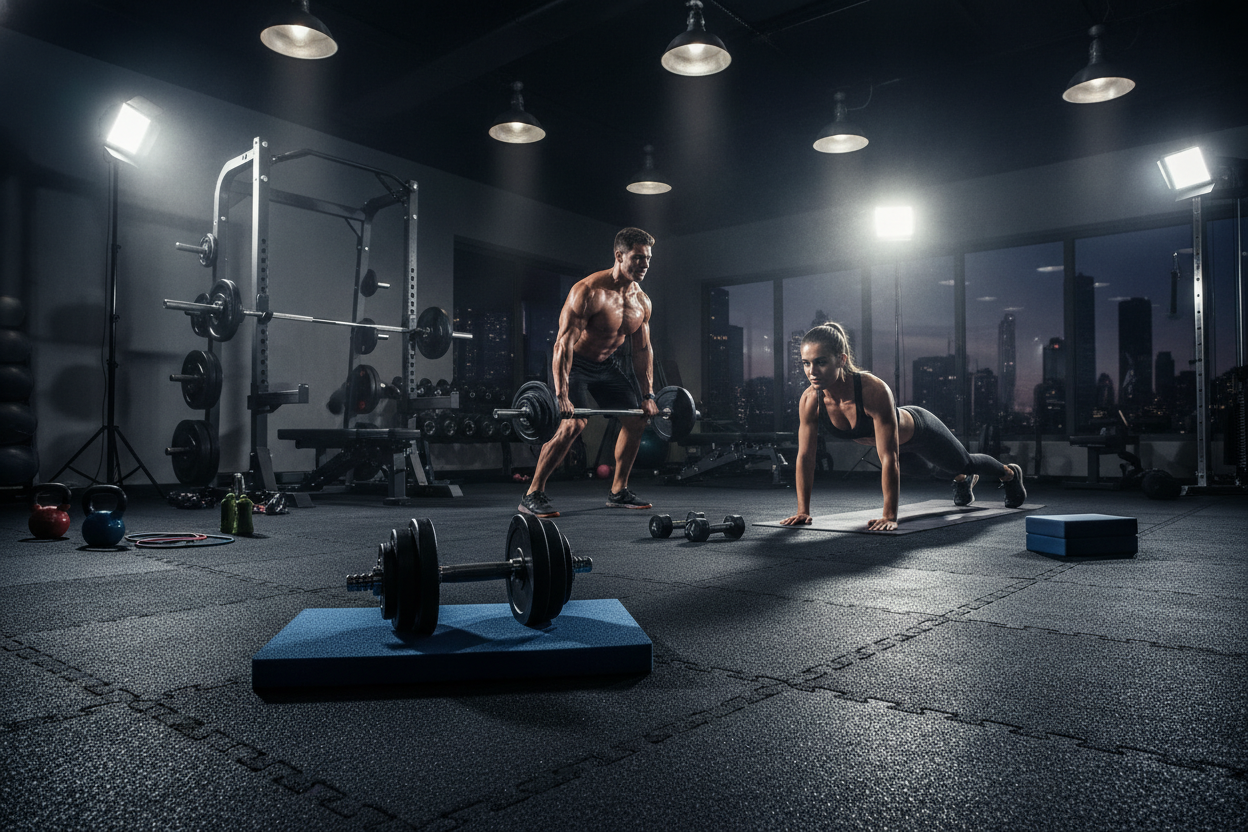
For Pilates, calisthenics, and HIIT routines, foam provides a responsive, shock-absorbing layer that protects knees and wrists. It creates a dedicated soft zone in your gym. Many hybrid athletes choose to split their flooring: heavy rubber under the power rack, and a foam carpet section dedicated entirely to mobility and core work.
From Our Gym: Honest Take
We have tested dozens of flooring solutions over the years, and I will be perfectly honest: I ruined my first set of foam tiles within a month. I made the rookie mistake of placing a heavy power rack and a stationary bike directly on top of 1/2-inch standard foam.
The equipment feet punched right through the material. However, once I learned its true purpose, my perspective shifted. I now keep a dedicated 8x8 foot section of 3/4-inch high-density foam in the corner of my garage gym. It is my go-to spot for post-workout stretching and kettlebell core routines. The textured grip is fantastic even when I am sweating heavily, and after 14 months of daily use in that specific capacity, the tiles still look brand new. Keep heavy iron off of it, and it will serve you incredibly well.
Frequently Asked Questions
Can I drop heavy weights on a foam carpet?
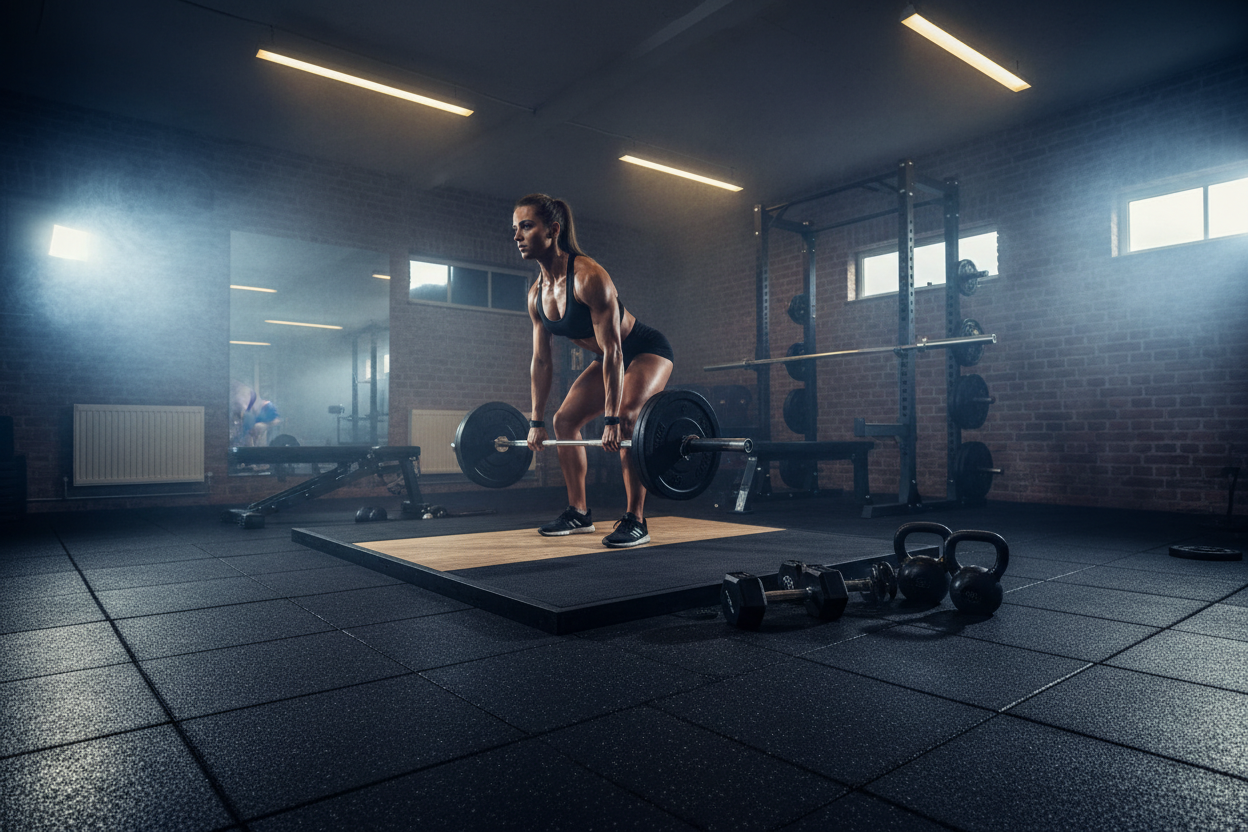
No. Dropping heavy dumbbells or barbells on foam will likely puncture the material and damage your subfloor. For dropping weights, you need thick, vulcanized rubber mats or a dedicated lifting platform.
How do you clean foam gym flooring?
Maintenance is incredibly simple. Sweep or vacuum loose debris, then wipe the surface with a damp mop using a mild soap and water solution. Avoid harsh chemical cleaners, as they can break down the foam over time.
Can I put foam tiles over regular house carpet?
While possible, it is not recommended for workouts that require balance. The double-cushion effect creates a highly unstable surface. If you must put it over plush carpet, place a thin sheet of plywood between the carpet and the foam tiles to create a rigid base.