
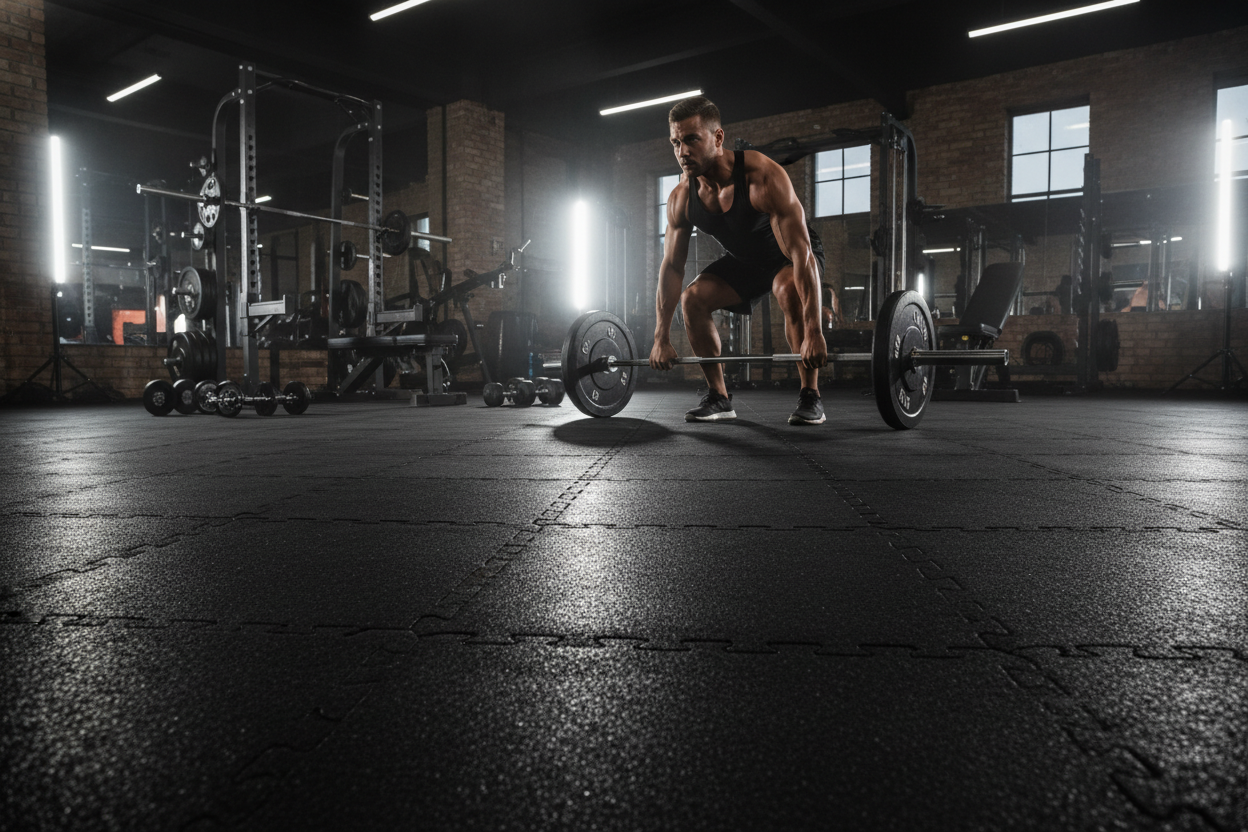
Flooring Rubber Mat: What to Know Before You Build Your Gym
Nothing kills the vibe of a heavy lifting session faster than the fear of cracking your garage floor. Whether you are dealing with noise complaints from family members or worrying about damaging your expensive bumper plates, the foundation of your home gym is arguably your most important investment. Upgrading to a high-quality flooring rubber mat is the easiest way to solve these pain points while instantly elevating the look, feel, and safety of your space.
But not all flooring is created equal. From agricultural horse stall mats to specialized interlocking fitness tiles, the options can be overwhelming. In this guide, we will break down exactly what you need to know to choose the right foundation for your specific training style, budget, and room layout.
Key Takeaways
- Thickness matters: A 3/8-inch mat is great for general fitness and cardio machines, while heavy lifters need at least 1/2-inch to 3/4-inch thickness for drop protection.
- Material quality: Virgin rubber has significantly less odor, but recycled crumb rubber is more budget-friendly and highly durable.
- Density is key: A dense rubber floor pad prevents heavy equipment from sinking and provides stable, non-compressible footing for heavy squats.
- Installation: Most heavy-duty commercial mats do not require adhesive; their sheer weight (often 100+ lbs each) keeps them locked firmly in place.
Choosing the Right Thickness and Density
The biggest mistake most home gym owners make is buying cheap, low-density EVA foam instead of a proper rubber floor pad. Foam compresses under heavy loads, creating an unstable surface that is outright dangerous when you have hundreds of pounds on your back.
Finding the Sweet Spot
If your workouts consist of yoga, kettlebell swings, and adjustable dumbbell work, a standard 3/8-inch mat offers plenty of joint protection. However, if you are dropping loaded barbells, you need serious impact absorption. A 3/4-inch heavy-duty mat absorbs the shock, protecting both your plates and the concrete subfloor beneath. Always look for high-density vulcanized rubber—it resists gouging and handles dropped iron with ease.
Space Planning and Installation
Planning your layout before ordering is crucial. A standard 4x6 foot commercial mat weighs around 100 pounds, making it incredibly stable but a serious chore to move once placed.
Garage vs. Basement Considerations
For a two-car garage gym, standard 4x6 mats laid edge-to-edge provide a seamless, commercial feel. If you are outfitting an oddly shaped basement, interlocking tiles might be easier to cut and install around support pillars. Remember that concrete floors can sweat; if you are in a humid climate, consider laying a plastic moisture barrier beneath your rubber floor padding to prevent mold buildup over time.
Durability and Maintenance
A premium mat should outlast almost every piece of equipment in your gym. Maintenance is surprisingly simple, but you must avoid harsh chemical cleaners, as they can break down the rubber binders over time. A simple weekly mop with a neutral pH cleaner and warm water is all it takes to keep your floor looking brand new.
From Our Gym: Honest Take
We recently overhauled our primary testing facility, swapping out old, compressed interlocking foam tiles for 3/4-inch vulcanized flooring rubber mats. The difference in stability is night and day. During a heavy deadlift session last week, I dropped a 405-pound bar from hip height. The mats absorbed the impact with a dull thud, and there was zero bounce or floor vibration. My chalked grip held solid through the rest of the set because I wasn't worried about the floor shifting under my feet.
That said, I have to be completely honest about the break-in period. Because we opted for recycled rubber to keep our budget in check, the 'new tire' smell was intense for the first two weeks. We had to leave the garage doors open and run high-velocity fans to off-gas the room. If you are sensitive to smells or building an indoor basement gym with poor ventilation, spending the extra money on virgin rubber is absolutely worth the investment.
Frequently Asked Questions
Is a flooring rubber mat worth it for a home gym?
Absolutely. It protects your concrete subfloor from cracking, prolongs the life of your expensive barbells and plates, deadens sound, and provides the necessary traction for safe, heavy lifting.
How much space do I need to cover?
You don't necessarily need to cover your entire room wall-to-wall. At a minimum, an 8x8 foot area (using four 4x6 mats, trimmed to fit) provides enough space for a standard power rack and a dedicated deadlift zone in front of it.
How do I cut a thick rubber mat?
The easiest method is using a sharp utility knife, a metal straight edge, and a piece of scrap wood. Score the mat multiple times rather than trying to cut through it in one pass. Placing a 2x4 under the cut line helps separate the rubber as you slice, significantly reducing friction on the blade.


