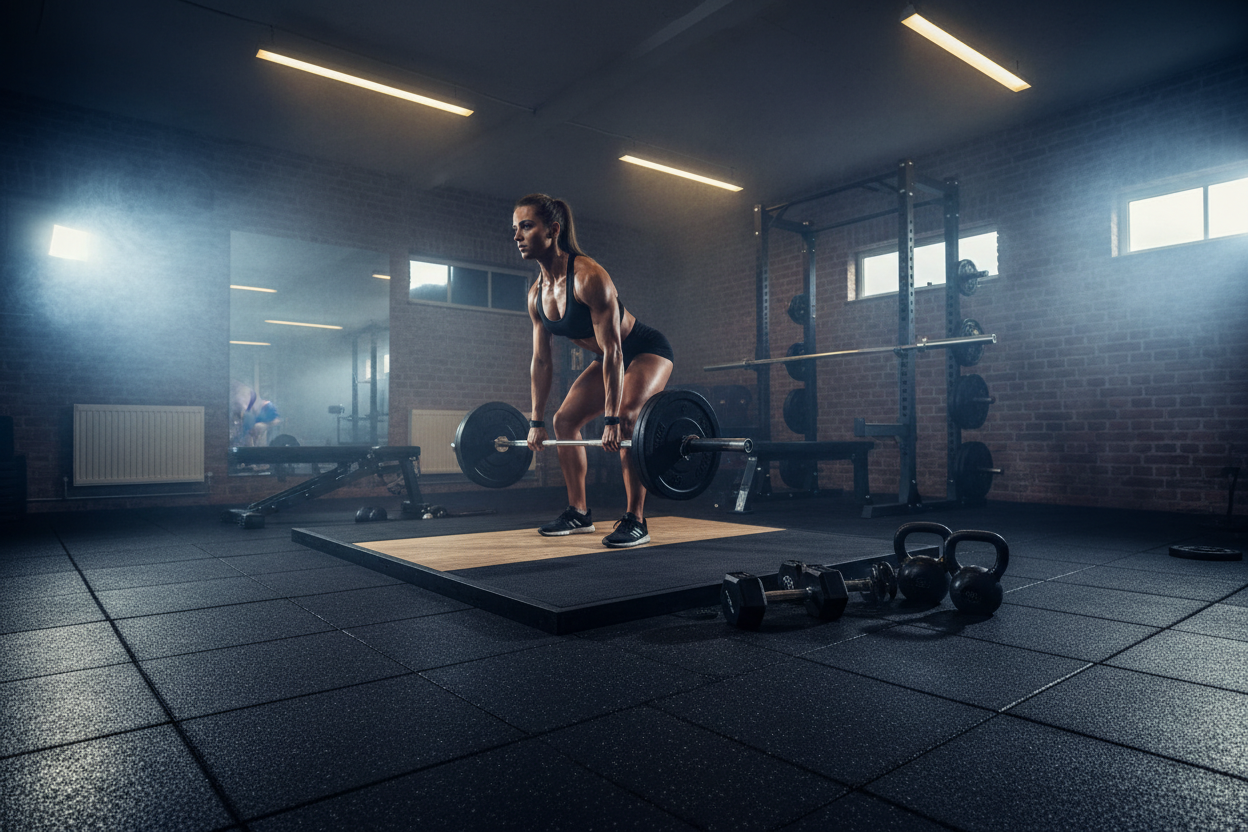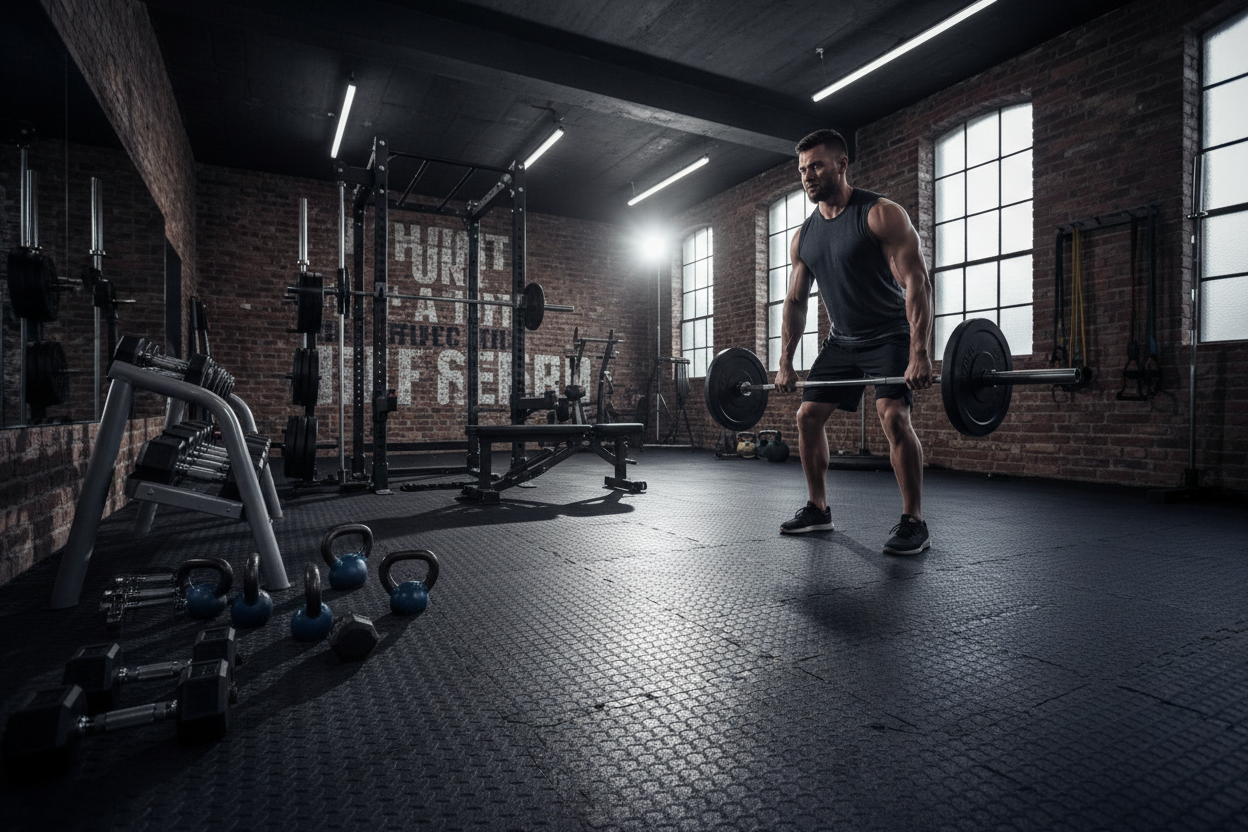
There is nothing quite like the heart-stopping sound of a heavy deadlift crashing down, followed by the sickening crunch of a cracked concrete foundation. Whether you are building a new setup in your basement or upgrading a garage space, your subfloor takes a massive beating.
Investing in proper flooring for weight rooms is the single most important decision you will make for your training environment. It dictates your safety, the lifespan of your expensive barbells, and whether your neighbors (or sleeping family members) will tolerate your early morning sessions. Let's break down exactly what you need to build a bulletproof foundation.
Key Takeaways
- Thickness matters: Aim for at least 3/8-inch thickness for general strength training, and 3/4-inch for heavy Olympic lifting.
- Material dictates durability: Vulcanized rubber offers superior density and odor control compared to standard recycled crumb rubber.
- Protect the subfloor: Even the best mats cannot magically absorb all shock; heavy lifters may still need a dedicated lifting platform.
- Format fits the space: Interlocking tiles are great for irregular basements, while rolled rubber is ideal for large, rectangular garages.
Decoding Thickness and Material Specs
Not all rubber is created equal. When sourcing a home gym rubber mat, the two biggest variables that affect both price and performance are thickness and the manufacturing process.
Finding Your Ideal Thickness
If your routine consists of dumbbell work, kettlebells, and machine use, a standard 3/8-inch (8mm to 10mm) floor is perfectly adequate. However, if you are dropping loaded barbells from the hip or overhead, you need to step up to 1/2-inch or even 3/4-inch flooring. Anything thinner than 3/8-inch is essentially a yoga mat and will not protect your concrete from a dropped cast-iron plate.
Vulcanized vs. Recycled Rubber
Standard recycled rubber is bound together with polyurethane. It gets the job done but can be porous, making it harder to clean, and often carries a strong rubber odor. Vulcanized rubber, on the other hand, uses heat and pressure to meld the rubber into a solid, non-porous sheet. It is significantly more durable, repels sweat and chalk water, and rarely smells. If you are looking for high quality gym mats that will last a lifetime, vulcanization is the gold standard.
Space Planning for North American Gyms
The layout of your home dictates the type of gym floor matting for home use you should buy. Climate and moisture also play massive roles in how your floor behaves over time.
Garage vs. Basement Setups
Garages experience massive temperature swings. Rubber expands and contracts with heat and cold. If you are laying down thick stall mats or rolled rubber in a non-climate-controlled garage, leave a 1/4-inch expansion gap around the perimeter of the room. Otherwise, the mats will buckle and create tripping hazards during the summer.
For basements, moisture is the enemy. Concrete floors naturally wick moisture from the earth. Laying non-porous rubber directly on unsealed basement concrete can trap moisture, leading to mold. Always test your concrete for moisture and consider a vapor barrier or dimpled underlayment before dropping your mats.
From Our Gym: Honest Take
When we first outfitted our testing garage, we went the cheap route and bought standard 3/4-inch horse stall mats from a local agricultural supply store. While they are incredibly durable and cheap, they were a nightmare to install. At 100 pounds each, dragging them into place was a workout in itself. More importantly, they were not perfectly square.
We spent hours with a utility knife and a straight edge trying to eliminate the gaps between mats where chalk and dirt kept accumulating. We eventually upgraded to precision-cut, vulcanized interlocking tiles. The seamless finish not only looks like a commercial facility, but my chalked deadlift grip feels much more planted without the micro-shifting we experienced with the cheaper, uneven mats. If you have the budget, skip the farm supply store and buy flooring explicitly designed for weightlifting.
Frequently Asked Questions
Do I need a plywood subfloor under my rubber mats?
For general fitness and powerlifting inside a power rack, 3/4-inch rubber directly on concrete is usually sufficient. However, if you are performing Olympic weightlifting (dropping weights from overhead), a layered lifting platform with plywood and rubber is highly recommended to disperse the kinetic energy and protect the concrete.
How do I clean and maintain my gym flooring?
Avoid harsh chemicals like bleach or acidic cleaners, which can degrade the rubber over time. A simple mixture of warm water and a few drops of mild dish soap or a pH-neutral floor cleaner applied with a damp (not soaking wet) mop is best. Vacuum up chalk dust before mopping to avoid turning it into a paste.
Are foam puzzle tiles safe for lifting?
No. EVA foam tiles compress easily under heavy loads. If you step back for a heavy squat on foam tiles, the floor will squish beneath your feet, compromising your stability and safety. Foam is only suitable for stretching, bodyweight exercises, or light dumbbell areas.