Flooring for Weight Room Spaces: What to Know Before You Buy
Setting up a home gym is exciting, but many people overlook the literal foundation. Dropping a 45-pound bumper plate on bare concrete is a fast track to cracked floors and ruined equipment. If you are researching flooring for weight room setups, you already know that a cheap yoga mat simply will not cut it. This guide will help you choose the right material and thickness to protect your home, reduce noise, and elevate your training experience.
Key Takeaways
- Thickness matters: 3/8-inch to 3/4-inch rubber is the gold standard for heavy lifting.
- Horse stall mats offer incredible durability on a budget but require heavy ventilation initially.
- Interlocking tiles are best for irregular spaces, while rolled rubber suits larger, permanent garage gyms.
- Proper exercise and gym flooring reduces noise, protects your expensive equipment, and prevents costly foundation damage.
Choosing the Right Floor for Weight Room Setups
Rubber vs. Foam vs. Vinyl
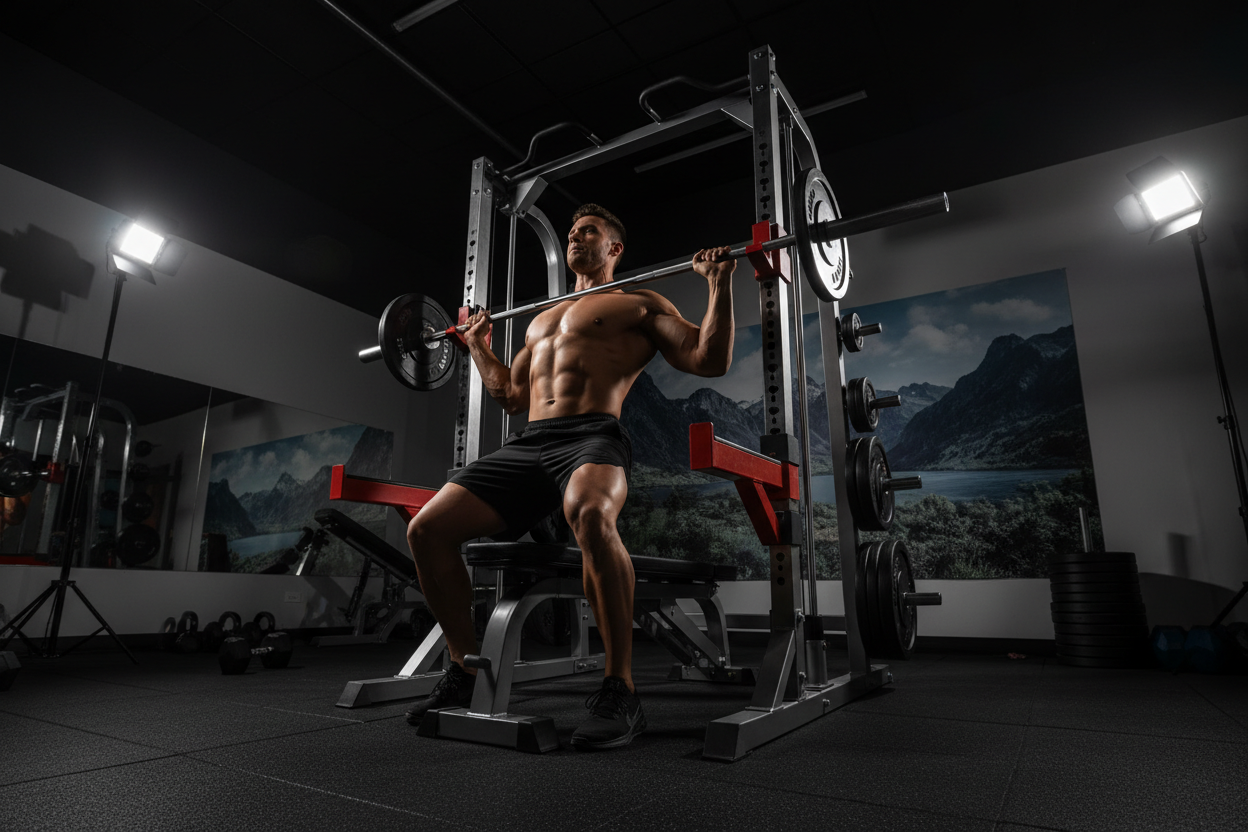
When selecting a floor for weight room use, material is your most critical decision. EVA foam tiles are popular because they are cheap, but they are designed for bodyweight exercises and stretching. Under the weight of a power rack or a heavy barbell, foam compresses and tears. Vinyl looks great but lacks shock absorption. High-density vulcanized rubber is the undisputed king of weight room floors—it absorbs impact, deadens sound, and provides the necessary grip for heavy squats and deadlifts.
How Thick Should It Be?
Your training style dictates your thickness requirements. If you primarily use selectorized machines and dumbbells under 50 pounds, 8mm (about 5/16-inch) rubber is sufficient. For a standard home gym featuring a power rack and general free weights, 3/8-inch is the industry standard. However, if you are dropping heavy barbells from overhead or performing heavy deadlifts, you need 1/2-inch to 3/4-inch rubber to properly protect your concrete foundation.
Sizing and Installing Your Gym Floor
Tiles, Rolls, or Mats?
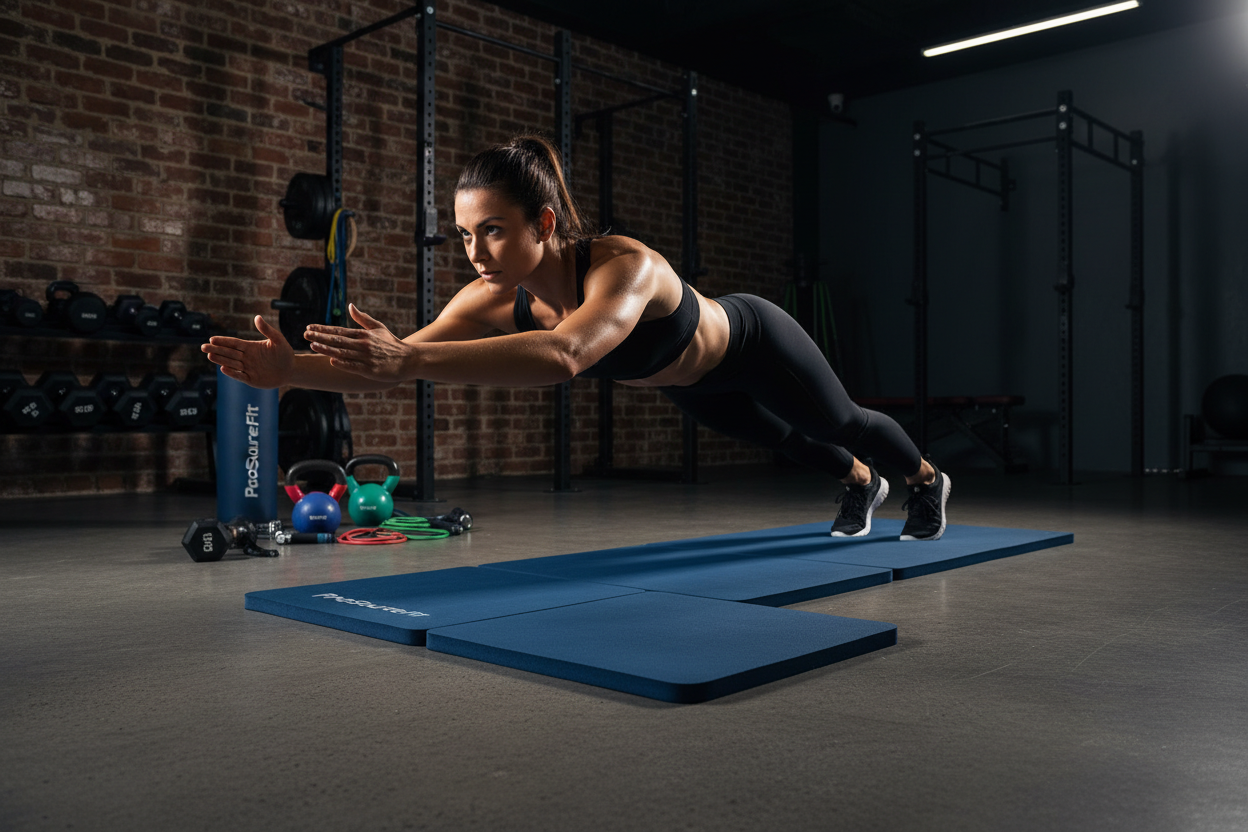
Interlocking rubber tiles are incredibly DIY-friendly and perfect for basements or spare bedrooms with irregular dimensions. Rolled rubber provides a premium, seamless look ideal for large, permanent garage setups, though it often requires adhesive or double-sided tape. Finally, 4x6 foot heavy-duty mats (often sold as horse stall mats) are the ultimate budget-friendly, high-durability option, though their massive weight makes them difficult to move solo.
From Our Gym: Honest Take
When I first built my garage gym, I tried to save money by using cheap EVA foam tiles. Big mistake. Within a month of heavy deadlifts, the foam was compressed to paper thickness, and my concrete developed a hairline crack. Upgrading to 3/4-inch vulcanized rubber stall mats completely changed the game. Yes, hauling those 100-pound mats out of the back of my truck was a brutal workout in itself, and the rubber smell took about three weeks to fully dissipate with the garage door open. But three years later? Those mats look brand new, and my foundation is perfectly intact even after dropping 400-plus pounds from hip height. It is an investment you only want to make once.
Frequently Asked Questions
Is horse stall matting safe for an indoor gym?
Yes, but they off-gas a strong rubber odor initially. They are best suited for well-ventilated garage gyms rather than enclosed basement spaces, unless you scrub them thoroughly with a mild degreaser and let them bake in the sun for a few days first.
Can I put a heavy squat rack directly on top of rubber gym flooring?
Absolutely. High-density rubber exercise and gym flooring is specifically designed to withstand thousands of pounds of static weight without permanently compressing or denting over time.
Do I need to glue down my weight room floors?
For heavy 4x6 mats, no—their sheer weight (often nearly 100 pounds each) keeps them firmly in place. For rolled rubber or lighter interlocking tiles, using double-sided carpet tape at the seams is highly recommended to prevent shifting during dynamic lateral movements.