Flooring For A Home Gym: What Actually Works Over Concrete
If you have ever cringed at the sound of a heavy dumbbell crashing onto a bare floor, you already know that building a great workout space starts from the ground up. Whether you are dealing with a cramped spare bedroom, a damp basement, or a massive garage, your foundation dictates what you can safely lift, how much noise you make, and how long your equipment lasts.
Choosing the right flooring for a home gym is about more than just aesthetics. It protects your subfloor, dampens noise, and saves your joints during high-impact training. In this guide, we will break down the best materials, formats, and installation methods to help you build a resilient, professional-grade training environment.
Key Takeaways
- Thickness matters: Aim for at least 3/8-inch (8mm) rubber for general strength training, and 1/2-inch to 3/4-inch for heavy barbell lifting.
- Rubber reigns supreme: The best rubber gym flooring offers unmatched durability, grip, and shock absorption compared to cheap foam alternatives.
- Concrete needs care: When installing home gym flooring over concrete, always check for moisture issues and consider a vapor barrier.
- Format flexibility: Interlocking tiles are ideal for DIYers and odd-shaped rooms, while rolled rubber provides a seamless, high-end commercial look.
Gym Flooring Materials: What Belongs Under Your Feet?
When evaluating flooring options for home gym setups, the material you choose dictates the lifespan of both the floor and your expensive iron.
The Undisputed King: Vulcanized Rubber
If you are looking for the best floor for home gym use, vulcanized or recycled rubber is the gold standard. The best rubber flooring for home gym applications provides incredible shock absorption, will not compress under heavy power racks, and offers excellent traction even when you are sweating. While heavy-duty horse stall mats are a popular budget hack, purpose-built gym rubber often has less odor and a smoother, more uniform finish.
Why You Should Avoid Cheap EVA Foam
While colorful foam tiles are frequently marketed as easy basement gym floor ideas, they are generally a poor choice for serious lifting. Foam compresses under heavy weights, leaving permanent divots, and can easily tear if you drag a bench across it. Save foam for stretching areas or light yoga, but keep it far away from your squat rack.
Conquering the Basement and Garage Gym Setup
Subterranean spaces are the classic North American workout sanctuary, but they come with unique challenges—namely, cold, hard, and sometimes damp subfloors.
Protecting Your Subfloor: Flooring Over Concrete
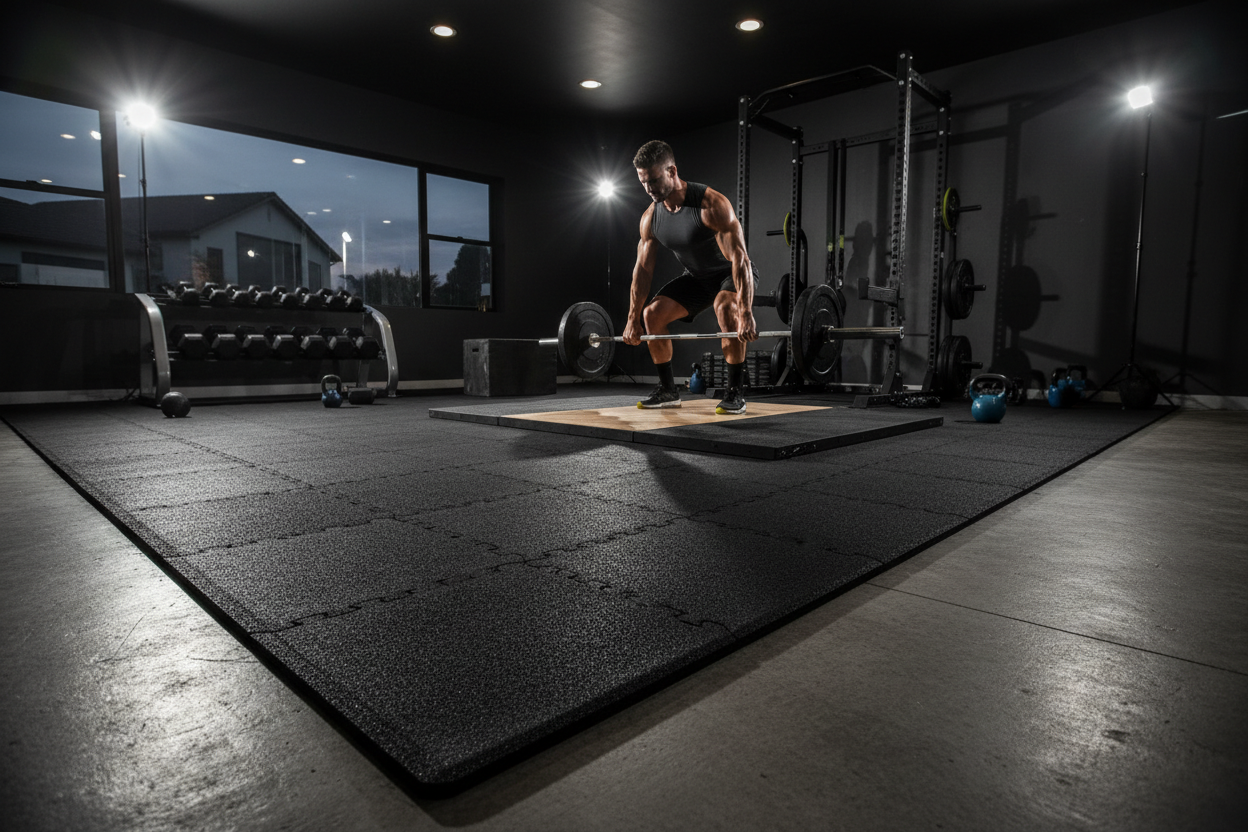
A bare concrete gym floor is a recipe for cracked plates and shattered dreams. The best flooring for home gym over concrete acts as a vital shock absorber. If you are dropping heavy deadlifts, you need serious thickness. For the ultimate protection, many lifters combine a base layer of 3/8-inch rolled rubber with a dedicated, thick wooden lifting platform in their drop zones.
Dealing with Basement Moisture
If you are searching for the best gym flooring for basement environments, you must address moisture first. Concrete is porous. Before laying down the best floor mats for gym use, tape a piece of plastic to the concrete for 48 hours. If condensation forms underneath, you need a vapor barrier or a dimpled underlayment before putting down your basement gym mats. This crucial step prevents mold and mildew from destroying your investment.
Formats: Rolls, Tiles, or Mats?
Once you know you want rubber, you have to decide how it comes packaged. Here are the most popular gym floor options on the market.
The Case for Interlocking Tiles
The best interlocking gym floor tiles are the ultimate DIY-friendly solution. They snap together tightly like puzzle pieces, making them perfect for the best flooring for exercise room setups in spare bedrooms or irregular spaces. If a single tile gets damaged by a dropped kettlebell, you simply replace that one piece rather than the whole floor.
Rolled Rubber for a Seamless Look
If you want that commercial, high end gym flooring aesthetic, rolled rubber is the way to go. It minimizes seams, which prevents dirt, sweat, and chalk from getting trapped in the cracks. However, it is incredibly heavy, harder to cut, and usually requires double-sided tape or glue to stay completely flat.
From Our Gym: Honest Take
When I built my first garage gym, I made the classic rookie mistake: I bought cheap, 1/4-inch thick foam tiles because they were on sale. Within three months, my power rack had permanently crushed the foam down to the concrete, and the tiles constantly pulled apart during lateral lunges.
I eventually ripped it all up and invested in 3/8-inch commercial-grade rolled rubber. The difference was night and day. My stance felt infinitely more secure during heavy squats, the annoying echo in the room completely died down, and five years later, it still looks brand new. One caveat: fresh rubber rolls will smell like a tire shop for about two weeks. Keep your windows open and run a fan—the smell definitely fades, but it will be noticeable at first.
Frequently Asked Questions
What is the best flooring for a workout room in a basement?
The best flooring for basement home gym spaces is 3/8-inch thick interlocking rubber tiles or rolled rubber, placed over a thin vapor barrier if the concrete is prone to moisture. Rubber withstands temperature fluctuations and will not harbor mold like carpet or cheap foam.
How thick should my home gym floor mats be?
For general fitness, HIIT, and dumbbell workouts, 1/4-inch to 5/16-inch is usually sufficient. If you are doing heavy strength training or dropping barbells, the best home gym mats should be at least 3/8-inch to 1/2-inch thick to adequately protect both the equipment and the subfloor.
Can I put gym flooring directly over concrete?
Yes, laying workout room flooring over concrete is standard practice. However, if your concrete is unlevel or prone to dampness, you should fix the leveling with a patching compound and lay down a moisture barrier before installing your rubber mats to ensure longevity.